
HS
Hydrological Sciences

EGU Guest blogger

This guest post was contributed by a scientist, student or a professional in the Earth, planetary or space sciences. The EGU blogs welcome guest contributions, so if you've got a great idea for a post or fancy trying your hand at science communication, please contact the blog editor or the EGU Communications Officer to pitch your idea.

On modelers and modeling

On modelers and modeling

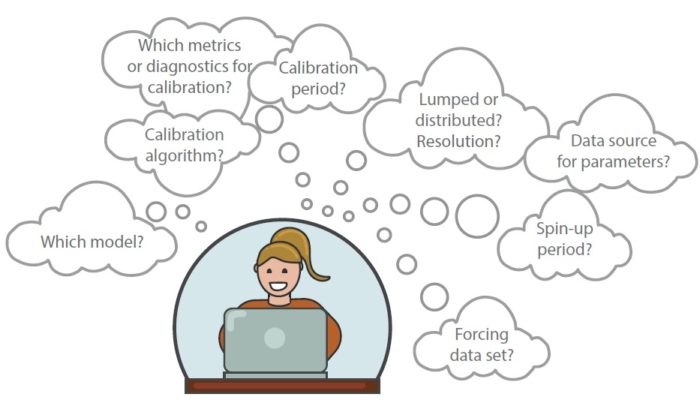
Several studies were conducted and are ongoing where we investigate modelers, modeling decisions and modeling perceptions. Below I discuss the rationale and a summary of the (preliminary) results. Simulation models, conceptualizations of processes into a system of mathematical equations (hereafter simply referred to as models), are frequently used tools in the hydrological sciences. The literature ...[Read More]

Sharing is caring: Models for all, presenting eWaterCycle II

Sharing is caring: Models for all, presenting eWaterCycle II

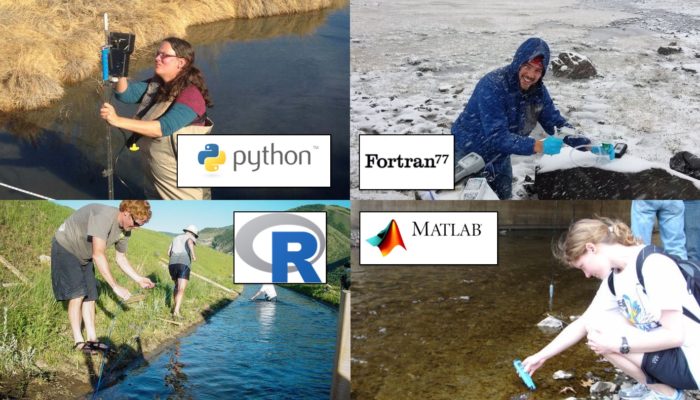
The photos above were found by doing a google image search for ‘hydrologist’. Apparently our image is that of scientists that get to be outside a lot. We all know that the knowledge we gain from fieldwork gets codified in hydrological models which can be written in all sort of programming languages. “I wonder what this analysis would look like using that other groups hydrological model ...[Read More]

Featured catchment series: The San Carlos Catchment in northeast Costa Rica, a multi-scale hydrological observatory to leapfrog data scarcity in the tropics

Featured catchment series: The San Carlos Catchment in northeast Costa Rica, a multi-scale hydrological observatory to leapfrog data scarcity in the tropics

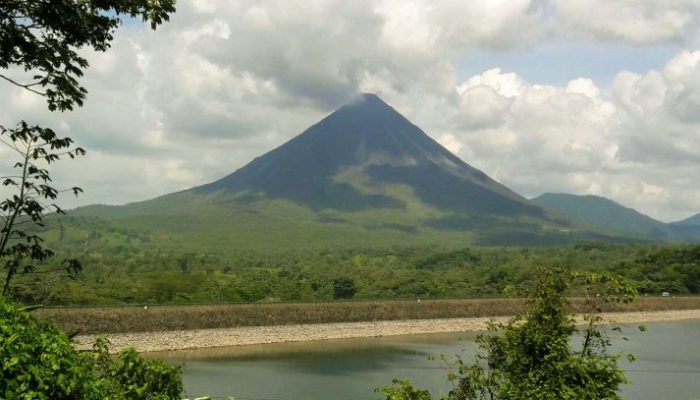
Tropical ecosystems are of major hydrological importance for regional and global climate systems and are characterized by greater energy inputs, higher rate of change and dynamics compared to other hydroclimatic regions. Nowadays, the anthropogenic influence in the climate crisis exerts enormous pressure on tropical hydrological systems. This growing pressure affects water quality and quantity, wh ...[Read More]

Andreas Hartmann (EGU ECS Awardee) on Doing What You Love Will Pay Off

Andreas Hartmann (EGU ECS Awardee) on Doing What You Love Will Pay Off

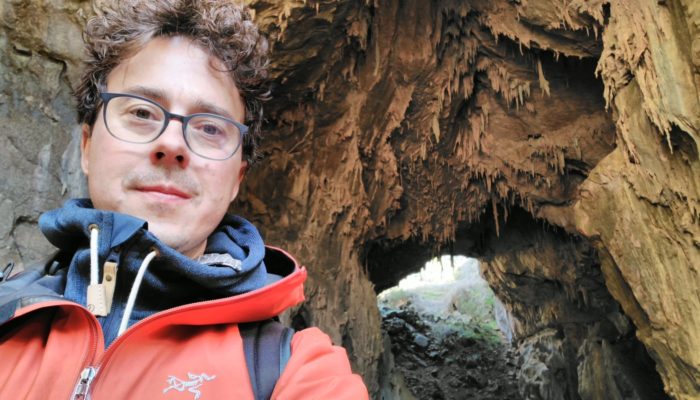
Andreas Hartmann makes a point to attend Hofer Filmtage – or the Hof International Film Festival – every year to keep up a tradition he started when he was 12. As a professor, he sets down research to make the yearly pilgrimage to his German hometown to visit with his best friends and family. This year, he couldn’t completely separate from work. After getting out of a film, he got a note saying th ...[Read More]

Science as Type II Fun

Science as Type II Fun

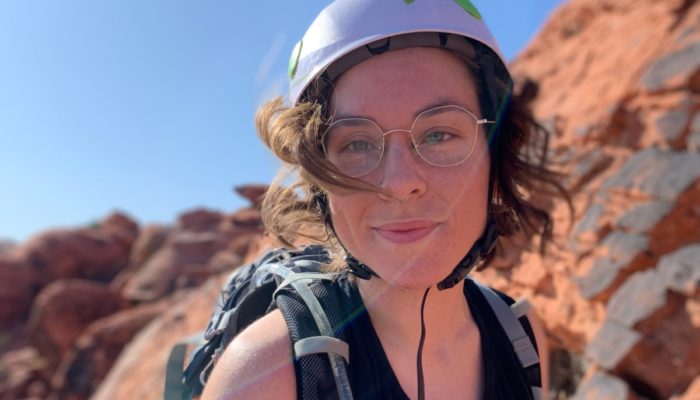
Autumn had finally arrived – the weather had cooled down enough to start rock climbing outside again in southern Arizona. I was working on scaling a mountain’s cliff face tall enough to be a skyscraper with nearly 15 fellow scientists climbing routes around me. My palms were sweaty with nerves and my muscles were starting to get tired. I questioned what possessed me to climb this huge rock. ...[Read More]

Featured catchment series: Disentangling the ecohydrology of a tropical hotspot!

Featured catchment series: Disentangling the ecohydrology of a tropical hotspot!

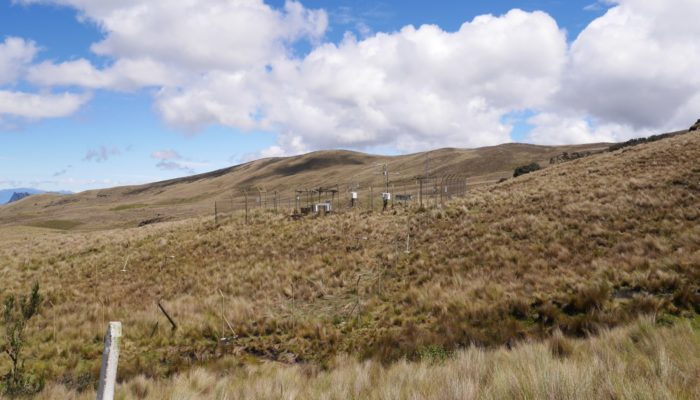
Zhurucay Ecohydrological Observatory: Critical zone observations at the top of the Andes! A natural laboratory of tropical alpine ecohydrology Tropical alpine ecosystems, known as the Páramo, extend to high elevations (3,000-5,000 m a.s.l.) mainly through the northern Andes of South America from Venezuela to northern Peru. Given their geographical location and elevation, Páramo areas are exposed t ...[Read More]

All models are wrong but…

All models are wrong but…

“All models are wrong but some are useful” is a quote you probably have heard if you work in the field of computational hydrology – or ‘hydroinformatics’ – the science (or craft?) of building computer models of hydrological systems. The idea is that, even if these models cannot (by definition!) be a 1:1 representation of reality, their erroneous predictions can still be useful to support decision- ...[Read More]

Talking hydrology: an interview with Hjalmar Laudon on hydrological research at the Krycklan catchment

Talking hydrology: an interview with Hjalmar Laudon on hydrological research at the Krycklan catchment

For our second post of “Talking hydrology”, we interviewed Hjalmar Laudon, professor and chair of forest landscape biogeochemistry at SLU Umeå (Sweden). We talked about past and current research in the Krycklan catchment and the usefulness of long-term datasets.   1) You have been conducting hydrological research at the Krycklan catchment (North of Sweden) since 2002. How did you keep yoursel ...[Read More]

Quality through Equality – tackling gender issues in hydrology

Quality through Equality – tackling gender issues in hydrology

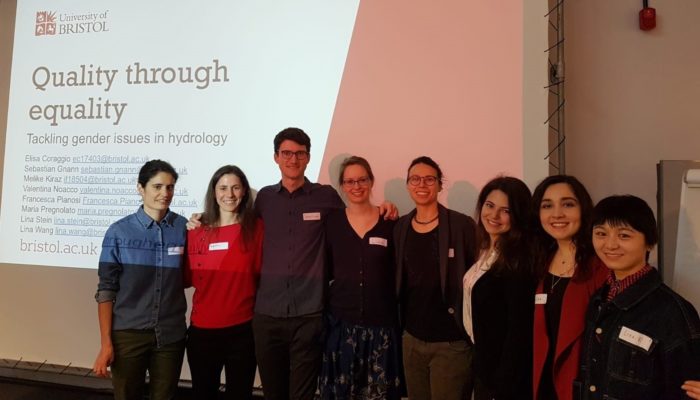
Quality through Equality – tackling gender issues in hydrology Results of a 1-day workshop organised by the University of Bristol’s Water Engineering Group “Science has a diversity problem” (Nature, 2019), and hydrology and the water sciences are no exception. For example, overall only 36% of all EGU medal awardees are female. With 31% of all nominations going to female researchers (Ka ...[Read More]

Featured catchment series: The North is not forgotten!

Featured catchment series: The North is not forgotten!

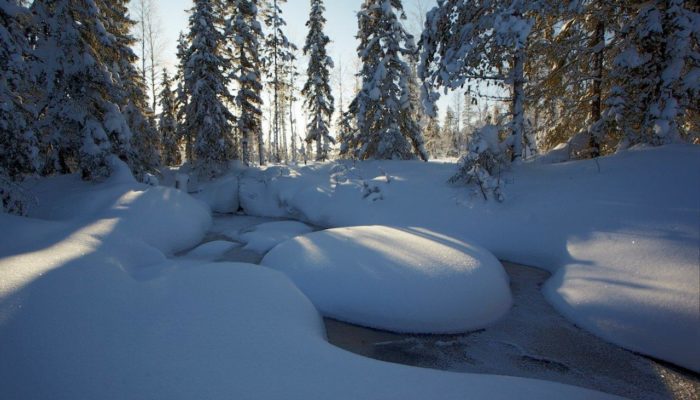
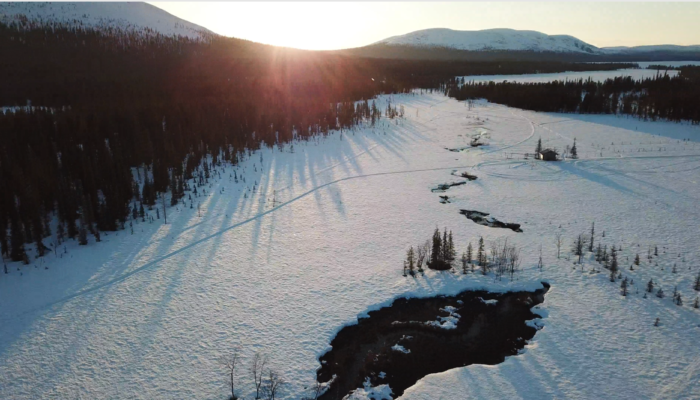
This is the first post of “Featured Catchment”, a series of posts in the HS Blog that present experimental catchments across Europe and beyond. Here, the authors of the posts will explain the main characteristics (e.g., climate, geology, topography, land use) of their catchments, why hydrologic research is important in their study areas, describe the applied methodologies (field instrumentation an ...[Read More]