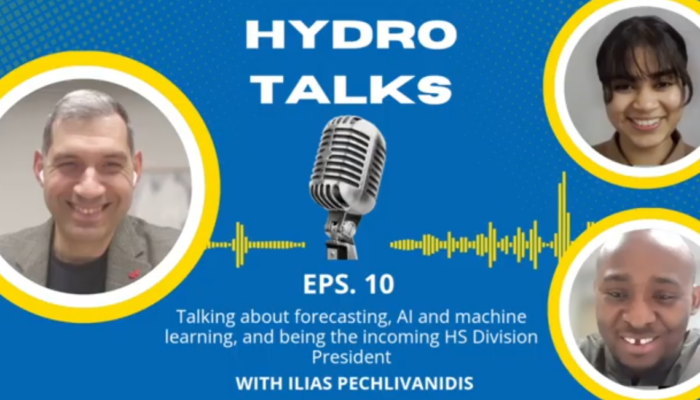
For this episode of HydroTalks, we’re thrilled to welcome Dr. Ilias Pechlivanidis, Senior Researcher and Associate Professor (Docent) in hydrology and water resources at the Swedish Meteorological and Hydrological Institute (SMHI), and Visiting Researcher at Uppsala University.
He is currently the Vice President of the EGU Hydrological Sciences Division and will serve as Division President for the 2027–2029 term. His responsibilities will include representing the hydrological scientific community within EGU, and managing the administration of the division, especially arranging the programme at the General Assembly.
You can check out the full episode here and read the interview summary in this blog!
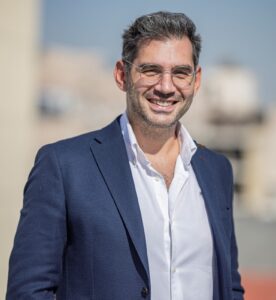
Dr. Ilias Pechlivanidis
About Ilias’s research
Please tell us about your research.
A large part of my research focuses on improving hydrological predictions. I investigate forecasting systems across river basins, from hours and days ahead to seasonal timescales. I am particularly interested in hybrid modelling, which combines process-based hydrological models with artificial intelligence. The key focus is to predict different hydrological conditions, including extremes, and translate predictions into actionable decisions.
How do hydrological forecasts work in simple terms? And have you seen these forecasting systems evolve over time?
At its core, hydrological forecasting needs three things: knowledge of today’s river conditions, such as soil moisture, snowpack and lake/reservoir levels; access to meteorological forecasts; and a well-performing hydrological model. To get today’s river conditions, we run the model using historical and real-time observations. Having actual condition data is a benefit, and we can assimilate those data into the model. After that, we force the model with meteorological forecasts, from hours and days ahead to seasons ahead. There are more advanced methods nowadays.
Thanks to satellite-based products and methods such as data simulation schemes and machine learning, we have experienced quite some evolution in forecasting systems. For example, flood early warning systems can sometimes predict floods up to eight days ahead, depending of course on the river system. (Read More)
Do forecasting systems perform equally well everywhere?
Slow-responding rivers, including systems strongly influenced by lakes, snow/ice accumulation and melting or baseflow, can be more predictable than fast-responding rivers that are controlled by rainfall. Accurate meteorological forecasts are essential however, with regions experiencing localised convective rainfall remain challenging to capture. However, forecast performance is not the same as forecast usability, because decisions are even made with biased and uncertain predictions. (Read more)
How could AI transform hydrological forecasting?
AI and machine learning can improve accuracy, reduce uncertainty, generate high-resolution forecasts and even help us understand the drivers of predictability. Explainable AI and hybrid models are promising, because they bring physical knowledge and data-driven insights together. I see opportunities in the next-generation early warning systems through AI, supporting citizen-centred communications and helping individuals respond to disasters. However, AI integration in early warning systems must be done carefully, ensuring transparency and robustness, and following standardised evaluation frameworks and data security protocols. (Read more)
How can better forecasts support local communities?
Better forecasts can provide earlier and more accurate warnings, giving communities time to prepare and respond. This can reduce loss of life, economic damage and long-term disruption, as seen in some European countries in 2021, 2023 and 2024. But producing an accurate forecast is only part of the challenge. Warnings need to be clear, communicating the impacts to the society,, while they should ideally be tailored to different groups, so that everyone can to understand what the warning means for them. (Read more)
About Ilias’s role as incoming President of HS Division
When did you first become involved with EGU?
I first attended EGU in 2007 and have remained actively involved since then. Over the years, I have convened sessions, contributed to community activities, and served as the scientific officer for the Hydrological Forecasting subdivision from 2020 to 2024.
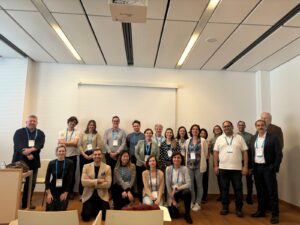
Photo with colleagues from the Hydrological Forecasting HS subdivision at EGU24
What is your vision for the Hydrological Sciences Division?
I want the division to remain a global and inclusive home for hydrologists. This means bringing in more voices from outside Europe, supporting early-career scientists, and strengthening connections with international communities. I also want to promote innovation, and ensure that science continues supporting real-life decisions. I want to foster an open and collaborative culture of sharing ideas.
Which skills do you believe could help in your role?
Both academic and non-academic skills are essential. This includes a broad understanding of hydrology and water resources, alongside skills such as leadership, efficient communication, international coordination and collaboration, and inclusivity across disciplines, institutions, and cultures.
What do you expect to be the most challenging and rewarding parts of the role?
One challenge will be balancing the priorities of a large and diverse international community. At the same time, that diversity is also the most rewarding part. Bringing together different perspectives, supporting collaboration, and seeing ideas develop into impactful science and services can be very fulfilling.
What career advice would you share with early-career scientists?
Stay focused on your ethics and long-term goals, but remain open to opportunities beyond your immediate field. A career path does not always need to be linear. Sometimes taking a thoughtful risk can lead to something innovative.
Check out the full episode here.