GD
Geodynamics

Geodynamics

Growing geological Christmas trees: salt ‘Christmas-tree’ structures explained
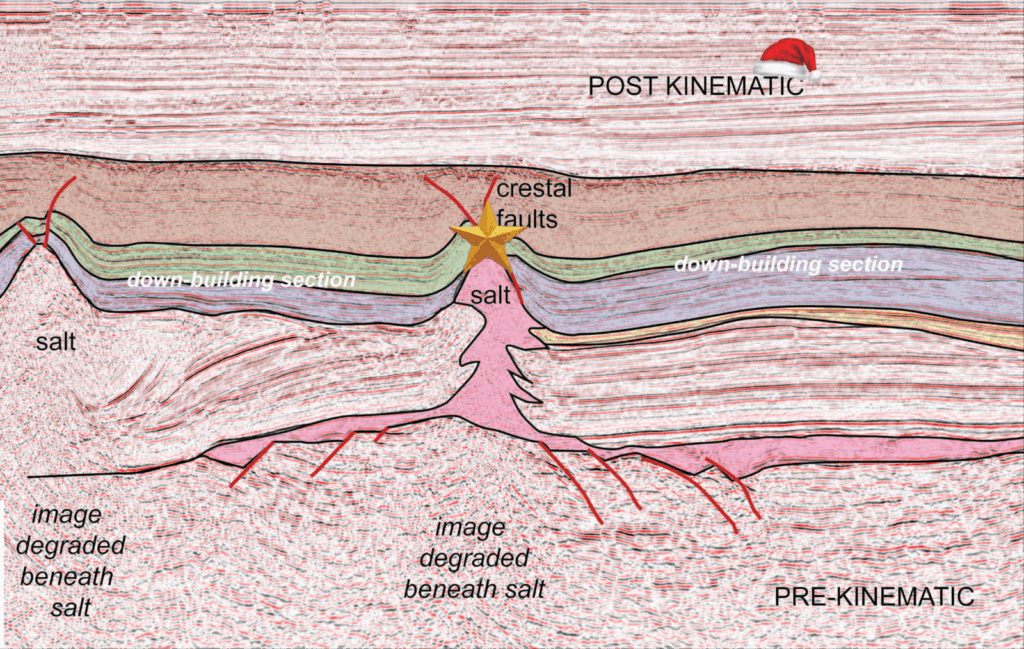
Regional profile through salt structures in the eastern part of the Dutch graben, southern North Sea

As geoscientists, we tend to see geology everywhere. Around Christmas, many people stare at decorated fir trees and twinkling lights; salt tectonicists stare at seismic lines and outcrops and see… trees as well. Tall stems, branching limbs, stacked “tiers” of material; a whole forest of geological Christmas trees hiding in the subsurface. In salt provinces around the world, from the Flinders Range ...[Read More]

Destruction of the North China Craton and its global impact

Destruction of the North China Craton and its global impact

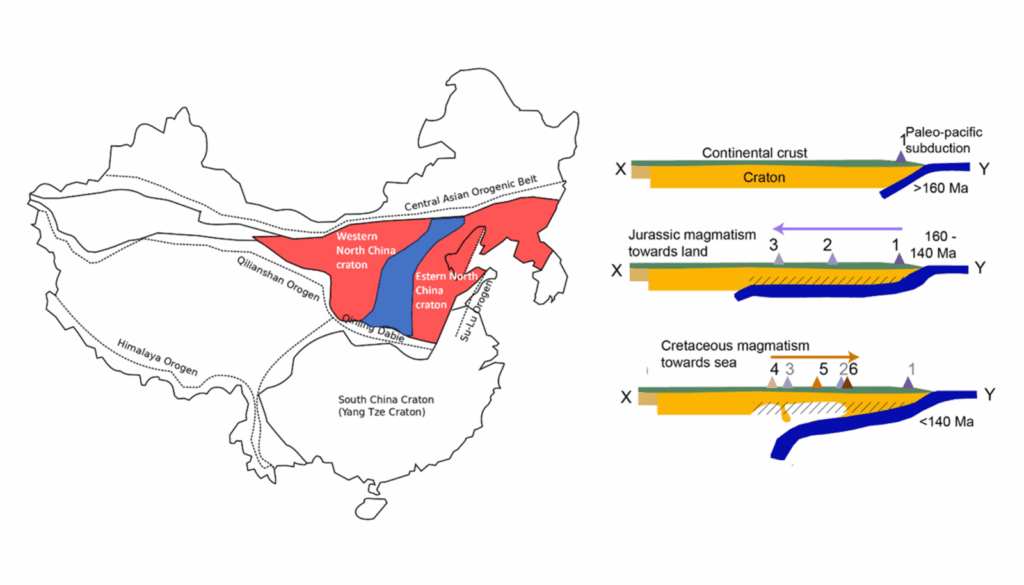
Cratons are forever, until they are not. These long-lived portions of lithosphere are known for being remarkably stable. However, if the conditions are right, even cratons can be ripped apart by geological forces, with far-reaching impacts on Earth’s systems. This week, Jyotirmoy Paul from the University of Oslo, Norway will tell us the downfall of the North China Craton, using numerical sim ...[Read More]

GeoMOD 2025 – Lisbon edition

GeoMOD 2025 – Lisbon edition

The GeoMOD meeting is a bi-annual conference that gathers Earth Science researchers from all over the world working on analogue and numerical modelling in Geosciences. Showcasing the most recent advances in this field, GeoMOD brings together the pursuit of new knowledge while allowing for great get-togethers between researchers. This year’s meeting was successfully held in Lisbon but not without i ...[Read More]

Dislocation Creep and the Development of Deformation Fabrics

Dislocation Creep and the Development of Deformation Fabrics

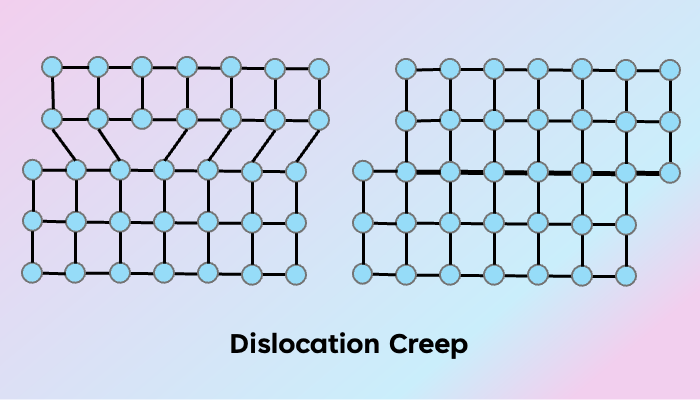
Assume you are under stress. What do you do? Take a walk in the park, order your favorite takeout, have a breakdown, or internally slip along preferred slip systems and develop a fabric? The response will mostly depend on what kind of material you are, how much stress you are under, and what environmental conditions you are subjected to. For instance, someone might listen to classical music after ...[Read More]

Bored by the Lower Mantle? Think Again!

Bored by the Lower Mantle? Think Again!

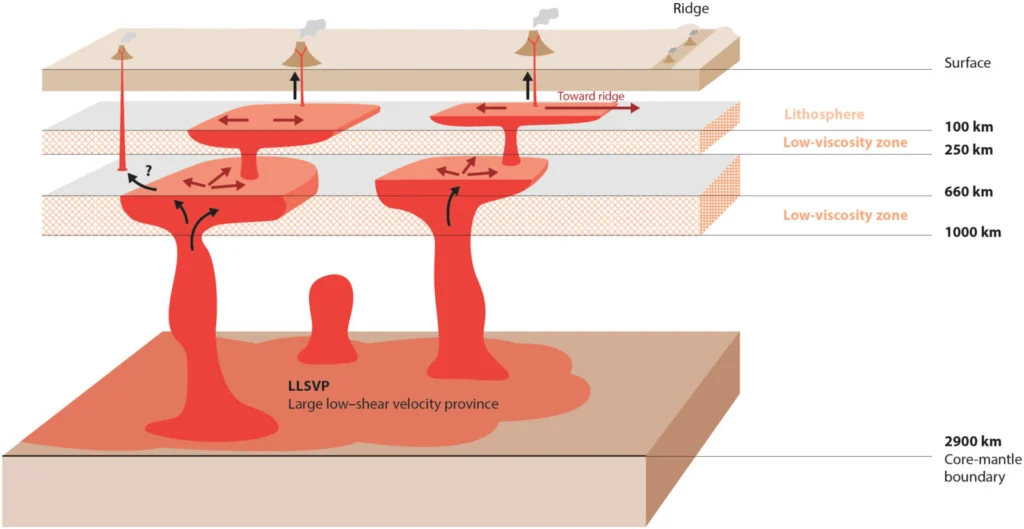
Is the lower mantle boring? For a long time, the lower mantle was thought to be relatively featureless and uniform compared to the more dynamic upper mantle. But recent seismic observations are challenging that idea, especially when we look near the base of the mantle. Recent studies from Maureen Long’s group (Creasy et al. 2017, Wolf et al. 2019, Reiss et al. 2019, Wolf & Long, 2023) and othe ...[Read More]

From Mountains to Oceans: How the memory of ancient orogens guides the rupture of continents

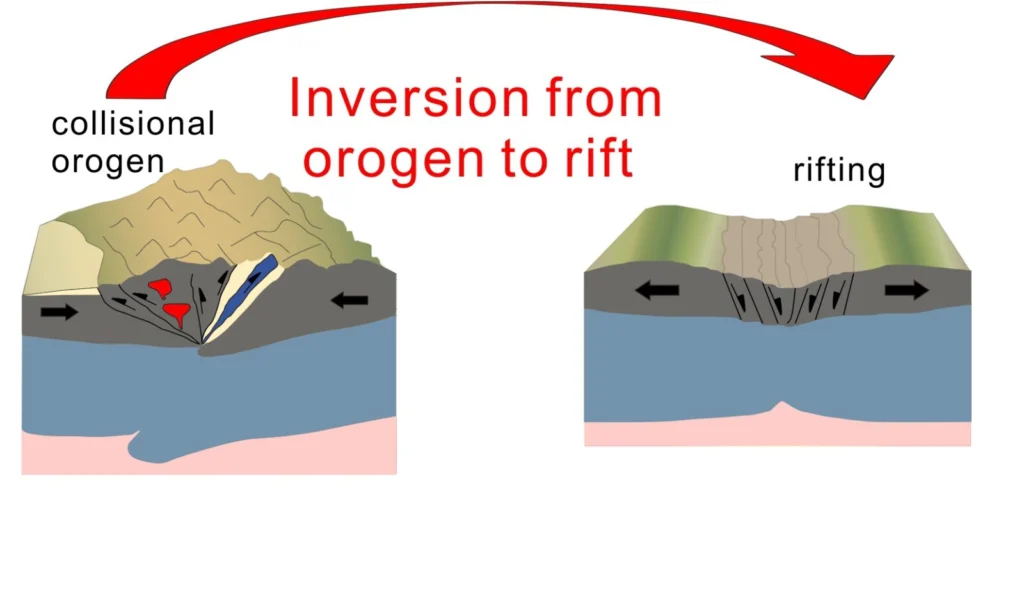
Picture showing an orogen that transform in a rift

In this new blog, Dr. Kai Li (GFZ Potsdam) talk about his PhD work, where he used accordion numerical models to explore the tectonic history of the South China Sea. His PhD research focuses on the impact of orogenic inheritance on rifts and rifted margins, employing advanced geodynamic modeling techniques. Have you ever tried to fit the west coast of Africa and the east coast of South America toge ...[Read More]

Journey Towards the Centre of the Earth: The Secret Behind the Long-Term Survival of Large Low-Velocity Provinces

Journey Towards the Centre of the Earth: The Secret Behind the Long-Term Survival of Large Low-Velocity Provinces

Geophysicists have long been intrigued by the enigmatic “blobs” residing deep within Earth’s lower mantle — the Large Low-Velocity Provinces (LLVPs). Ever wondered what keeps these gigantic thermochemical structures surviving for billions of years despite the mantle’s vigorous convection? In this week’s News & Views, Prachi Kar, a PhD candidate from Arizona State University, delves into Earth’ ...[Read More]

Kamchatka Megathrust Earthquake: What lies in the Pacific Ring of Fire

Kamchatka Megathrust Earthquake: What lies in the Pacific Ring of Fire

From the very early years on this Planet, earthquakes have always captivated people’s attention. The feeling of admiration and fear always lies within us, especially drawing on the most recent megathrust earthquake that hit the south coast of Kamchatka’s Peninsula, in Russia, twice this year. Therefore, in this week’s blog, we aim to explore how this phenomenon evolved and why this specific region ...[Read More]

The Sassy Scientist – Gone but not forgotten: a tribute

The Sassy Scientist – Gone but not forgotten: a tribute

Between protests and strikes, I finally found some time to answer some questions. In case you are not aware – idk how that’s possible… do you live on Neptune? – everything is on fire, has been for a long time tbf. So I chose Michel’s question. They ask: I’m lost. I feel like I don’t belong in academia, but neither in industry. What do I do? Dear Michel, Gosh, it has been a long time si ...[Read More]

The hidden effects of academic excellence: workaholism in Academia

The hidden effects of academic excellence: workaholism in Academia

Years have passed since I started my academic career, and I have come to realise that, in academia, excellence appears to come with a price tag. Stress and pressure have become commonplace for academics, often normalising certain behaviours such as workaholism. This essay explores how workaholism have become a common practice in these working environments. It was late, the library lights were blin ...[Read More]