Tinted detail of a photo: Wet sand on a beach rippled into many small wavy ridges, with a shallow channel of water behind and grassy land below sharp, dark, partly snow-dusted peaks under white clouds.
GD
Geodynamics

Geodynamics

“You belong here”: reflections on gender inequality in Academia

“You belong here”: reflections on gender inequality in Academia
Academia is often imagined as a space driven by merit, curiosity, and scientific collaboration. Still behind publications, conferences, and research achievements, many women in STEM continue to navigate environments shaped by subtle exclusion, normalized inequalities, and power imbalances that are not always openly discussed. In Earth Sciences, where collaboration and field-based research are fundamental, conversations …[Read More]

Destruction of North China Craton: through the chronotunnel of time

Destruction of North China Craton: through the chronotunnel of time

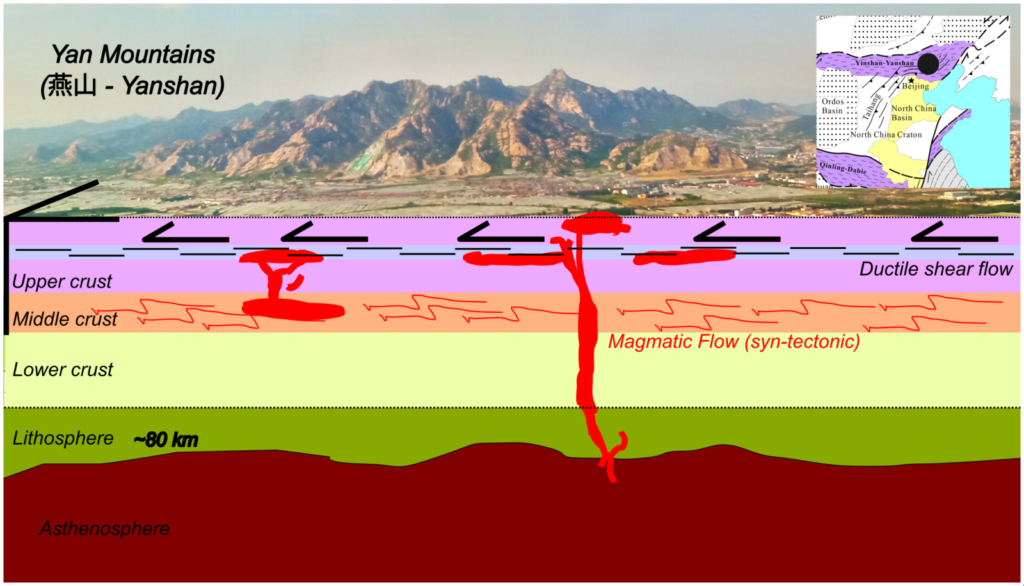
The Asian continent has fascinated the world for at least 3,000 years with its music, food, and discoveries, as well as its breathtaking landscapes. Most of these incredible landscapes are formed by mountains that can be considered geologically “recent” (such as the Cenozoic formation of the Himalayas). However, there are also ancient terrains, pre-dating the …[Read More]

Fluid injection-induced seismicity: the case of hydrofracking

Fluid injection-induced seismicity: the case of hydrofracking

Seismicity is undoubtedly an integral part of Geodynamics, since seismic data, from large-scale geophysical monitoring, can provide many valuable insights regarding the state of the Earth’s crust; seismicity, however, is not always natural, it can also be induced. In this week’s blog, we explored the subject of fluid injection-induced seismicity mainly through the lens of …[Read More]

Saskia Goes – Augustus Love Medallist 2026

Saskia Goes – Augustus Love Medallist 2026

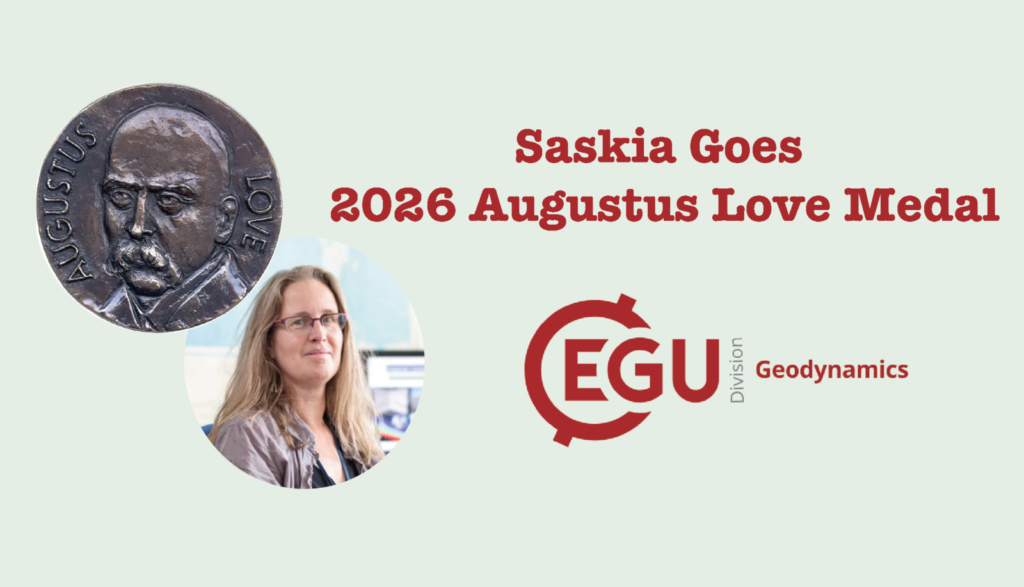
Profesor Saskia Goes is the receipent of the 2026 Augustus Love Medal of the Geodynamics Division for her outstanding contributions to our understanding of Earth structure and evolution, using integrative research at the confluence of geodynamics, seismology, mineral physics, and geochemistry. In this interview, she talks about her professional journey and shares her thoughts on …[Read More]

The Geodynamics Division @ EGU26

The Geodynamics Division @ EGU26

The EGU General Assembly is only a few weeks away, and attendees are starting to plan their schedules into what promises to be a week full of exiciting presentations and events. Don’t know where to start planning your week? We got you covered! In today’s blog, we highlight the key events of Geodynamics Division and …[Read More]

The sassy scientist: we regret to inform you

The sassy scientist: we regret to inform you

With the winds of change brought by a new season, I’m back to help my readers to get out from dispair. This time a reader ask: Dear Sassy scientist, How do I deal with rejection during a job hunt? Dear Sarah, I hear you writing from the edge of despair. Let’s be honest: you’ve chosen …[Read More]

Interview ECS GD Awardee 2026 – Sia Ghelichkhan

Interview ECS GD Awardee 2026 – Sia Ghelichkhan

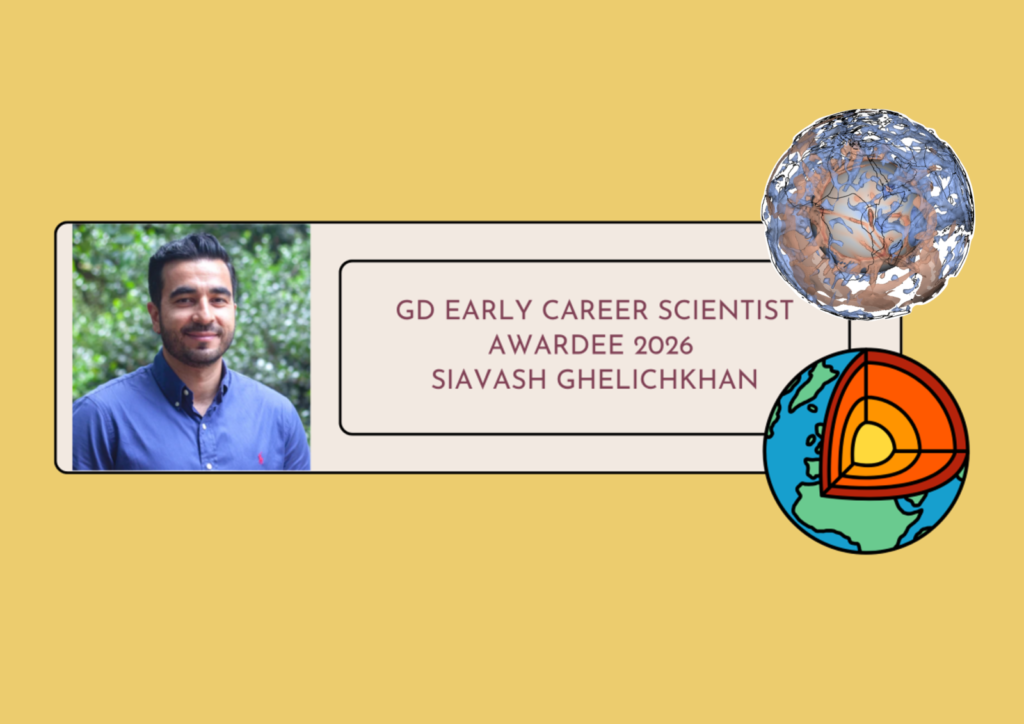
The Division Outstanding Early Career Scientist Awards highlight exceptional scientific contributions made by an Early Career Scientist in the fields of Earth Sciences associated with each division. This year, the prestigious recognition for the Geodynamics Division has been awarded to Dr. Sia Gelichkhan, from the Australian National University. Today we have the pleasure of interviewing …[Read More]

Subduction interfaces are complicated – and that’s their beauty!

Subduction interfaces are complicated – and that’s their beauty!

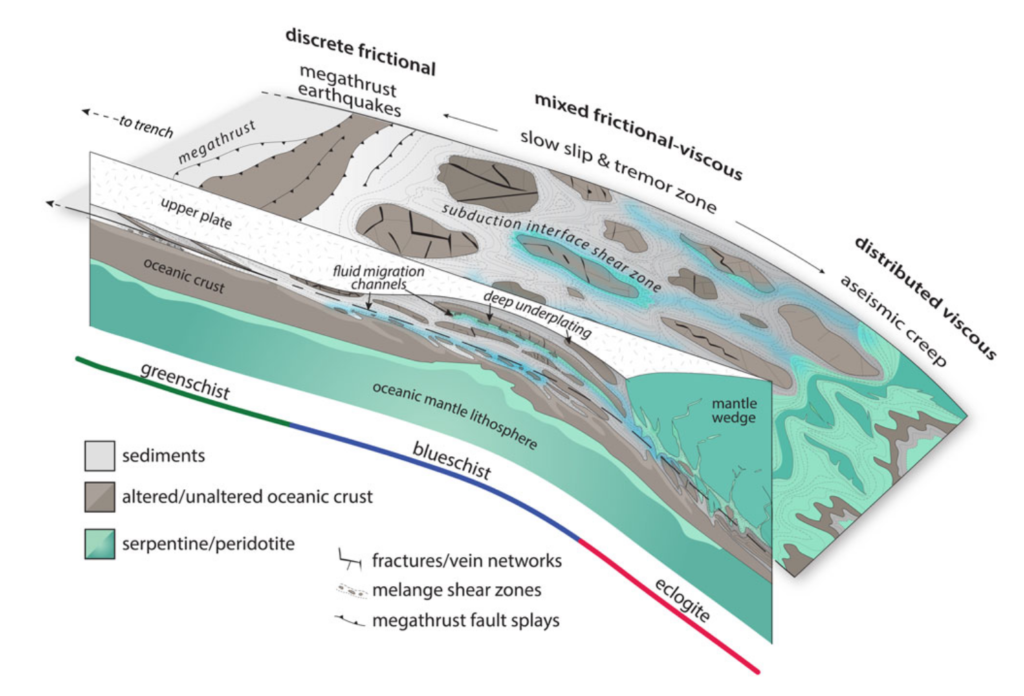
The dynamics of subduction zones are strongly influenced by the subduction interface. Understanding its rheology enables geodynamic modellers to better simulate these systems and unravel the fundamental processes that govern them. In today’s blog post, we explore subduction interface rheology and discuss effective approaches for modelling it. What is a subduction interface? I first met …[Read More]

Under pressure: measuring stress within the crust

Under pressure: measuring stress within the crust

At the geodynamic scale, tectonic forces guide the distribution of stress. Stress in the Earth is not constant, but varies through space. Variations in gravitational energy caused by changes in mass distribution within the Earth, forces acting at plate boundaries, and basal mantle drag all cause stress to vary and act in different directions. Overall, …[Read More]