Michaela is stuck at home, both physically and mentally, with the hope that she does not catch nor spread the new COVID-19 virus. Without the comforting environment of her own university desk, and not the itchy couch at home that’s hardly been sat on, she wonders: What is the best approach to efficiently work from home? Dear Michaela, Feeling your pain of enforced home isolation, I wonder to ...[Read More]
Graduate students worldwide deserve living wages
‘Now, more than ever, we need science’, thinks the editor of this blogpost as he works from his small studio paid by a rent-burdened academic salary while under lockdown in California due to the COVID-19 pandemic. However, the need for an open, fair, inclusive science seems to be ignored all across the world by policy makers and university administrations, who refuse to pay graduate st ...[Read More]
The Sassy Scientist – Niche Necessity
T-Low feels a little insecure whether that specific niche of the broad spectrum of science merits all of the effort put in: Every now and then I’m starting to wonder if my little branch of science is really worth doing? And if not, which one is? And why? Dear T-Low, Stay doing what you’re doing. Even if you feel a little bit underwhelmed by an apparent lack of interest sometimes. Don&# ...[Read More]
Introducing the social media team!
Did you know the EGU Geodynamics division has a social media team? No? Well, now you do! A small, but incredibly dedicated team, these are the people shouting geodynamics from the online rooftops every single day! They are responsible for the posts on facebook and the lively tweets on twitter. What? You don’t follow us on social media yet? Well, I’ll forgive you if you take a second to ...[Read More]
The Sassy Scientist – Co-author Craziness
Agata struggles with the many and diverse opinions thrown at her whilst endeavoring to finish a paper: What is the perfect number of co-authors for a paper? Dear Agata, As few as possible. Limit yourself to the people you really cannot avoid. Such as those collaborators that have actually provided a significant contribution to the body of work presented in a manuscript. For every researcher this d ...[Read More]
Should we still study LLSVPs?
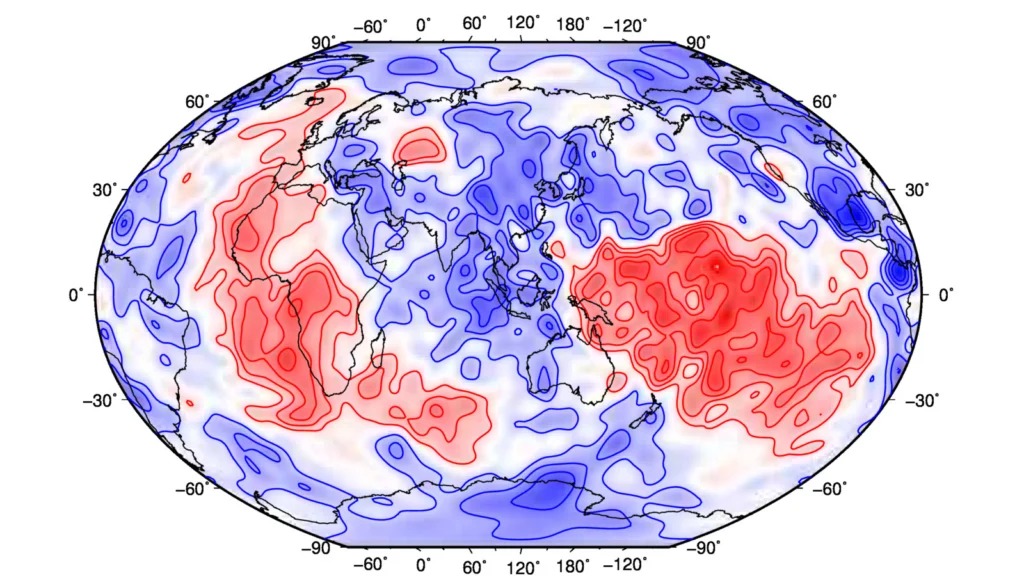
All blobs are equal, but some blobs are more interesting than other blobs. In this new Wit & Wisdom post, Jamie Ward, PhD student in seismology at the University of Leeds, United Kingdom, explores this age-old saying and discusses whether or not LLSVPs are the most important blobs in our lives. Also, there is a picture of a dog. It makes sense, I promise. Large Low Shear Velocity Provinces (LL ...[Read More]
The Sassy Scientist – Stochastic Sequels
Tuckered from simply contemplating the infinite myriad of possibilities arising behind the dandy phantasmagoria at the pristine horizon which is a doctorate, Maite considers: Should I start a postdoc directly after my PhD? Dear Maite, I would. If you want to stay in science, that is. Consider yourself a prospector initiating the exploration of an unsullied landscape. A wonderful scenery of excitin ...[Read More]
Postdoc: Europe vs. United States
Being a postdoc provides you with an extended training period after receiving your PhD. It is the pathway towards becoming an independent scientist; therefore, it is important to undertake your postdoc in a place where career development is enhanced and supported. Let’s start with a basic yet crucial question: why should I move to another continent? The United States remains the most popular coun ...[Read More]
The Sassy Scientist – Climate Change Causality
Tom Doehne has been watching the news reports on the effects of climate change on human civilization. Dumbfounded that the main stream has not peered beyond the variable intensity of weather patterns and the mere notion of rising sea levels, he pondered: Will the increase in ocean level trigger more slippage along subduction zones? Dear Tom, In terms of geophysical research angles this really is a ...[Read More]
Science. Exploration. Survival.
A scientific career can be a struggle. This week Dave Stegman, Associate Professor at Scripps, draws parallels between being a scientist and being an Antarctic explorer. He dangled in the crevasse, unable to touch the sides; the abyss beneath was hundreds of feet deep; the rope he was suspended from was 14 feet long, connected above to the sledge he had been hauling. Was it luck when his sledge ha ...[Read More]