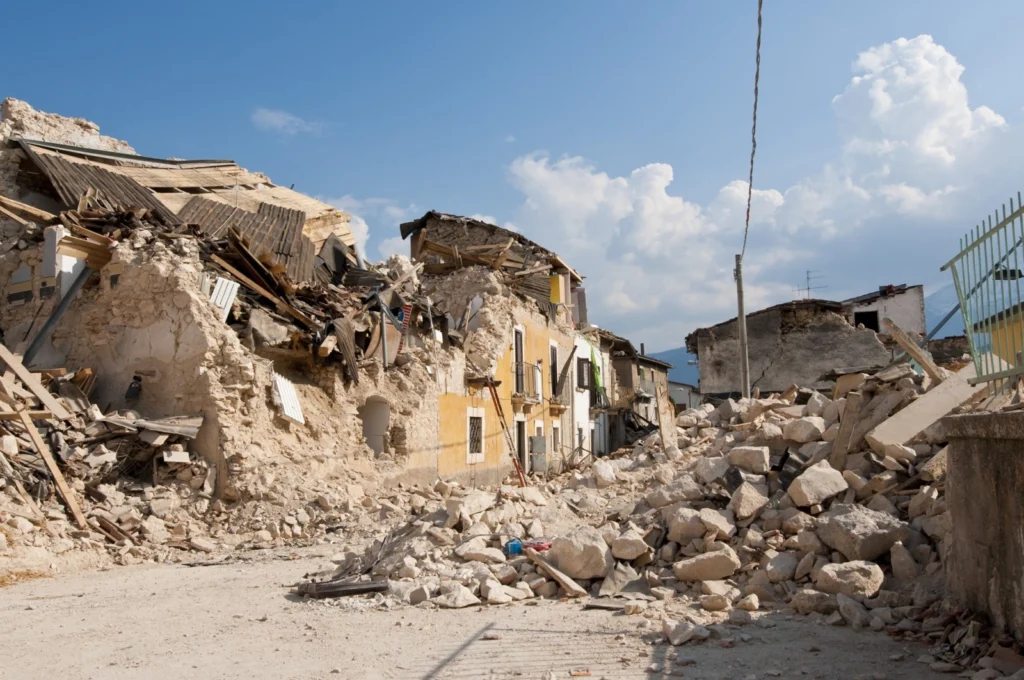
Though giant earthquakes are disastrous, they provide essential information to investigate earthquake physics. In this week’s news and views, Thyagarajulu Gollapalli, a PhD student jointly from the Monash University and the Indian Institute of Technology, Bombay, discusses our present understanding of such big earthquakes and how advanced numerical models will help to get a more precise picture of ...[Read More]
Locking people up to program — or: “What is a hackathon?”
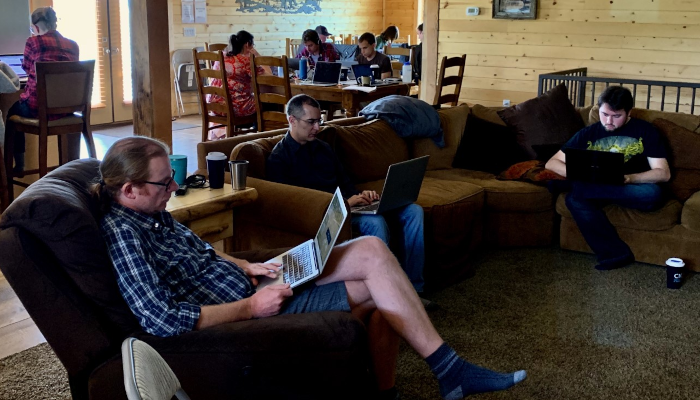
This week the seventh yearly hackathon of the geodynamics code ASPECT is taking place. But what actually is a hackathon, why is it useful and how did it get started in the first place? This week, Wolfgang Bangerth, one of the founders of ASPECT, explores all these questions for us. Due to the intensity of a hackathon, he wrote this article before the start of the hackathon. It’s really not p ...[Read More]
The Sassy Scientist – Picturing The Perfect Petting Zoo
Kamal is happy, trotting around academia with a laptop in one hand, a cup of coffee in the other, and a faint grin on his face as he contemplates how to tackle the next big questions in geodynamics. Amazed that others do not consider academia as a radiant beacon on the horizon of potential career pathways, he is curious: If you were not a scientist, what would you be? Dear Kamal, I suppose I would ...[Read More]
The two faces of Mars
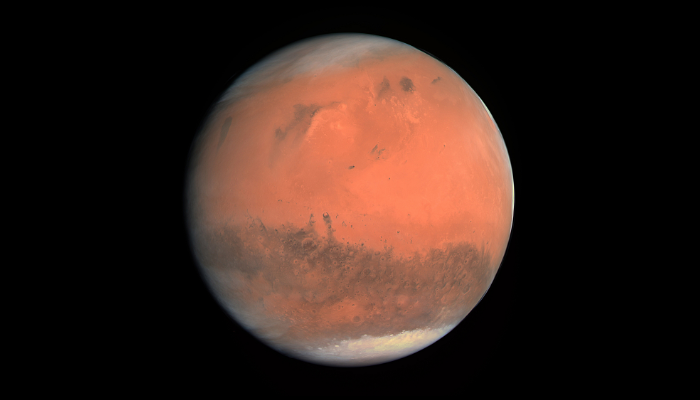
In this week’s blog post, we will learn more about the past of our neighbouring planet Mars. Kar Wai Cheng, PhD student at the Institute of Geophysics at ETH Zurich, is talking about the Martian dichotomy and how it could have formed. Humans have recognized Mars for a very long time. One of the earliest records of Mars is seen on a skymap in the tomb of an ancient Egyptian astronomer. By tha ...[Read More]
The Sassy Scientist – The Cricetinae Model
Despite workshops and seminars and conference sessions and Zoom colloquia, of which Geraldine has attended many, one big question remains in geophysics: What drives plate tectonics? Dear Geraldine, Slab pull? Ridge push? Mantle drag? Continental keels? Super plumes? Mantle wind? Expanding Earth? God? Nope, there is only one explanation that truly fits the data and passes the common sense test: The ...[Read More]
What happens when two worlds collide?
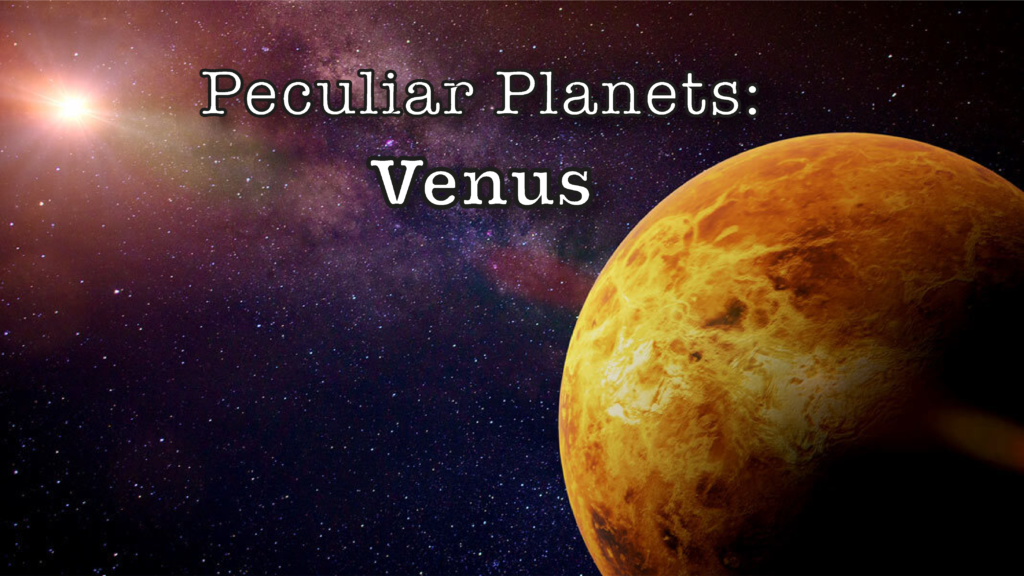
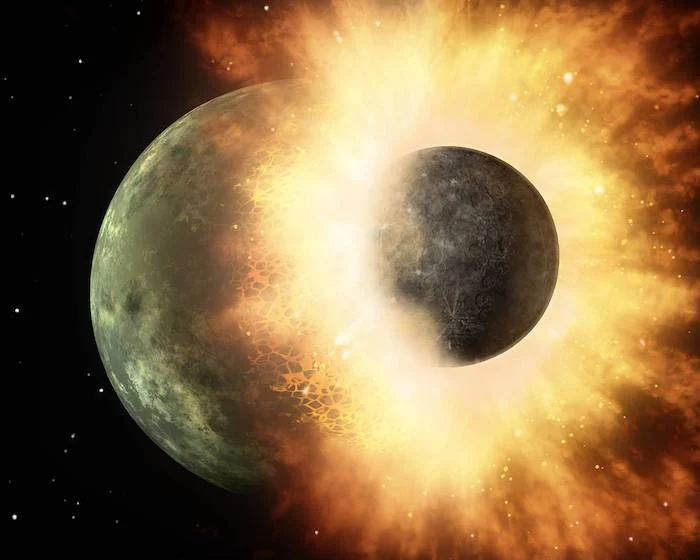
Why does the Moon have a very small core and Mercury one that makes up roughly 85% of the planet’s radius? Why are humans doing research in geoscience and not some evolved version of dinosaurs? In this week’s blog post, Harry Ballantyne, PhD student at the Department of Space and Planetary Sciences at the University of Bern, is talking about large-scale collisions and how they can answ ...[Read More]
The Sassy Scientist – Flavours of mantle rheology
While drowning bacon in maple syrup, Eduardo has been wondering: Which rheology best describes the mantle? Dear Eduardo, You sound like a numerical modeller to me: someone who wants an equation (and one that actually works on top of it!) to describe the rheology of 84% of Earth’s total volume. You seem to seek one glove that fits all, and I am afraid to disappoint, but our planet does not wo ...[Read More]
How to fall in love?
Ah, love – that elusive feeling most people search for. It can be hard to find and hard to hold on to. Let me help you out. This week, I will give you 10 definitive tips to find your perfect match and fall and stay in love with your research. 1. Size doesn’t matter Some people like big, broad research topics, while others like smaller, niche research topics for which you really need to dive ...[Read More]
The Sassy Scientist – A Last Minute Lark
Tatiana feels the pressure. A never-ending workload, a busy home life and unparalleled expectations of her own devising leave her with this: Why does everything have to be last minute in academia? Dear Tatiana, Last minute? Don’t know what you’re talking about. Nothing is last minute in case you’ve mapped out your activities properly beforehand. Do you find it difficult planning your to-do list an ...[Read More]
Baking geological cakes!
Who doesn’t love baking? Seriously, baked goods are the best: with or without gluten, with or without chocolate. But you know what makes every bake out there even better? A geological theme. You heard it here first! This week, Ruth Amey, postdoctoral researcher and programme manager of the Earth Observation Center for Doctoral Training at the University of Leeds, United Kingdom, discusses th ...[Read More]