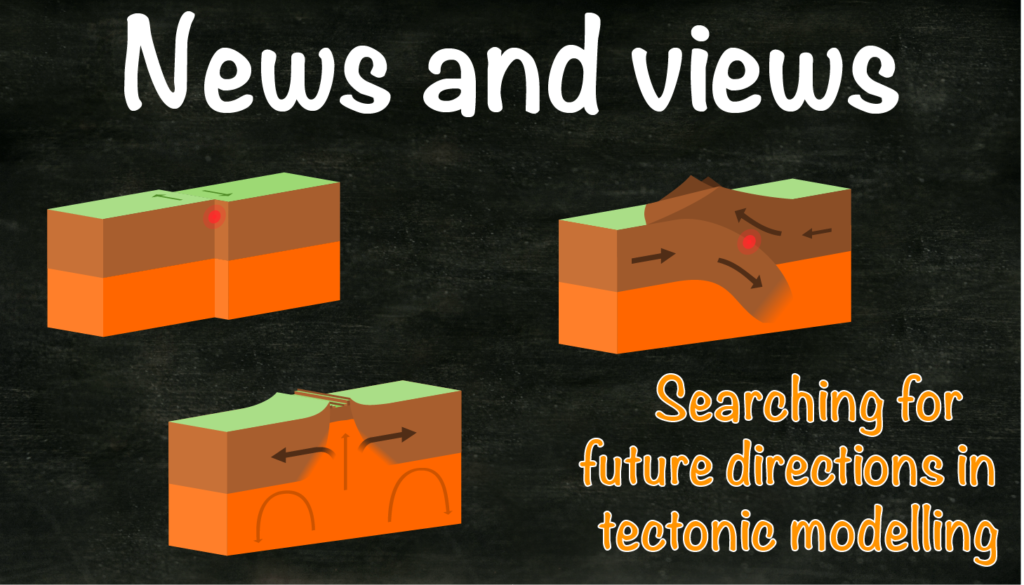

Geoscientists frequently use forward geodynamic simulations to test hypotheses derived from geophysical and geologic observations. While numerical simulations of lithospheric deformation have lead to key advances in our understanding of tectonic processes, in many cases it remains difficult to ascertain whether numerical models reproduce observations for the correct underlying regions. This week, ...[Read More]
Iron volcanism on metallic asteroids?
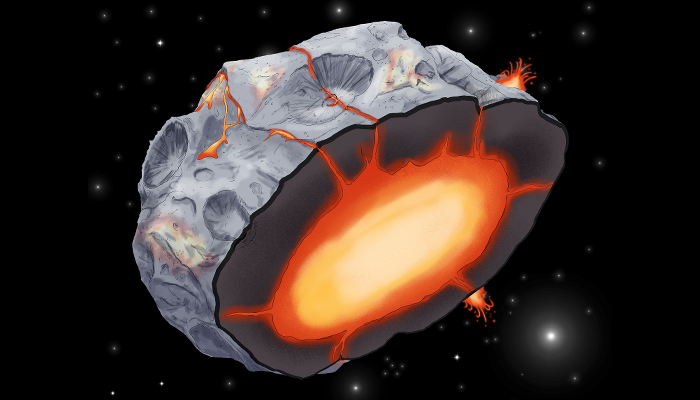
This week, Francis Nimmo, professor in the Department of Earth and Planetary Sciences (University of California Santa Cruz), tells us about volcanism on metallic asteroids! Around and after the formation of the solar system (4.5 billion years ago onwards), volcanoes on some of the gigantic bodies of the asteroid belt might have erupted … iron. Explanations. One way in which we can learn abou ...[Read More]
How the EGU works: Experiences as GD Division President
In a new regular feature, Paul Tackley, president of the EGU geodynamics division, writes about his role as a president, and gives us an insider’s view on how EGU works and is preparing for the future. Stepping into the role of GD Division President has given me a big learning experience about how the European Geosciences Union is run and about how members are represented and can participa ...[Read More]
On the resolution of seismic tomography models and the connection to geodynamic modelling (Is blue/red the new cold/hot?) (How many pixels in an Earth??)
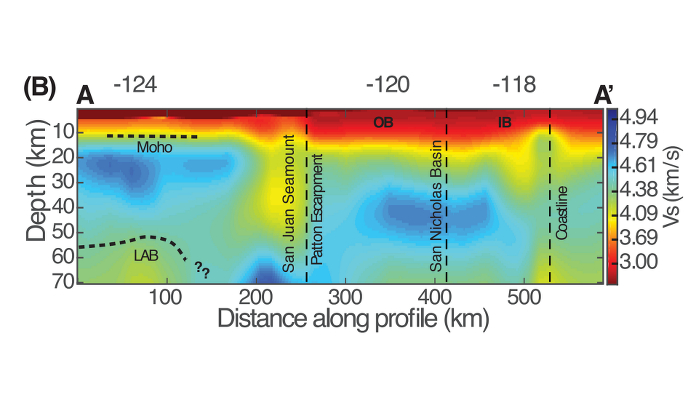
Seismologists work hard to provide the best snapshots of the Earth’s mantle. Yet tomographic models based on different approaches or using different data sets sometimes obtain quite different details. It is hard to know for a non specialist if small scale anomalies can be trusted and why. This week Maria Koroni and Daniel Bowden, both postdocs in the Seismology and Wave Physics group in ETH ...[Read More]
How to make a subduction zone on Earth
Subduction zones are ubiquitous features on Earth, and an integral part of plate tectonics. They are known to have a very important role in modulating climate on Earth, and are believed to have played an essential part in making the Earth’s surface habitable, a role that extends to present-day. This week, Antoniette Greta Grima writes about the ongoing debate on how subduction zones form and persi ...[Read More]
Conferences: Secret PhD Drivers
Conferences are an integral part of a PhD. They are the forum for spreading the word about the newest science and developing professional relationships. But as a PhD student they are more likely to be a source of palpitations and sweaty palms. This week Kiran Chotalia writes about her personal experience on conferences, and lessons learnt over the years. My PhD is a part of the Deep Volatiles Cons ...[Read More]
Thoughts on geological modelling: an analogue perspective
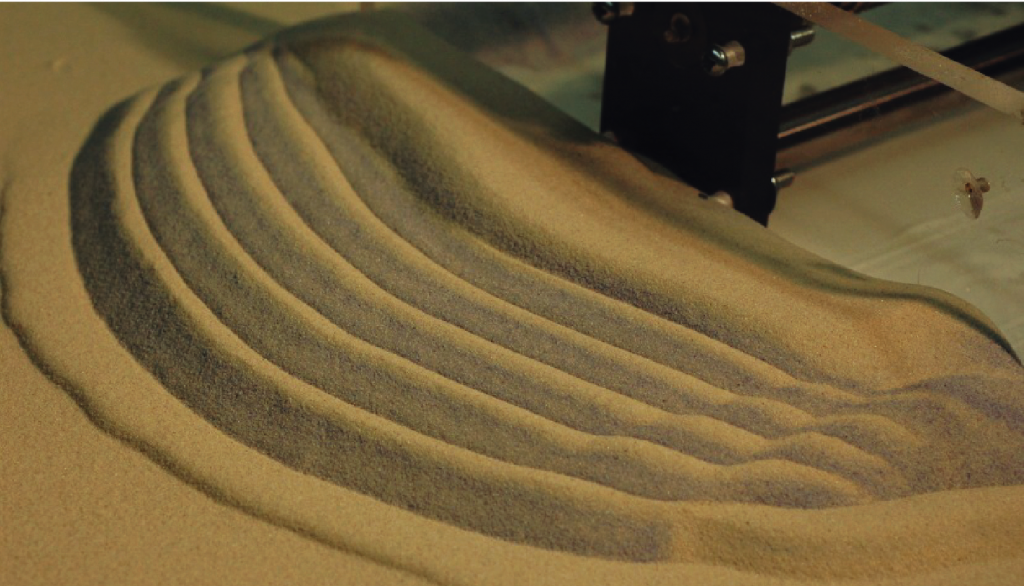
In geodynamics we study the dynamics of the Earth (and other planets). We ground our studies in as much data as possible, however we are constrained by the fact that pretty much all direct information we can collect from the interior of the Earth only shows its present-day state. The surface rock record gives us a glimpse into the past dynamics and evolution of our planet, but this record gets spa ...[Read More]
Oceans on Mars: the geodynamic record
Apart from our own planet Earth, there are a lot of Peculiar Planets out there! In this series we take a look at a planetary body or system worthy of our geodynamic attention, and this week we are back to our own solar system, more precisely to our neighbour Mars. In this post, Robert Citron, PhD student at the University of California, Berkeley, writes about the links between oceans, shorelines, ...[Read More]
It’s just coding … – Scientific software development in geodynamics
As big software packages become a commonplace in geodynamics, which skills should a geodynamicist aim at having in software development? Which techniques should be considered a minimum standard for our software? This week Rene Gassmöller, project scientist at UC Davis, Computational Infrastructure for Geodynamics, shares his insights on the best practices to make scientific software better, and ho ...[Read More]
Magma oceans
The Geodynamics 101 series serves to showcase the diversity of research topics and methods in the geodynamics community in an understandable manner. We welcome all researchers – PhD students to professors – to introduce their area of expertise in a lighthearted, entertaining manner and touch upon some of the outstanding questions and problems related to their fields. For our latest ‘Geodynamics 10 ...[Read More]