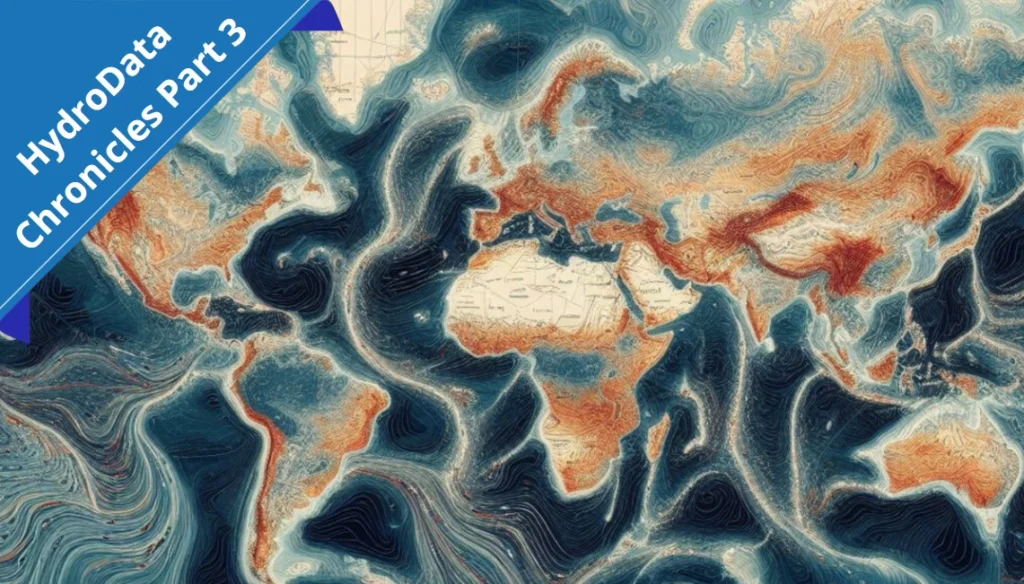
Welcome back to the HydroData Chronicles! In our previous post, we explored the innovative pRecipe package developed by Mijael Rodrigo Vargas Godoy and Yannis Markonis in 2023 and its impact on precipitation research. Today, we shift our focus to Italy with the introduction of the Italian FlOod and Catchment Atlas (FOCA) database, introduced in 2023 by Pierluigi Claps, Giulia Evangelista, Daniele ...[Read More]
How to Convene an EGU Session in Hydrology
Have you ever thought about convening an EGU session instead of just attending them? Until September 9th you have the chance to do just that for the 2025 General Assembly, which will be taking place from April 27 to May 2 in Vienna, Austria. Convening a session can sound a bit intimidating, especially if you’ve never done it before or if you are an early career scientist. However, it’s an i ...[Read More]
Call to participate to the public consultation for the Water4All-Partnership
Those of you who are active in proposal writing might know the programme Water4All Partnership – Water Security for the Planet. It is a funding programme for scientific research in freshwater with the goal to address urgent water-related challenges. The programme is co-funded by the European Union within the frame of the Horizon Europe programme (lasting until 2027) and includes 90 partners ...[Read More]
The IAHS Digital Water Globe – Increase the Visibility of Your Research in Hydrological Sciences
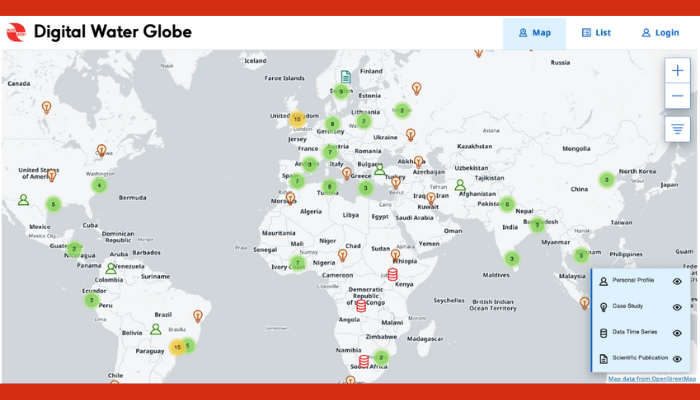
Are you looking for ways to boost the visibility of your hydrology research? Are you looking for potential collaborators for new research in a specific topic? Doing research and getting it published are two of the challenges every hydrologist faces. However, once one’s research has passed peer review and is out in the world, there is one more hurdle to clear: ensuring people see it, read it, and ...[Read More]
HydroData Chronicles: A global precipitation climatology toolbox and database
Welcome back to the HydroData Chronicles, where we uncover the hidden stories within hydrological data! In our last post, we explored a novel high-resolution, 40-year rainfall dataset covering the Contiguous United States (CONUS), developed developed by Emmanouil et al. in 2021. This time, we dive into the world of precipitation datasets with a promising new tool: the pRecipe package developed by ...[Read More]
Public engagement in science: how to position ourselves?
The recent student protests against the war in Gaza reminded all of us that being a member of the academic community requires us to reflect upon our role in society. In Switzerland, the university occupations (see SwissInfo) led to several open letter-type reactions from academic staff, either supporting the protests or on the contrary, recalling that scientists should abstain from activism. This ...[Read More]
EGU24 – A Hydrologist’s Look Back
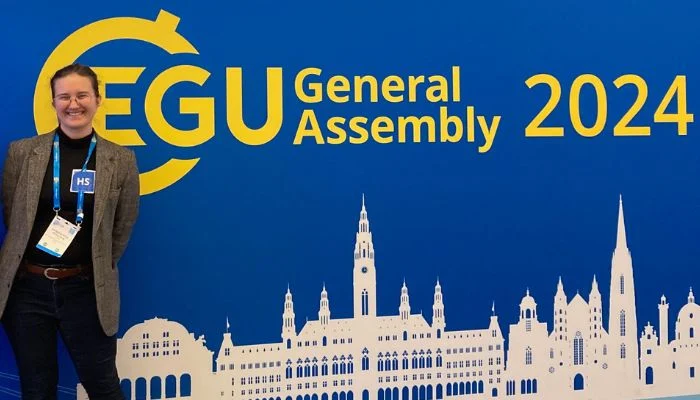
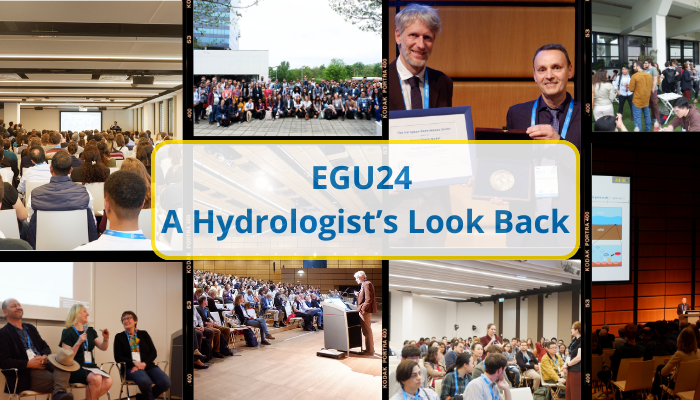
With almost 21,000 participants, the 2024 EGU General Assembly, held from 14-19 April, in Vienna and online, was the biggest one yet. For hydrologists, there were hundreds of sessions to enjoy, networking events to join, short courses to learn from, and colleagues to meet. Here’s a look back at the highlights! A look back at EGU24. Thanks to the video editing service Tasty Edits for the fantastic ...[Read More]
Do-It-Yourself (DIY) in Geoscience Miniseries – Part 3: Getting it all together – Cables, Breadboards and Circuit Boards
You got all your components for your project, so now it’s all about getting it all together. Then it’s great to be able to quickly exchange components and change wiring. That’s where a so-called “breadboard” comes in handy. It’s an easy to use device where you can connect microelectronic components without the need to solder anything. Breadboards are like pinboards for cables and microelect ...[Read More]
Using rainy day temperatures to predict the future of 100-year downpours
It’s hard to overstate the importance of so-called “rainfall frequency analysis,” or the estimation of rare rainfall probabilities such as the 100-year storm. Billions of euros worth of infrastructure and planning decisions are made every year around the world based on such statistics. Unfortunately, extreme short-duration rainfall—meaning very high rainfall rates over a few minutes to a few hour ...[Read More]
Historical evolution of water management: the example of Switzerland over 200 years
How can we use and manage natural resources more sustainably? This question stands at the core of many social, political and scientific debates about how we can reach the United Nation’s Sustainable Development Goals (SDGs). The targets are ambitious, and there is a growing consensus that rapid and extensive structural change is needed in various sectors simultaneously. However, how transformation ...[Read More]