Do you want to take on a leading role in the community of young hydrologists across the world? Then apply to become the Early Career Scientist Representative (ECS rep) of the Hydrological Sciences (HS) Division of the European Geosciences Union (EGU)! You’ll have the chance to shape the academic experience of other young hydrologists, interact …[Read More]
Hydrological Sciences
EGU General Assembly for Newcomers … or those who are coming back to it
I am finally going back to Vienna this year for the European Geosciences Union (EGU) General Assembly (GA) in April, for the first time since 2019. Strangely, I am now with this feeling of “finally back ‘home’ at the Austria Center Vienna”. I have been asking myself what is going to be different after these …[Read More]
Hydrological soundscapes: listening to hydrological regimes
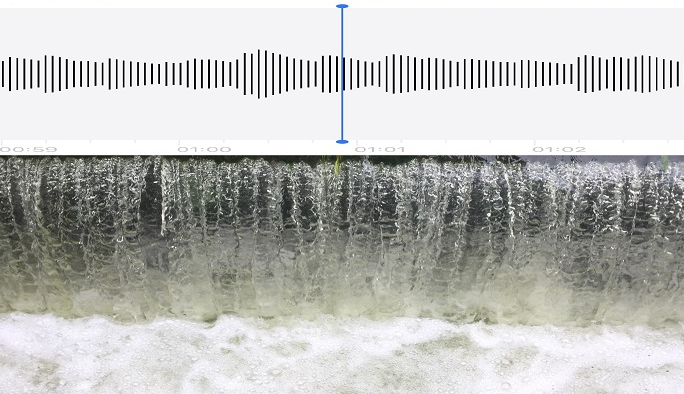
It is common to hear that a good illustration is better than a lengthy textual explanation, and we fully agree with that statement. We are used to retrieving information and understanding things through visual illustrations. In the scientific community, any paper comes with a number of plots to show the data, and diagrams to explain …[Read More]
Co-benefits of Nature-based Solutions: what we know and what we should know
Nature-based Solutions are on everyone’s lips in the view of their risk reduction potential but also their social, economic, and environmental side effects (so-called co-benefits). But how significant are these co-benefits? What are NBS? Nature-based Solutions (or in short NBS) are an umbrella term for ecosystem-based solutions to counteract societal challenges such as climate change, …[Read More]
2022 Recap of the HS Blog
Thinking about the past year, one of the highs of the year was definitely seeing the EGU General Assembly back to Vienna in May. The first-ever fully hybrid EGU meeting was a great success with over 12,000 presentations. Most of all, it was great seeing our hydrological sciences community meeting in person again. Many constraints …[Read More]
Scientific disobedience: where are our catchment boundaries?
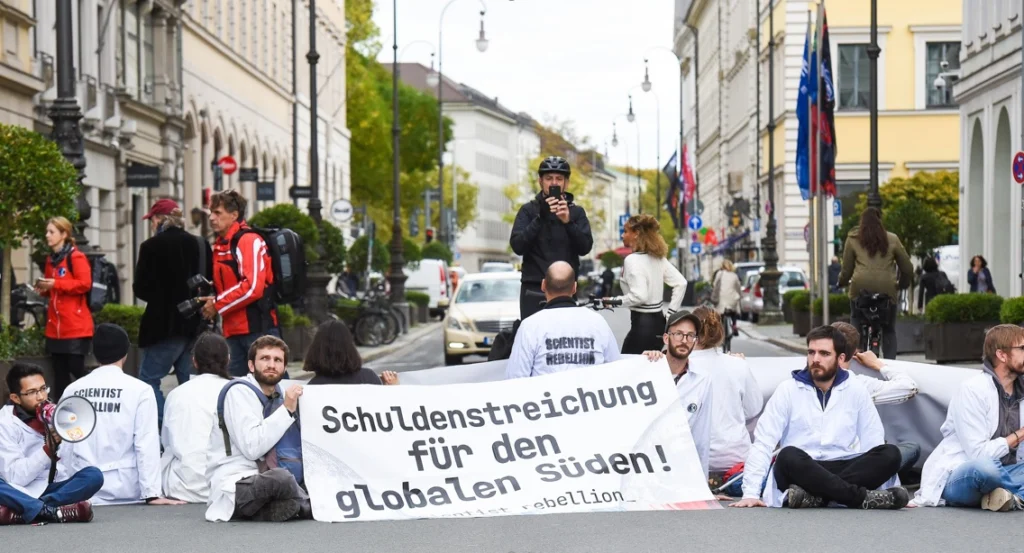
On the night preceding Halloween, somewhere in the main police station of Munich, 15 people appeared one by one before a judge of the local court who notified them their deprivation of liberty, deemed as “indispensable in order to prevent the imminent commission/continuation of a criminal/orderly offence of considerable importance for the general public”. For …[Read More]
Imagining Water Differently: Reflections from the Perspective of Critical Geography
For us humans, the world, before it is lived, has to be imagined. There is, however, something wrong with the way we have imagined the world if we consider where we are today, in particular in the face of global climate change. Let’s review how we have imagined water from the point of view of …[Read More]
A students’ wish list for field courses that leave no one behind
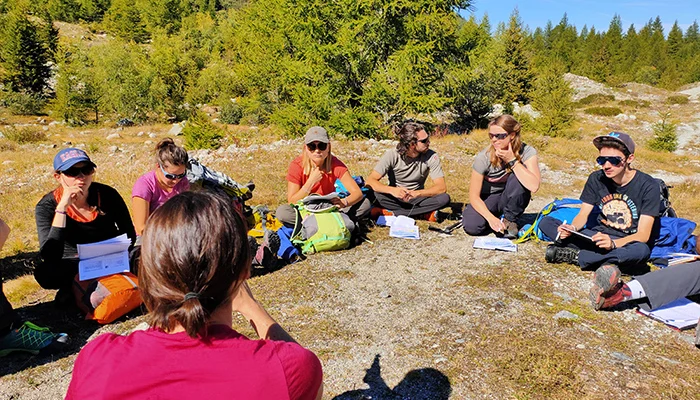
Following an inspiring workshop, as well as our own experiences and informal discussions with students and undergraduate PhD students at the University of Lausanne (see our previous blog post), we collected ideas for a wish list for safe and accessible field classes. It is not exhaustive, and we hope that it will inspire field leaders …[Read More]
Inclusive fieldwork: issues to care about
Imagine it is your first time going on a field trip. After spending hours in the lecture theatre, you are excited to get outside and see those environmental processes that so far you have only seen in graphs and figures. You get off the bus, and the first thing your professor says is: “people less …[Read More]
Making measurements accessible through low-tech hydro sensors: a step towards better agricultural water management?
“We can’t manage what we can’t measure”, said Peter Drucker, the founder of business management. Let’s see whether this applies to water management as well – especially agricultural water management. As part of my PhD project, I am wondering to what extent new (or alternative) hydro sensors may contribute to the improvement of the performance …[Read More]