Today is the World Water Day, held every year on 22 March since 1993 to celebrate water and to raise awareness of the lack of access to safe water for a large part of the world population. It is also the start of the UN 2023 WATER CONFERENCE (22-24 March), “a once-in-a-generation opportunity to unite the world around solving the water and sanitation crisis” (citation from World Water Day). I am th ...[Read More]
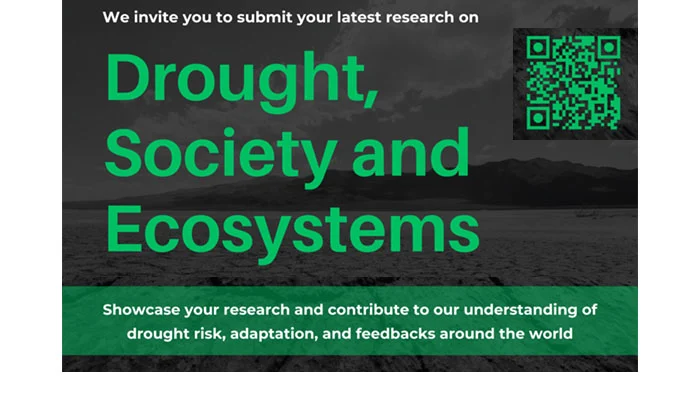
Inter-journal Special Issue “Drought, Society and Ecosystems”
Are you a scientist, researcher, student, practitioner, or stakeholder with an interest in the complex phenomenon of drought and its impacts on societies and ecosystems? If so, we have exciting news for you! The IAHS Panta Rhei scientific decade (2013-2023) working group “Drought in the Anthropocene” (DitA) is advertising an inter-journal special issue entitled “Drought, Society and Ecosystems” to ...[Read More]
From natural streams to urban consumption: Water distribution networks and their strong environmental footprint in a changing climate
Water distribution networks play a crucial role in ensuring access to clean and safe drinking water. However, they can also have significant environmental impacts, especially in the context of a changing climate. To minimize their environmental footprint, it’s important to adopt sustainable practices by implementing energy-efficient technologies. Freshwater availability: a worsening crisis ...[Read More]
Where should hydrology go?
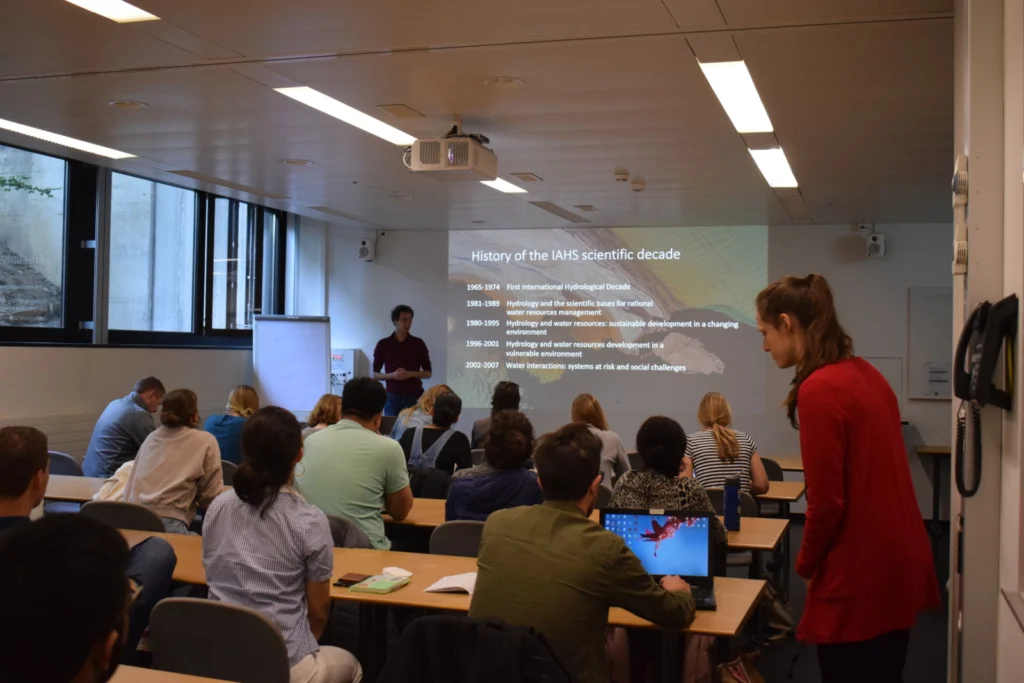
In 1965, UNESCO launched the first International Hydrological Decade to promote hydrology as an independent scientific discipline. This initiative has since grown into a global movement boosting hydrological research around a changing theme: the International Association of Hydrological Sciences (IAHS) Scientific Decades. The last two decades have shown that community efforts can shape the field o ...[Read More]
From Physics to Interdisciplinary Climate Science: Interview with Florentine Weber, Early Career Scientist Representative
Kirsten M Florentine Weber, is the Early Career Scientist (ECS) representative of the Hydrological Sciences division of the EGU. She just finished her PhD and is starting a post-doctoral fellowship in 2023. As ECS representative, it is her job to help young researchers to navigate the community – to inform them about their opportunities, to listen to them, and give them a voice within the E ...[Read More]
Call for Applications: Early Career Scientist Representative of the EGU’s Hydrological Sciences Division
Do you want to take on a leading role in the community of young hydrologists across the world? Then apply to become the Early Career Scientist Representative (ECS rep) of the Hydrological Sciences (HS) Division of the European Geosciences Union (EGU)! You’ll have the chance to shape the academic experience of other young hydrologists, interact regularly with EGU leaders, and impact the evolution ...[Read More]
EGU General Assembly for Newcomers … or those who are coming back to it
I am finally going back to Vienna this year for the European Geosciences Union (EGU) General Assembly (GA) in April, for the first time since 2019. Strangely, I am now with this feeling of “finally back ‘home’ at the Austria Center Vienna”. I have been asking myself what is going to be different after these four years, who I will meet there, if the city has changed, which places I want to see agai ...[Read More]
Hydrological soundscapes: listening to hydrological regimes
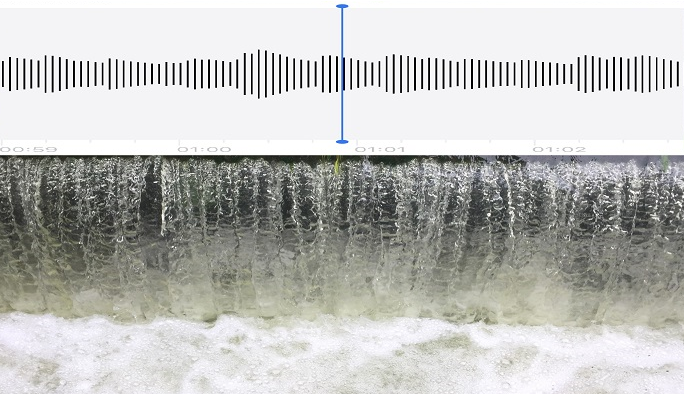
It is common to hear that a good illustration is better than a lengthy textual explanation, and we fully agree with that statement. We are used to retrieving information and understanding things through visual illustrations. In the scientific community, any paper comes with a number of plots to show the data, and diagrams to explain concepts, ideas or workflows. For example, a typical plot that hy ...[Read More]
Co-benefits of Nature-based Solutions: what we know and what we should know
Nature-based Solutions are on everyone’s lips in the view of their risk reduction potential but also their social, economic, and environmental side effects (so-called co-benefits). But how significant are these co-benefits? What are NBS? Nature-based Solutions (or in short NBS) are an umbrella term for ecosystem-based solutions to counteract societal challenges such as climate change, disaster, bi ...[Read More]
2022 Recap of the HS Blog
Thinking about the past year, one of the highs of the year was definitely seeing the EGU General Assembly back to Vienna in May. The first-ever fully hybrid EGU meeting was a great success with over 12,000 presentations. Most of all, it was great seeing our hydrological sciences community meeting in person again. Many constraints prevented us from having all the features we love in the GA meeting, ...[Read More]