The EGU Programme Committee convened in late October to finalize the scientific program for the upcoming General Assembly, GA2024. Their task involved organizing the numerous session proposals, spanning 22 divisions, including Inter- and Transdisciplinary (ITS) sessions, discussing the format of scientific sessions (do expect news for virtual posters and PICOs at GA2024!), the mentoring programme, ...[Read More]
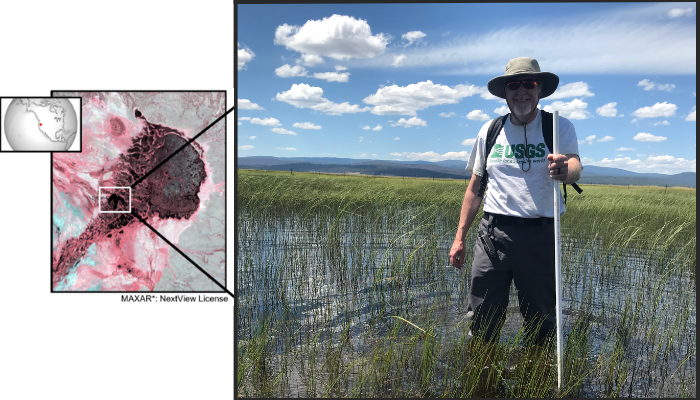
Care to get your boots wet? The ‘Partial Surface Water Challenge’
Inland surface water is a critical resource when scarce and a potential hazard when floods occur. Because the extent of surface water affects habitat condition, weather, and biogeochemical cycles, our ability to accurately track variations in surface water extent is important for resource management, science, commerce, hazard mitigation, and policy making. Openly distributed data derived from sat ...[Read More]
How far can we take the DORA rules?
DORA stands for Declaration on Research Assessment, also known as the San Francisco Declaration on Research Assessment. The declaration was developed back in 2012 during the Annual Meeting of the American Society for Cell Biology in San Francisco and has become a worldwide initiative since then. The country where you are currently reading this post has most probably signed the declaration (the cou ...[Read More]
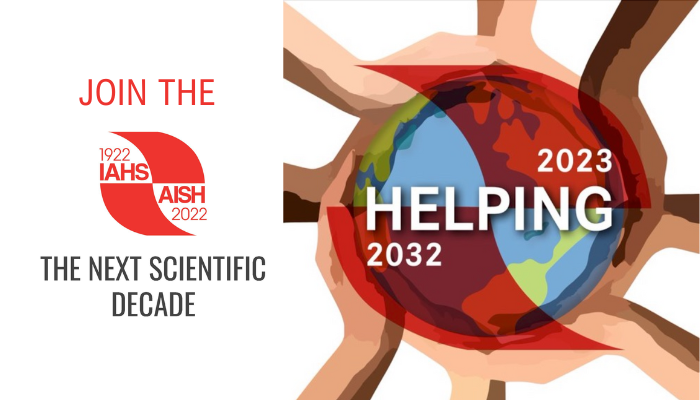
Join the IAHS’ New Scientific Decade: Science for Water Solutions – HELPING
What are the most pressing research topics in the international community of hydrologists? What are people working on? And how can you become involved? Many hydrologists, especially early career scientists, struggle to find answers to these questions. That is where the scientific decades of the International Association of Hydrological Sciences (IAHS) come in. Specifically, its latest one – ...[Read More]
Ma Terre en 180 Minutes: reducing our carbon footprint with concrete actions
As with all professional activities, one of the greatest challenges for us, geoscientists, is how to reduce our own CO2 emissions linked to our research activities over the coming decades. A collective of 57 researchers came together in 2021-2022 to promote awareness and concrete action to decarbonize scientific activities: it was the birth of Ma Terre en 180 Minutes, whose title is inspired by Ma ...[Read More]
Floods and droughts: two sides of the same hydrological coin
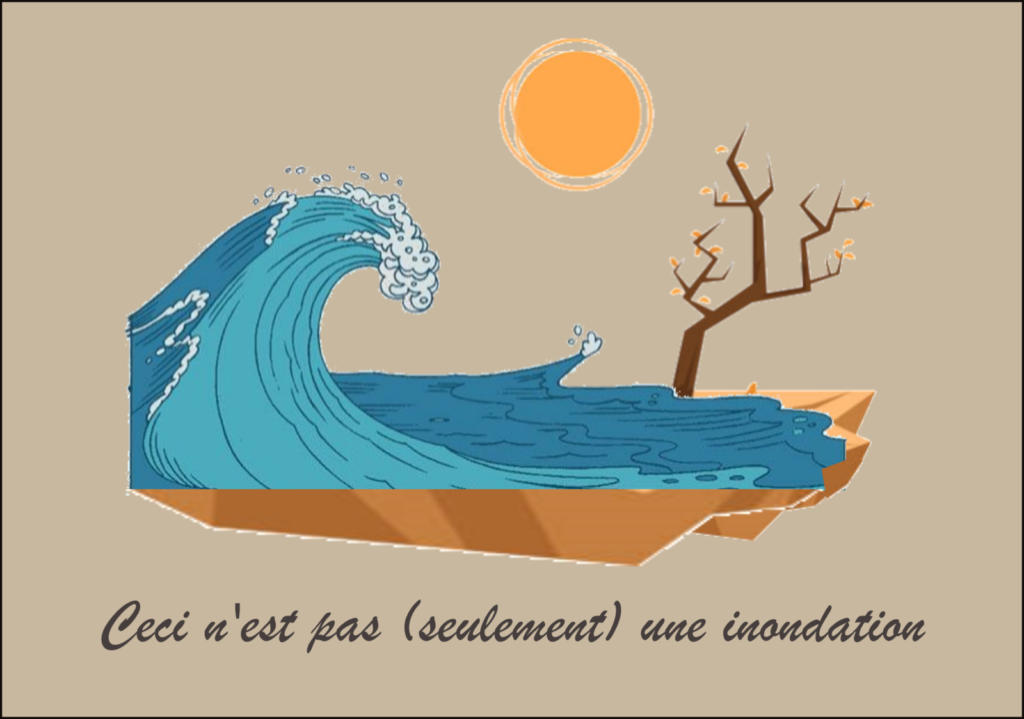
This is not (only) a flood. Inspired by Magritte’s painting: ‘Ceci n’est pas une pipe’ After an alarming dry winter, the European continent has been enduring weeks of a record-breaking heatwave across the southern regions, while coping with scattered, intense precipitation and flash floods. In Zaragoza (Spain), recent flash floods swiftly transformed the previously dry landscape into raging rivers ...[Read More]
How to organize an EGU24 Session as a newcomer? A guide for early career scientists.
Have you ever thought about organizing an EGU session instead of just attending them? Until September 14th you have the chance to do just that! It can sound a bit intimidating, especially if you’ve never done it before. But don’t worry – here’s everything you have to know. Find a Topic and Co-Conveners First off, you need to settle on a topic and find your co-conveners, i.e. the team who ...[Read More]
Exploring the History of Hydrology – Join the Effort to Map Our Discipline Across the Centuries
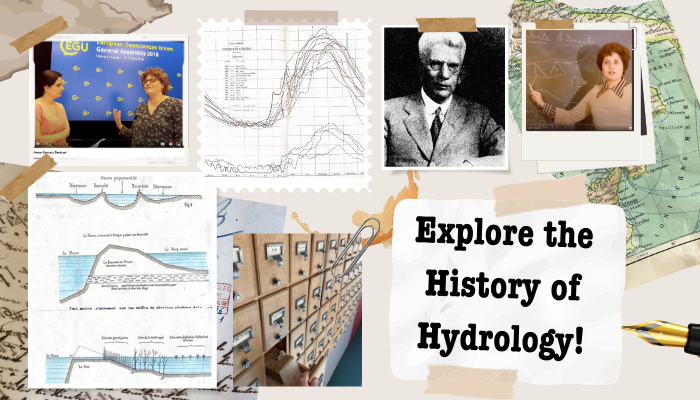
The history of hydrology stretches back millennia: from the engineers of ancient high cultures over scientific pioneers like Da Vinci and Pallisy to modern groundbreaking modellers. However, so far, few hydrologists have worked to systematically record the history of their discipline – especially in its more recent decades. That is a gap that the History of Hydrology working group of the In ...[Read More]
Ending a Decade of Hydrological Research – The IAHS’ Final Panta Rhei Symposium
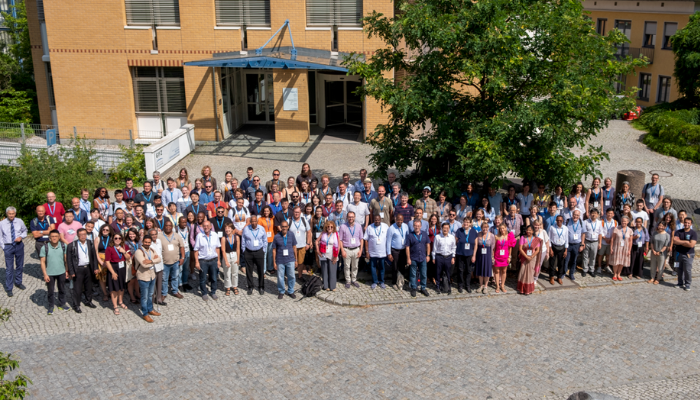
On the 10th and 11th of July 2023, the final symposium for the scientific decade “Panta Rhei – Everything Flows: Change in Hydrology and Society” of the International Association of Hydrological Sciences (IAHS) took place at the German Research Centre for Geosciences (GFZ) in Potsdam. During these two days, 150 hydrologists, engineers, social scientists and practitioners from 32 countries gathere ...[Read More]
Organizing a Workshop as an ECS: Lessons learned from “Cryosphere-groundwater interactions: a missing link in mountain water research”
Despite the importance of mountains for downstream water supply, there are large gaps in our scientific understanding of how snow and ice meltwater travels through the landscape, specifically which flowpaths meltwater takes below the surface. Plus, existing knowledge is scattered throughout various sub-disciplines of mountain hydrology: glaciology, snow science, hydrogeology, and surface hydrology ...[Read More]