As a child, I was a huge fan of LEGO. I would spend hours building and creating structures, vehicles and landscapes. For every birthday & Christmas, I wished for the newest sets of these colorful plastic bricks. While building the sets manually was fun, creating something new from my own fantasy was even better. It seemed like once I had a substantial amount of different bricks, combination po ...[Read More]
Do-It-Yourself (DIY) in Geoscience Miniseries – Part 1: Microcontrollers
We geoscientists need all different kinds of data: soil moisture, water-levels, snow height, radiation, precipitation height and the list goes on. However, the devices we need to generate that data are often too expensive, not available or even don’t exist. Therefore, it’s sometimes necessary to build them yourself (like many geoscientists do – those who annually present their senors p ...[Read More]
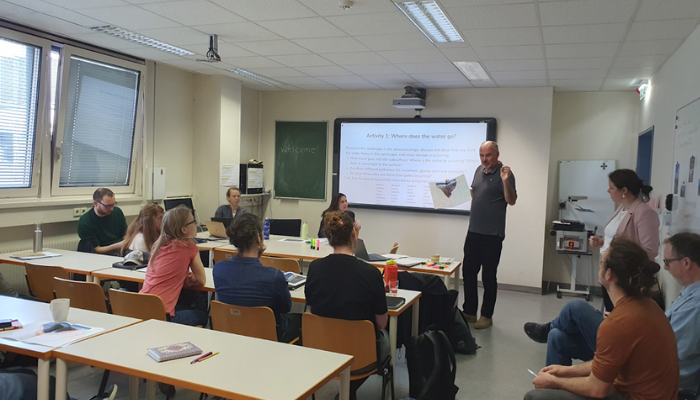
Organizing a Workshop as an ECS: Lessons learned from “Cryosphere-groundwater interactions: a missing link in mountain water research”
Despite the importance of mountains for downstream water supply, there are large gaps in our scientific understanding of how snow and ice meltwater travels through the landscape, specifically which flowpaths meltwater takes below the surface. Plus, existing knowledge is scattered throughout various sub-disciplines of mountain hydrology: glaciology, snow science, hydrogeology, and surface hydrology ...[Read More]
Running a live stream of proglacial processes
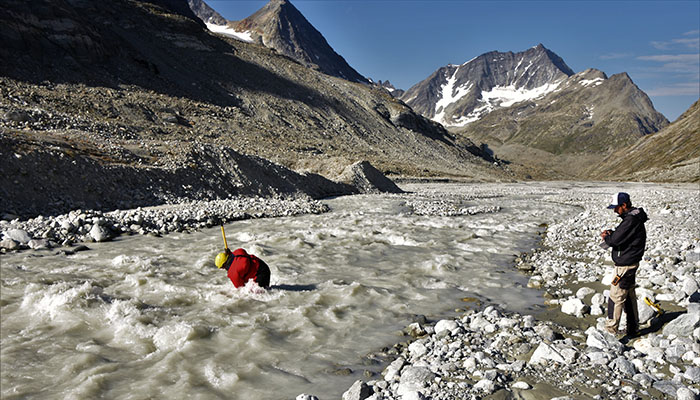
In Switzerland, nothing is really remote, but some places are more so than others. Dense infrastructure networks typically provide convenient access to research sites in the Alps where it is difficult to feel far away from home. However, this is not always the case… For us, our home for the summer is a bit different. We work at 2400 m above sea level in Southern Switzerland, in a narrow vall ...[Read More]