NP
Nonlinear Processes in Geosciences

Climate Change

A few reasons making the June 2022 French Heatwave too hot & too soon
A few reasons making the June 2022 French Heatwave too hot & too soon
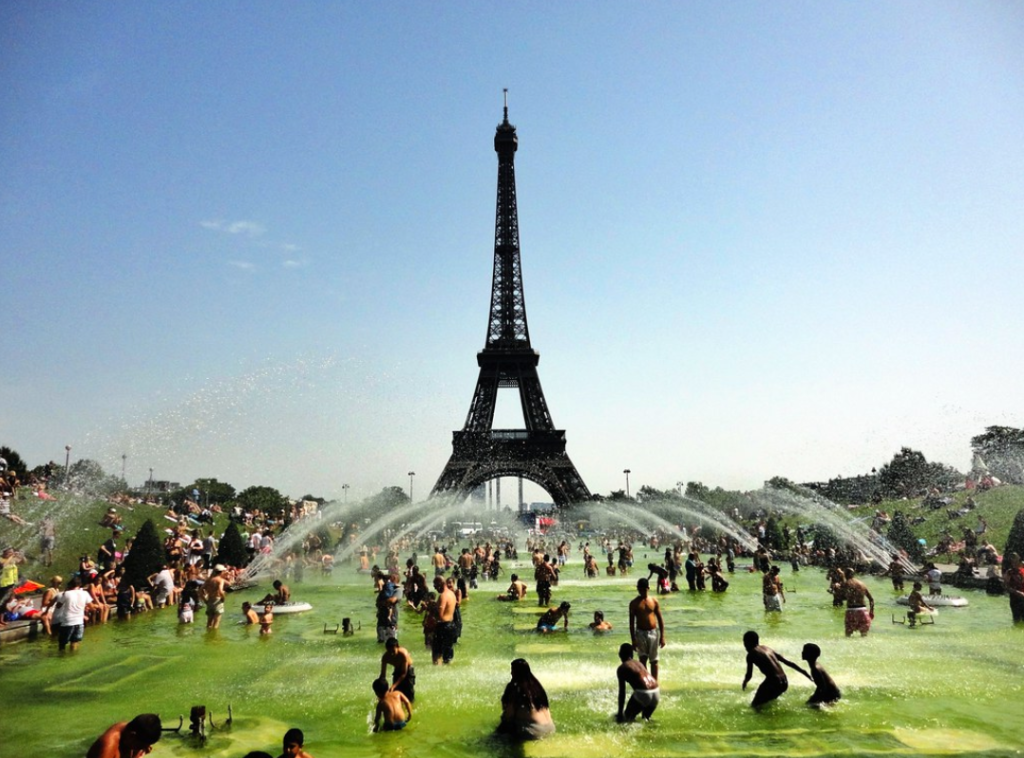
Too hot, Too soon: the thermometer has reached unprecedented temperature for a month of June in France, with the 40°C mark crossed by Friday June 17 in part of France. The IPCC AR6 report now clearly states that the probability of heatwave events such as this one has increased by a factor 3 to 5 in the present climate with respect to a counterfactual world not affected by anthropogenic greenhouse ...[Read More]

ClimarisQ: A game on the complexity of the climate systems and the extreme events

ClimarisQ: A game on the complexity of the climate systems and the extreme events

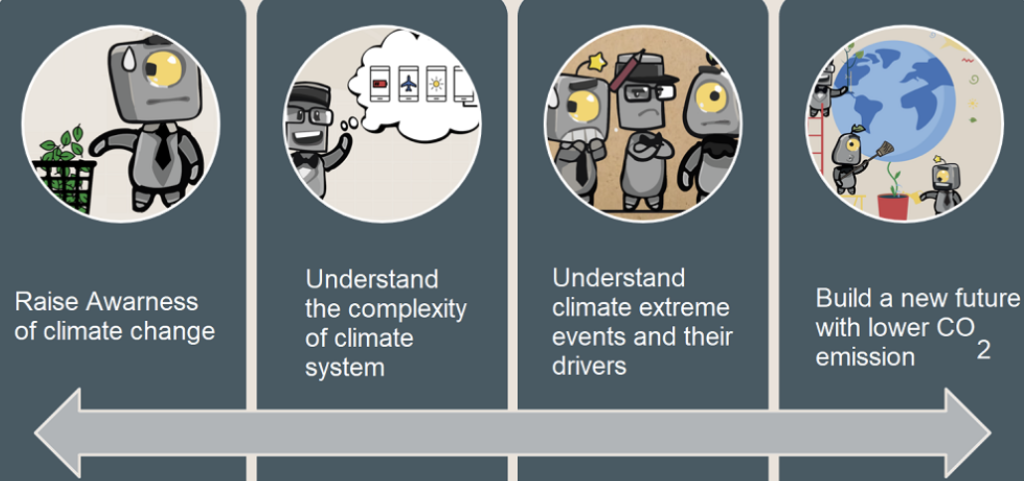
ClimarisQ is a smartphone/web game from a scientific mediation project that highlights the complexity of the climate system and the urgency of collective action to limit climate change. It is available in four languages: English, French, Spanish and Italian. It is an app-game where players must make decisions to limit the frequency and impacts of extreme climate events and their impacts on human s ...[Read More]

When weather extremes meet climate change: how do scientists attribute single events to climate change?

When weather extremes meet climate change: how do scientists attribute single events to climate change?

One of the main new points of the IPCC reports AR6 with respect to the previous ones is the increased confidence that global climate change induced by anthropogenic emissions is critically affecting the dynamics of weather extremes. For summer, and specifically over Europe, the AR6 report states that we are already observing prolonged periods of extremely warm conditions with increased droughts bo ...[Read More]

NPG Paper of the Month: “Comparing estimation techniques for temporal scaling in palaeoclimate time series”

The NPG paper of the month of July was awarded to Comparing estimation techniques for temporal scaling in palaeoclimate time series by Raphaël Hébert, Kira Rehfeld and Thomas Laepple (https://doi.org/10.5194/npg-28-311-2021). Raphaël Hébert is currently a post-doctoral researcher at the Alfred-Wegener-Institut in Potsdam (Germany) in the Earth System Diagnostics group of Thomas Laepple, where he a ...[Read More]

Exploring the multistable and multiscale climate system via noise

Could our present day “warm” climate turn into a frozen fully glaciated one, as if the whole Earth is a huge “snowball”? That was a question put forward independently by Mikhail Budyko and William Sellers in the late 60s [1,2] who made a first estimate of the necessary changes of incoming solar radiation, such that either the Arctic ice sheet completely melts, or the planet gets fully frozen. Base ...[Read More]

The 2021 Nobel Prize on Physics awarded to the physics of complex systems!

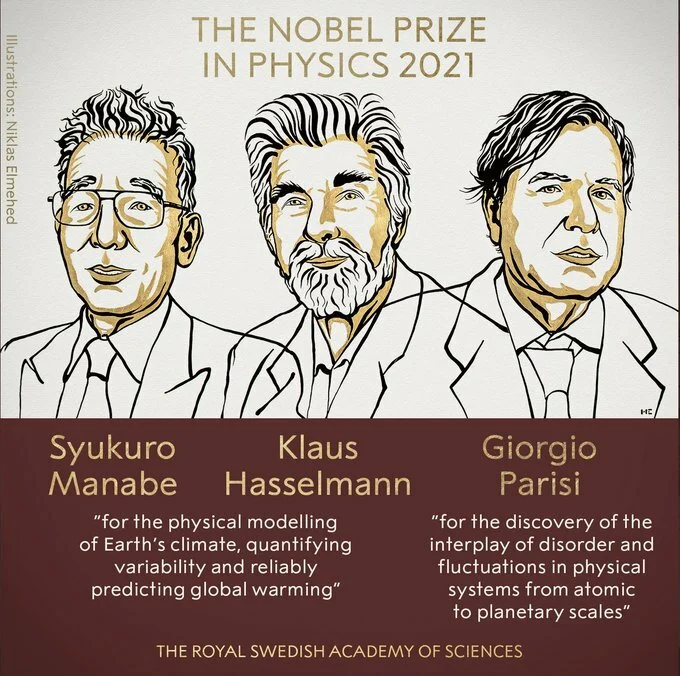
The 2021 Nobel Prize on Physics awarded to the physics of complex systems!

On October 7th, the Nobel Prize in Physics 2021 was announced. It came as a stunning surprise for the Non-linear Processes and Climate communities, the recipients of this year’s award being two outstanding senior climate scientists, Klaus Hasselmann and Syukuro Manabe, and a theoretical physicist specialized in complex systems, Giorgio Parisi. For many, this award was welcomed as a long-awaited re ...[Read More]

Three reasons why Forest-Fires worsen with climate change

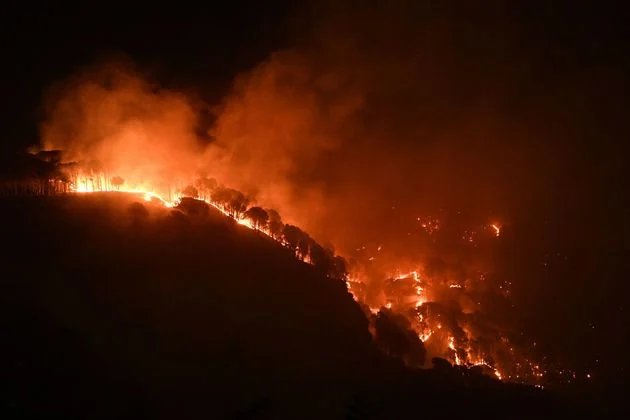
Three reasons why Forest-Fires worsen with climate change

The brand-new IPCC AR6 report clearly states that “Unless there are immediate, rapid and massive reductions in greenhouse gas emissions, limiting warming to around 1.5°C, or even 2°C, will be out of reach”. Although as human beings we do not perceive changes in global Earth average temperatures as a threat to our lives, the IPCC report also states that extreme weather events will worsen; actually ...[Read More]

When carbon emissions break nature: icebergs and their feedback to climate change

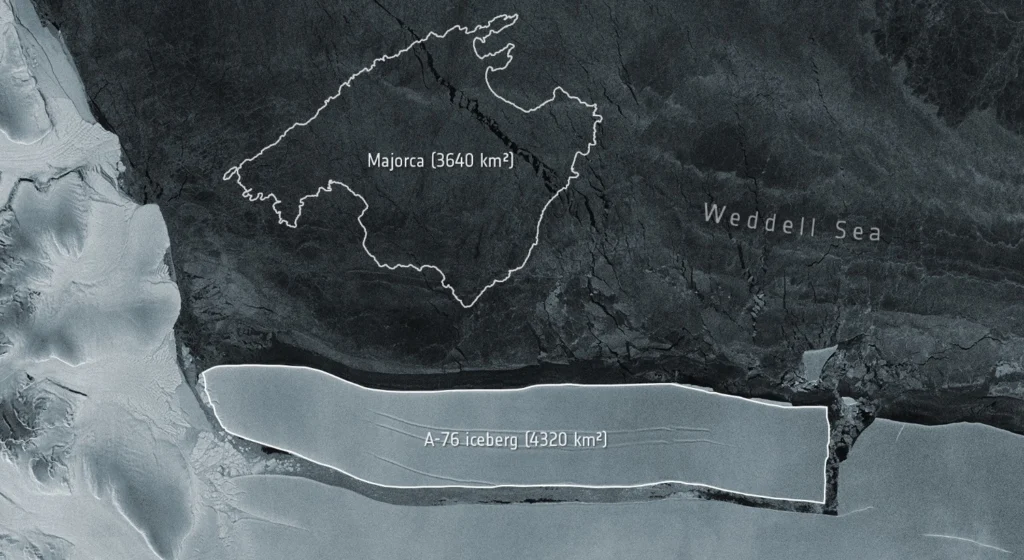
When carbon emissions break nature: icebergs and their feedback to climate change

The largest iceberg in the world, named A-76, about 170 km long and 25 km wide, is drifting away from the Ronne pack ice in Antarctica. A76, originally spotted by the British Antarctic Survey (BAS), a British polar research organization with a base nearby, will wander and melt in the Weddell Sea, according to a statement released Wednesday, May 20, by the European Space Agency. Several studies are ...[Read More]

Four reasons for still observing cold spells despite the undeniable global climate change

Four reasons for still observing cold spells despite the undeniable global climate change

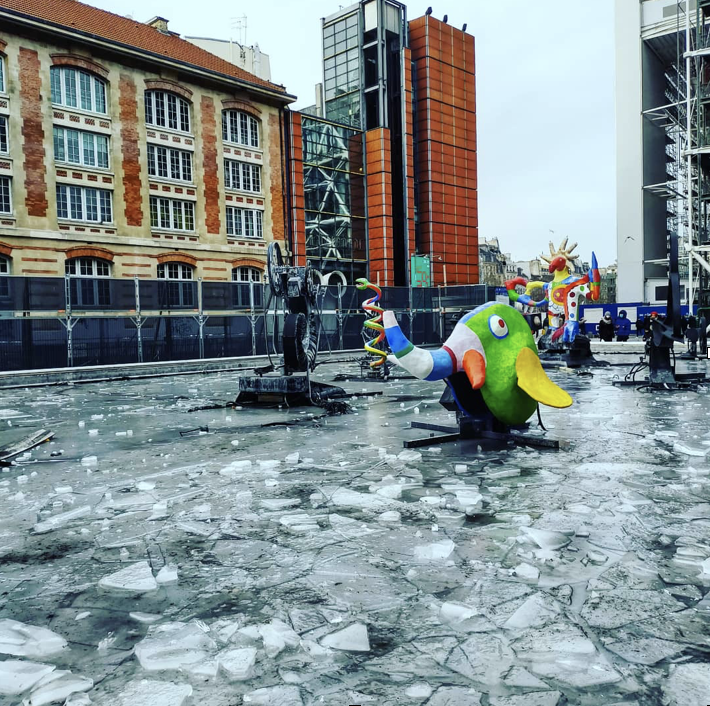
The winter of 2020-2021 has been characterized by various cold waves affecting – at different times – Western and Eastern Europe and North America.  The most striking pictures show Madrid covered by up to 40 cm of fresh snow, frozen Thames near London and Canal St Martin in Paris, heavy snow in Amsterdam and even on the Eolian Islands, just offshore Sicily. At first this seems contradi ...[Read More]

NP Campfire: “Perspectives on Climate Science: from historical developments to research frontiers”

NP Campfire: “Perspectives on Climate Science: from historical developments to research frontiers”

Recently, the European Geosciences Union (EGU) started to support a new type of event called ‘Campfires’ that will give the Divisions the freedom to run online interactive events in a way that suits their needs. This allows the EGU Divisions to encourage interactions in their research communities through virtual informal meetings. In this framework, and thanks to a group of young and established s ...[Read More]