Extreme meteorological and climatological events can be immensely damaging and disruptive to society. Understanding the physical mechanisms driving these events, and how they will evolve with climate change is crucial for informing societal adaptation to our changing climate. However, extreme events are, by definition, rare. Our capacity to understand these events is, therefore, hindered by the sm ...[Read More]
ClimaMeter: Putting Extreme Weather in Climate Perspective
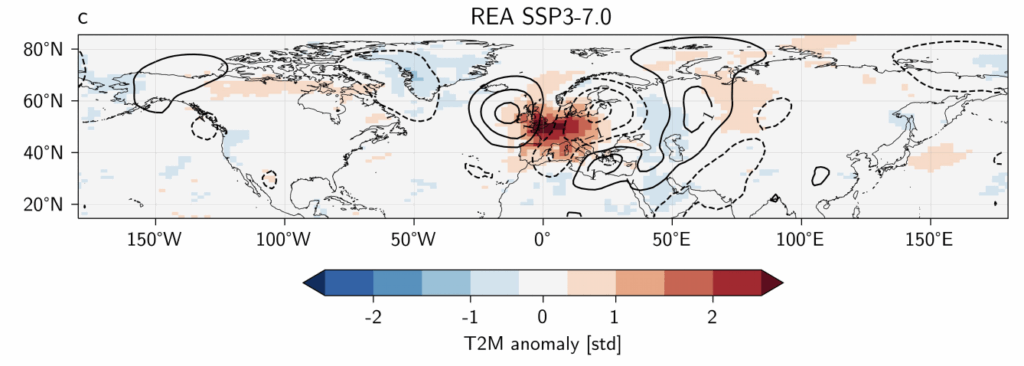
ClimaMeter offers a dynamic approach to contextualize and analyze weather extremes within a climate context. This framework provides both easily understandable immediate contextualization of extreme weather events as well as more in-depth technical analysis shortly after the events. Methodology: The foundation of ClimaMeter’s methodology lies in identifying weather conditions similar to those resp ...[Read More]
ECS SpotLight: The link between European warm-temperature extremes and atmospheric persistence
Persistent atmospheric circulation patterns are not a necessary requirement for warm temperature extremes in Europe. This key finding from a recent study led by Emma Holmberg challenges a more traditional meteorological view of persistence, which typically considers summertime heatwaves, especially in northern regions of Europe, to be synonymous with persistent atmospheric flow patterns. Furthermo ...[Read More]
Socio-economic and security implications of global heating
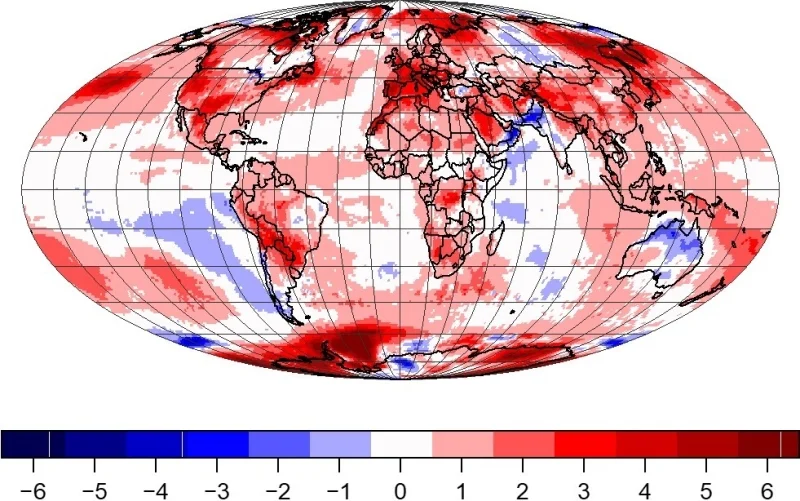
This year, like in the last few years, we are experiencing the effects of global heating in increasingly personal ways. The summer of 2022 exposed us to ever more extreme heat waves in North America, Europe, and Asia. For instance, the heat wave in India and Pakistan reached temperatures of 49C in Nawabshah, Pakistan. North America too experienced devastating heat waves and wildfires. Los Angeles ...[Read More]
ECS SpotLight: Changes in the climate dynamics have already modified characteristics and impacts of storms in France: the case study of storm Alex 2020
Extratropical cyclones play a key role in modulating the precipitation and wind in mid-latitudes and can be responsible for extreme wet and windy events. With global warming, the dynamics and thermodynamics associated with these atmospheric systems are being affected. However, due to the complexity of modelling the climate system, a challenge arises when evaluating the influence that climate chang ...[Read More]
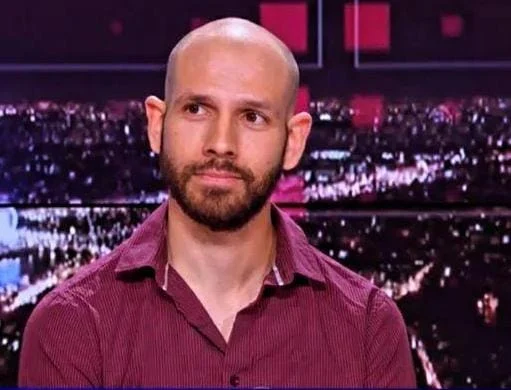
NP Interviews: Davide Faranda (CNRS) on the topic “global warming and extreme events in Europe”
Davide Faranda is a physicist at the French National Center for Scientific Research (CNRS). His main interests are devoted to the construction of a statistical mechanical and dynamical systems framework for the study of atmospheric motions. In particular, his works aim at the characterization of the metastable states of the atmospheric circulation with simple mathematical and statistical tools, an ...[Read More]
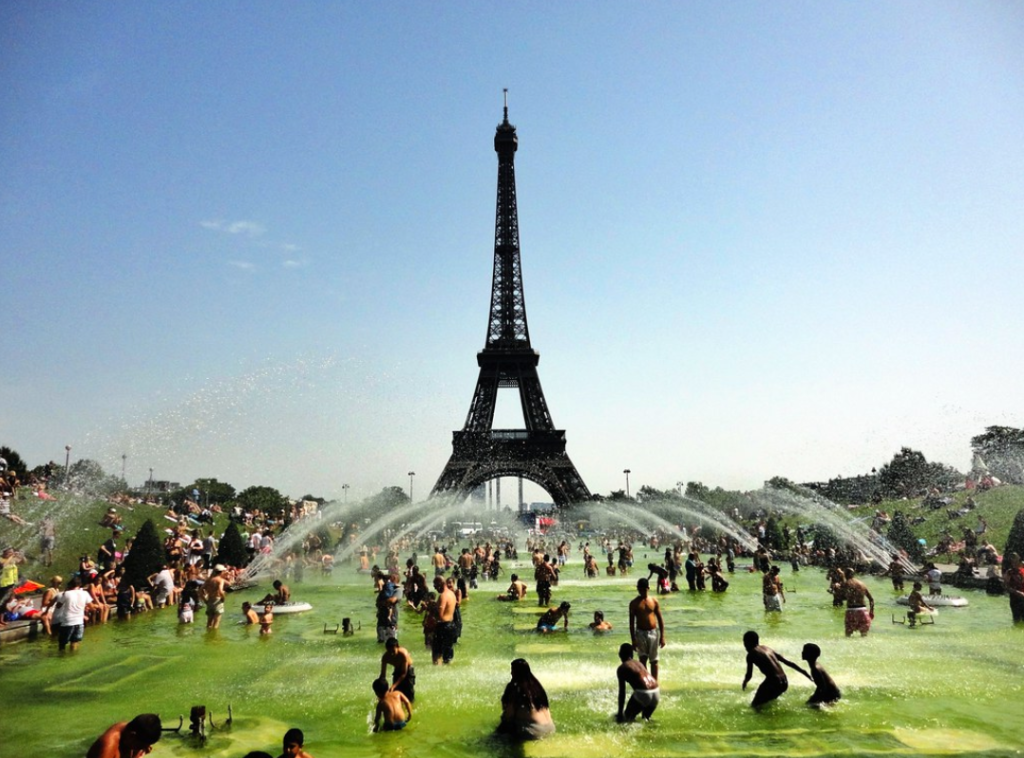
A few reasons making the June 2022 French Heatwave too hot & too soon
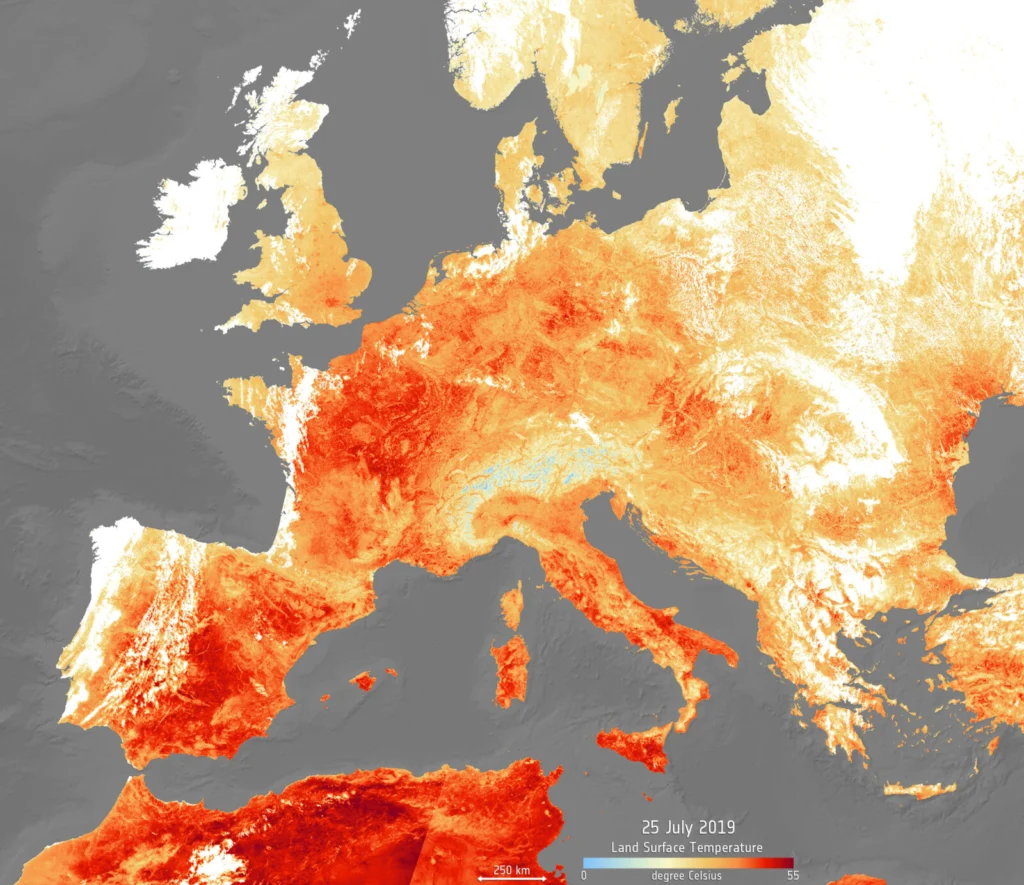
Too hot, Too soon: the thermometer has reached unprecedented temperature for a month of June in France, with the 40°C mark crossed by Friday June 17 in part of France. The IPCC AR6 report now clearly states that the probability of heatwave events such as this one has increased by a factor 3 to 5 in the present climate with respect to a counterfactual world not affected by anthropogenic greenhouse ...[Read More]
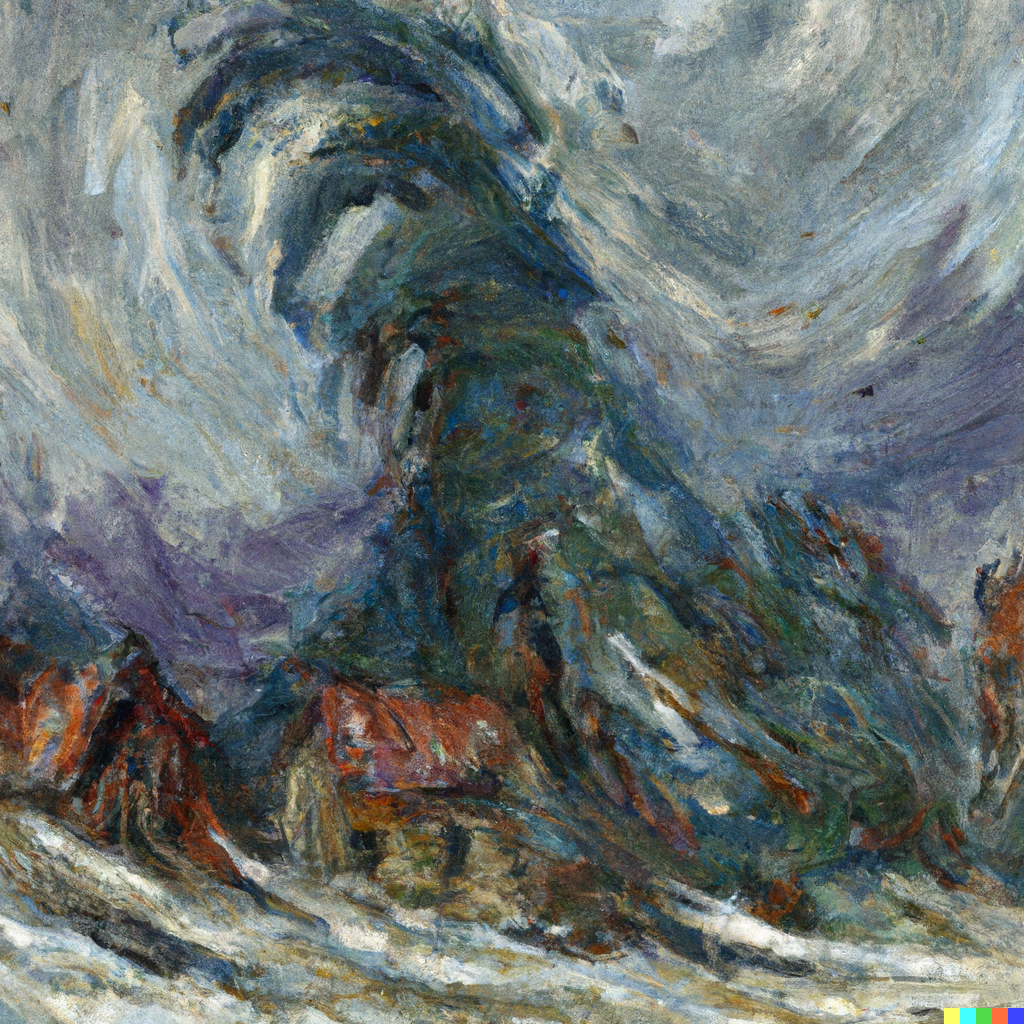
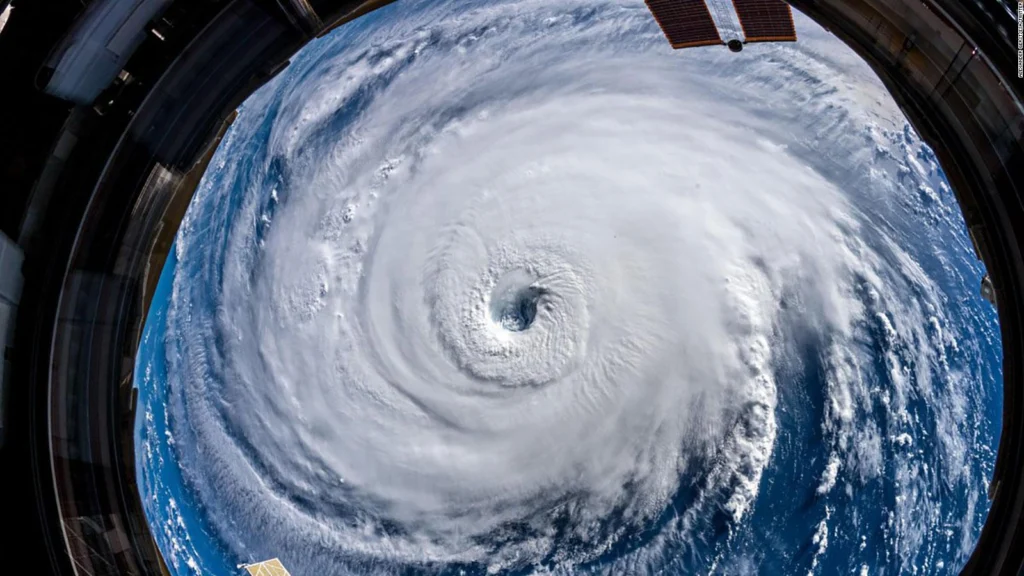
From the eyes of tropical cyclones to flooded strands : how climatologists use weather events to make climate predictions?
While extreme events are meteorological in nature, climatologists collect them to draw conclusions about the state of the present climate and to get clues how they possibly change in the future. Thus, climate and weather find common ground. If we consider an event alone, we are not studying the climate, we are in the field of meteorology, the goal of climatologists is therefore to put extreme even ...[Read More]
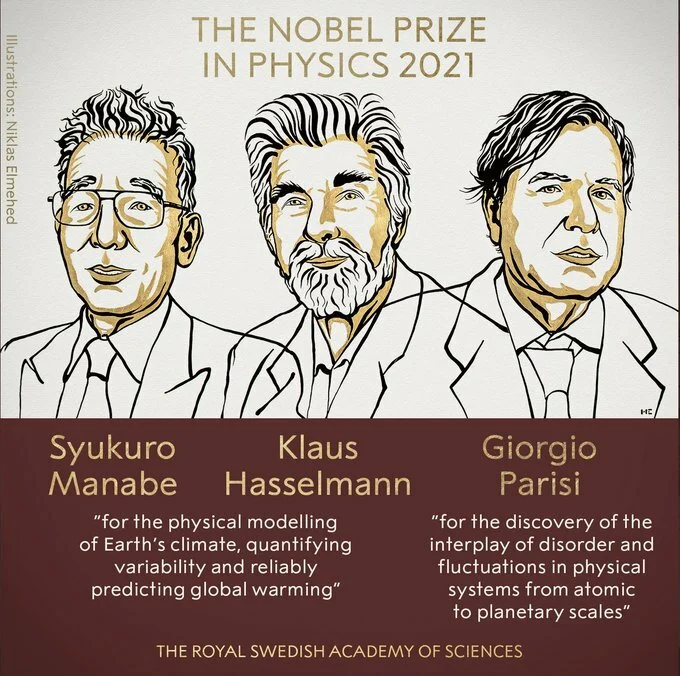
The 2021 Nobel Prize on Physics awarded to the physics of complex systems!
On October 7th, the Nobel Prize in Physics 2021 was announced. It came as a stunning surprise for the Non-linear Processes and Climate communities, the recipients of this year’s award being two outstanding senior climate scientists, Klaus Hasselmann and Syukuro Manabe, and a theoretical physicist specialized in complex systems, Giorgio Parisi. For many, this award was welcomed as a long-awaited re ...[Read More]
NP Campfire: “Perspectives on Climate Science: from historical developments to research frontiers”
Recently, the European Geosciences Union (EGU) started to support a new type of event called ‘Campfires’ that will give the Divisions the freedom to run online interactive events in a way that suits their needs. This allows the EGU Divisions to encourage interactions in their research communities through virtual informal meetings. In this framework, and thanks to a group of young and established s ...[Read More]