NP
Nonlinear Processes in Geosciences

Extreme events

ECS Spotlight: When “Day Zero Drought” Dries the Tap: How Drought is Reshaping Water Scarcity in the Anthropocene

ECS Spotlight: When “Day Zero Drought” Dries the Tap: How Drought is Reshaping Water Scarcity in the Anthropocene

Extreme events are becoming increasingly observable, intense, and interconnected. Drought, traditionally viewed as a regional and temporary phenomenon, is now undergoing a fundamental shift.  We introduce the concept of “Day Zero Drought” to describe a threshold where water demand exceeds available supply under persistent drought conditions. This study shows that water scarcity is no longer confin ...[Read More]

ECS Spotlight: Evolution of the Dynamics of Centennial Hot Summers in Western Europe With Climate Change

ECS Spotlight: Evolution of the Dynamics of Centennial Hot Summers in Western Europe With Climate Change

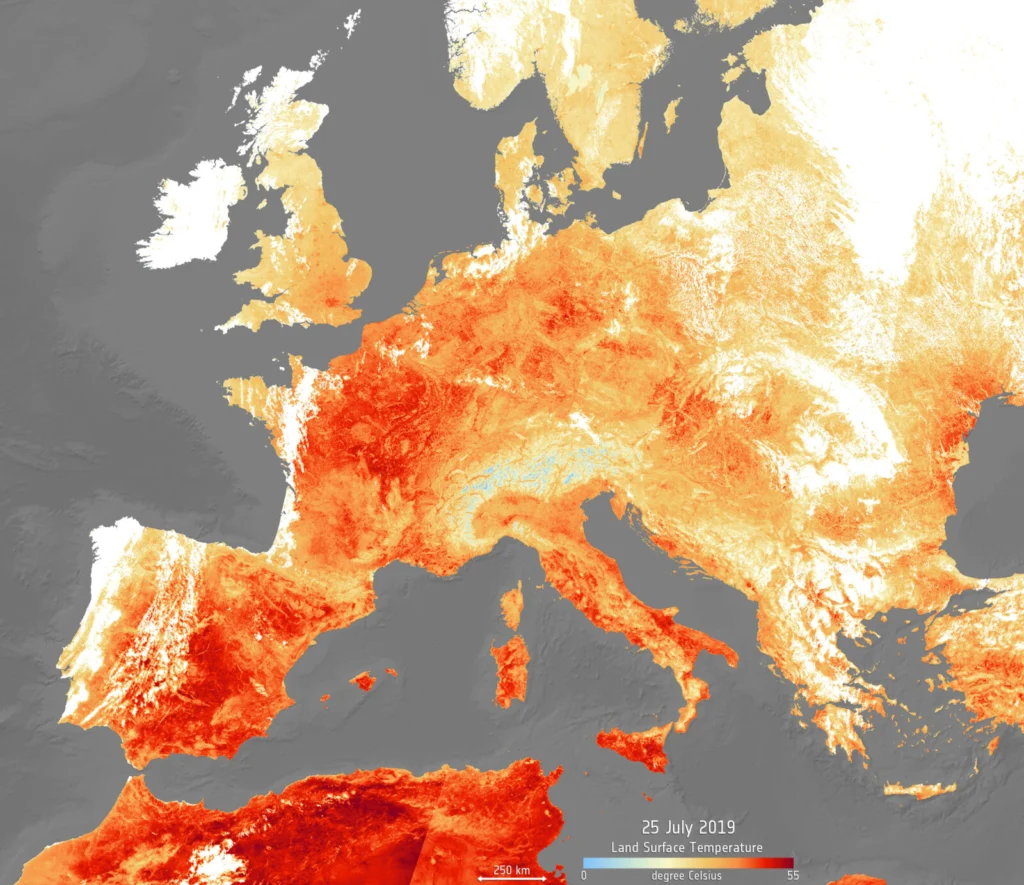
Extreme meteorological and climatological events can be immensely damaging and disruptive to society. Understanding the physical mechanisms driving these events, and how they will evolve with climate change is crucial for informing societal adaptation to our changing climate. However, extreme events are, by definition, rare. Our capacity to understand these events is, therefore, hindered by the sm ...[Read More]

From Theory to Impacts: Nonlinear Perspectives on Weather Extremes at UNDERPIN#2

From Theory to Impacts: Nonlinear Perspectives on Weather Extremes at UNDERPIN#2

From 1–5 August 2025, the medieval hilltop town of Erice, Sicily, hosted the second UNDERPIN workshop, a meeting organised within the Nonlinear Processes in Geosciences community and dedicated to advancing the science of weather extremes. The event brought together a truly diverse group of researchers, spanning climate dynamics, attribution science, socio-economic impacts, statistical physics, and ...[Read More]

EGU NP Paper of the Month “Finite-size local dimension as a tool for extracting geometrical properties of attractors of dynamical systems”

EGU NP Paper of the Month “Finite-size local dimension as a tool for extracting geometrical properties of attractors of dynamical systems”

The original goal of this study was to understand how the local dimension of the attractor of a dynamical system could be used to estimate the predictability of the future state of the system, and apply this in the case of radar images of rain. The local dimension using Extreme Value Theory (EVT) has been introduced and used in Faranda et al. (2017) to infer the current predictability of different ...[Read More]