As part of welcoming new members to the editorial team of Nonlinear Processes in Geophysics (NPG), we are pleased to present short interviews with two newly appointed editors, Dr. Kira Rehfeld and Dr. Jezabel Curbelo. They share their scientific backgrounds, motivations for joining the journal, editorial goals, and perspectives on emerging research directions in nonlinear geosciences. Their insigh ...[Read More]
Mathematics
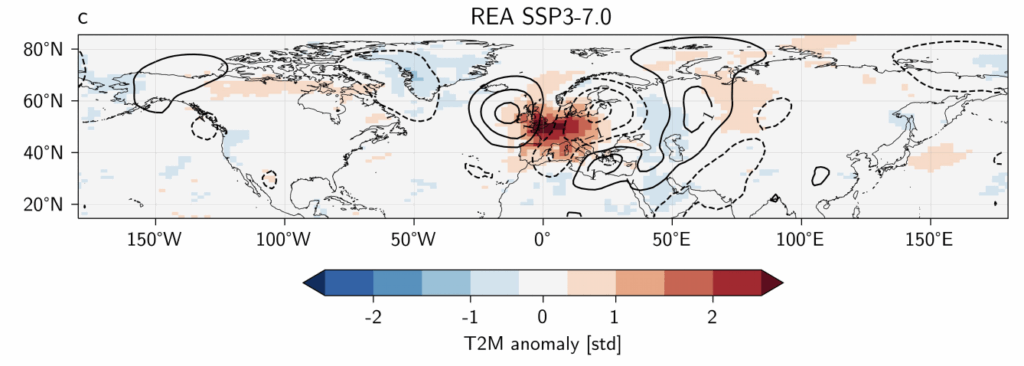
ECS Spotlight: Evolution of the Dynamics of Centennial Hot Summers in Western Europe With Climate Change
Extreme meteorological and climatological events can be immensely damaging and disruptive to society. Understanding the physical mechanisms driving these events, and how they will evolve with climate change is crucial for informing societal adaptation to our changing climate. However, extreme events are, by definition, rare. Our capacity to understand these events is, therefore, hindered by the sm ...[Read More]
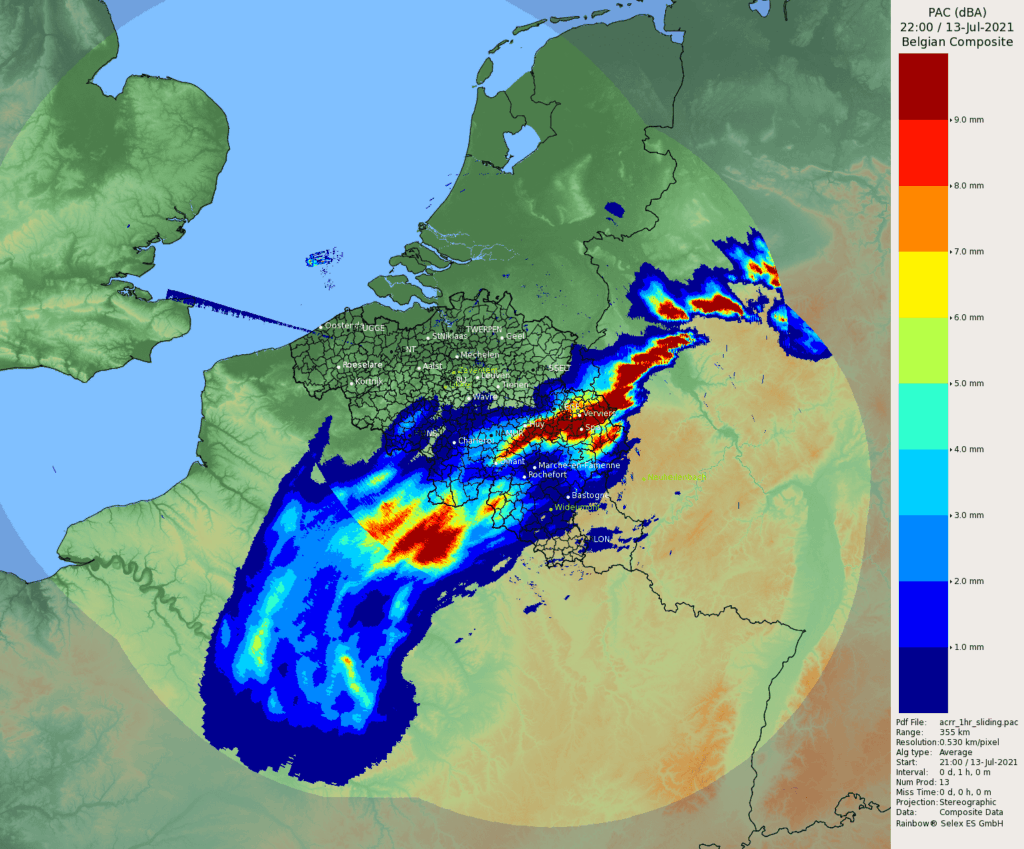
From Theory to Impacts: Nonlinear Perspectives on Weather Extremes at UNDERPIN#2
From 1–5 August 2025, the medieval hilltop town of Erice, Sicily, hosted the second UNDERPIN workshop, a meeting organised within the Nonlinear Processes in Geosciences community and dedicated to advancing the science of weather extremes. The event brought together a truly diverse group of researchers, spanning climate dynamics, attribution science, socio-economic impacts, statistical physics, and ...[Read More]
EGU NP Paper of the Month “Finite-size local dimension as a tool for extracting geometrical properties of attractors of dynamical systems”
The original goal of this study was to understand how the local dimension of the attractor of a dynamical system could be used to estimate the predictability of the future state of the system, and apply this in the case of radar images of rain. The local dimension using Extreme Value Theory (EVT) has been introduced and used in Faranda et al. (2017) to infer the current predictability of different ...[Read More]
NP Paper of the Month: “Representation learning with unconditional denoising diffusion models for dynamical systems”
About the revolution of generating butterflies Imagine the most vibrant butterfly you can conceive. Congratulations – you’ve just achieved what generative AI does! This technology can create images from simple text descriptions, revolutionising image generation. But as geoscientists, how can we use it to improve the prediction of chaotic system like our weather? How can it help us to discover prop ...[Read More]
Bridging Mathematics and Climate Science: the AMS MRC programme for June-July 2024
The American Mathematical Society’s Mathematics Research Communities (MRC) continues to be a beacon for early-career mathematicians seeking professional development. This esteemed program offers opportunities to hone collaborative research skills, cultivate networks within active research domains, and benefit from mentorship by leaders in the field. As part of the MRC initiative, the upcoming conf ...[Read More]
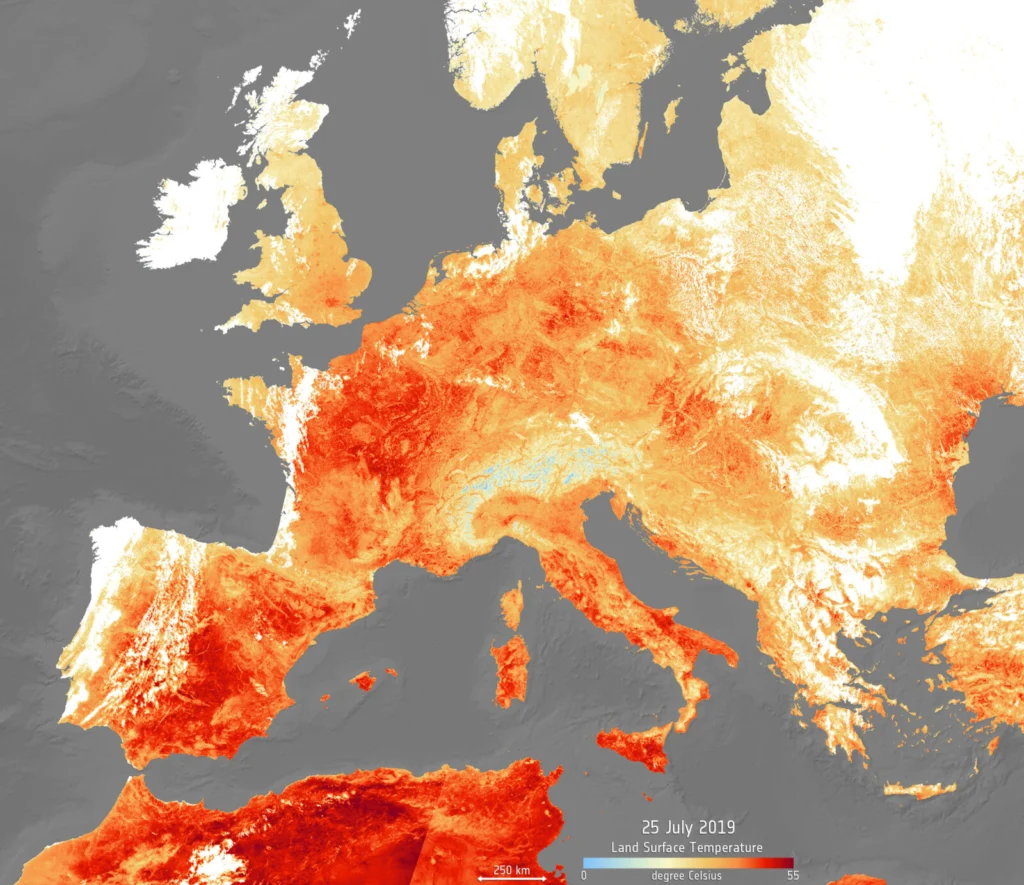
ECS SpotLight: The link between European warm-temperature extremes and atmospheric persistence
Persistent atmospheric circulation patterns are not a necessary requirement for warm temperature extremes in Europe. This key finding from a recent study led by Emma Holmberg challenges a more traditional meteorological view of persistence, which typically considers summertime heatwaves, especially in northern regions of Europe, to be synonymous with persistent atmospheric flow patterns. Furthermo ...[Read More]
Exploring the multistable and multiscale climate system via noise
Could our present day “warm” climate turn into a frozen fully glaciated one, as if the whole Earth is a huge “snowball”? That was a question put forward independently by Mikhail Budyko and William Sellers in the late 60s [1,2] who made a first estimate of the necessary changes of incoming solar radiation, such that either the Arctic ice sheet completely melts, or the planet gets fully frozen. Base ...[Read More]
NPG Paper of the Month: “Empirical evidence of a fluctuation theorem for the wind mechanical power input into the ocean”
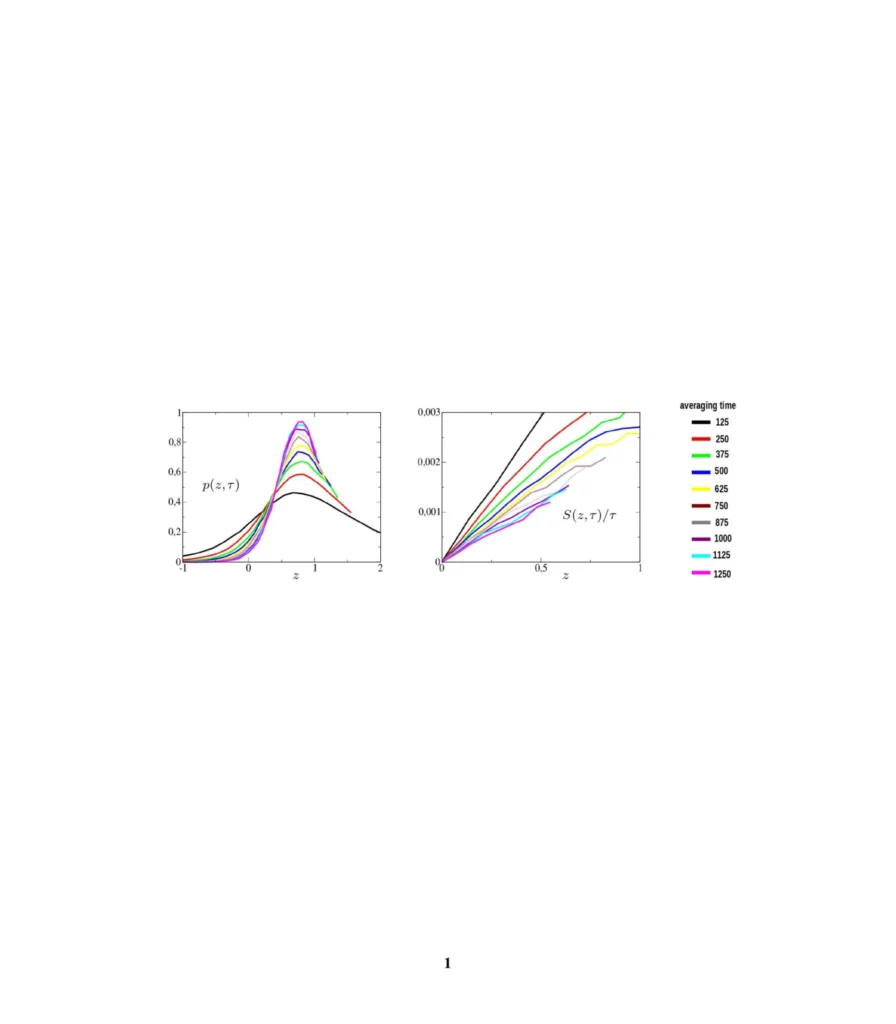
This month the NPG Paper of the Month award is achieved by Achim Wirth for his paper “Empirical evidence of a fluctuation theorem for the wind mechanical power input into the ocean“. Achim obtained his PhD at the University of Nice (Franc), doing research on turbulence theory. He then moved to oceanography working at UCLA (USA) and Geomar (Germany). Since 2005 he holds a permanent position a ...[Read More]
NPG Paper of the Month: “Ordering of trajectories reveals hierarchical finite-time coherent sets in Lagrangian particle data: detecting Agulhas rings in the South Atlantic Ocean”
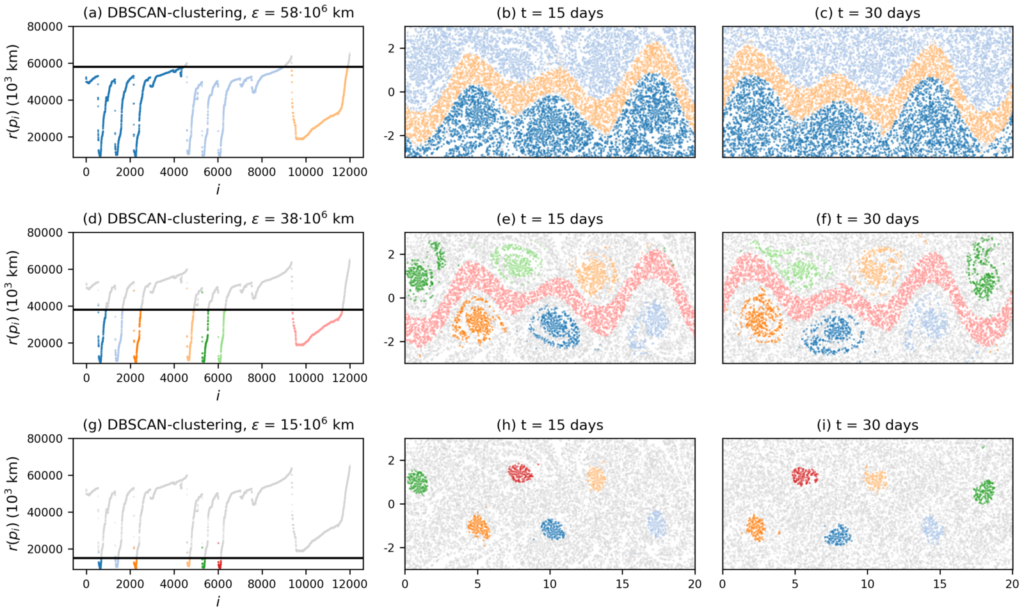
The February 2021 NPG Paper of the Month award goes David Wichmann and his co-authors for their paper “Ordering of trajectories reveals hierarchical finite-time coherent sets in Lagrangian particle data: detecting Agulhas rings in the South Atlantic Ocean“. Understanding the transport of tracers and particulates is an important topic in oceanography and in fluid dynamics in general. Th ...[Read More]