NP
Nonlinear Processes in Geosciences

networking

Bridging Mathematics and Climate Science: the AMS MRC programme for June-July 2024
Bridging Mathematics and Climate Science: the AMS MRC programme for June-July 2024
The American Mathematical Society’s Mathematics Research Communities (MRC) continues to be a beacon for early-career mathematicians seeking professional development. This esteemed program offers opportunities to hone collaborative research skills, cultivate networks within active research domains, and benefit from mentorship by leaders in the field. As part of the MRC initiative, the upcoming conf ...[Read More]

A new virtual seminar series on Climate Physics organized by the American Physical Society (APS) group in Physics of Climate

The APS Topical Group on the Physics of Climate (APS-GPC) is excited to launch a new virtual monthly seminar series on climate physics and variability. These seminars are aimed at introducing the broader physics community (and math, engineering, and other communities) to the fundamentals of climate science as well as cutting-edge research and open questions in this field. APS invites you to attend ...[Read More]

ClimarisQ: A game on the complexity of the climate systems and the extreme events

ClimarisQ: A game on the complexity of the climate systems and the extreme events

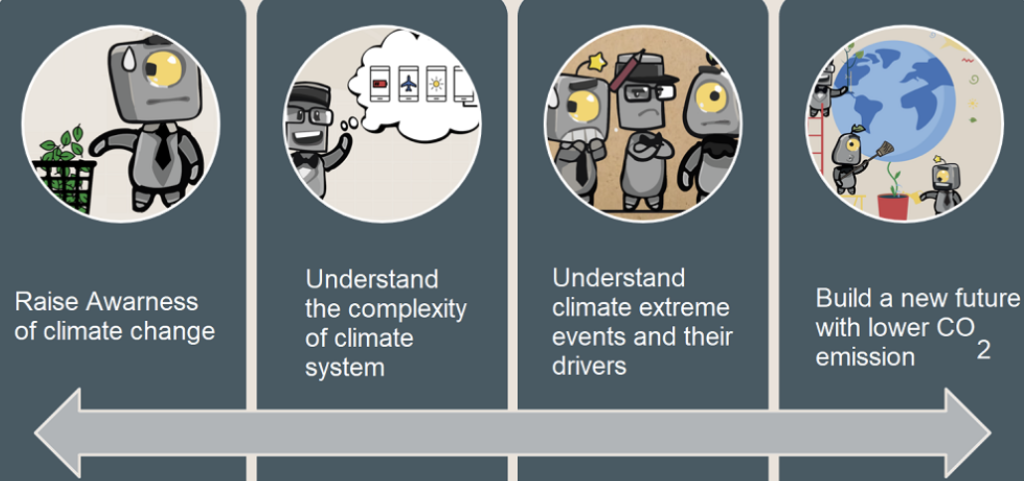
ClimarisQ is a smartphone/web game from a scientific mediation project that highlights the complexity of the climate system and the urgency of collective action to limit climate change. It is available in four languages: English, French, Spanish and Italian. It is an app-game where players must make decisions to limit the frequency and impacts of extreme climate events and their impacts on human s ...[Read More]

NP Campfire: “Scaling and multifractals : from historical perspectives to recent developments”

NP Campfire: “Scaling and multifractals : from historical perspectives to recent developments”

Scaling law behaviours are ubiquitous in geosciences both from a theoretical and practical point of view. They are required to better understand, analyse and simulate the underlying processes, which yields the observed variability of geophysical fields over wide ranges of spatio-temporal scales. A group of scientists within the Nonlinear Processes in Geosciences (NP) Division of the European Geosc ...[Read More]

NPG Paper of the Month: “Recurrence analysis of extreme event-like data”

NPG Paper of the Month: “Recurrence analysis of extreme event-like data”

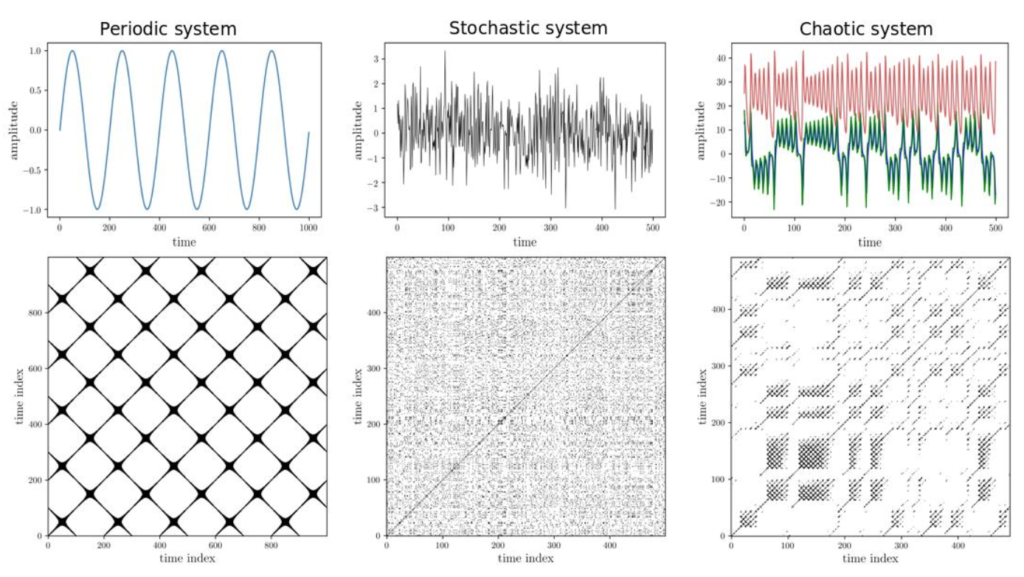
The May 2021 NPG Paper of the Month award goes Abhirup Banerjee and his co-authors for their paper “Recurrence analysis of extreme event-like data“. Abhirup is pursuing a doctoral degree in Theoretical Physics at University of Potsdam. He is working at Potsdam Institute of Climate Impact Research as a guest researcher as part of the DFG funded NatRiskChange project. In this project, he ...[Read More]

#vEGU21 Networking events of the Nonlinear Processes in Geosciences (NP) Division

#vEGU21 Networking events of the Nonlinear Processes in Geosciences (NP) Division

The current COVID-19 situation has profoundly changed our daily lives and has also affected our way to perform and share research. In today’s world a lot of efforts have been made to minimize the impact of working from home and exchange thoughts with colleagues. As for last year the usual annual General Assembly of the European Geosciences Union (EGU) has been moved online. Thus, it will be virtua ...[Read More]

NPG Paper of the Month: “Ordering of trajectories reveals hierarchical finite-time coherent sets in Lagrangian particle data: detecting Agulhas rings in the South Atlantic Ocean”

NPG Paper of the Month: “Ordering of trajectories reveals hierarchical finite-time coherent sets in Lagrangian particle data: detecting Agulhas rings in the South Atlantic Ocean”

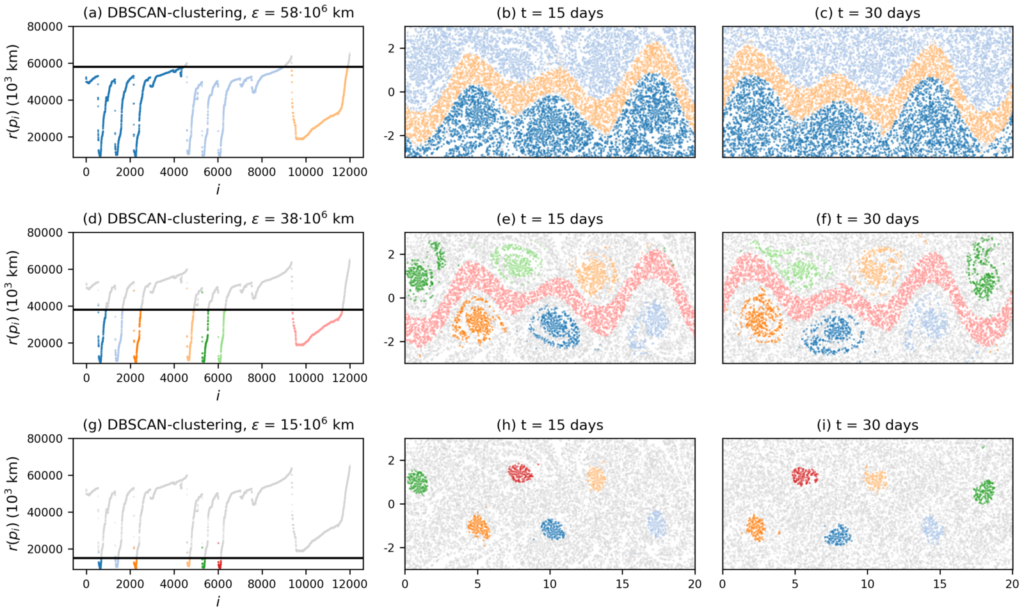
The February 2021 NPG Paper of the Month award goes David Wichmann and his co-authors for their paper “Ordering of trajectories reveals hierarchical finite-time coherent sets in Lagrangian particle data: detecting Agulhas rings in the South Atlantic Ocean“. Understanding the transport of tracers and particulates is an important topic in oceanography and in fluid dynamics in general. Th ...[Read More]

NP Campfire: “Perspectives on Climate Science: from historical developments to research frontiers”

NP Campfire: “Perspectives on Climate Science: from historical developments to research frontiers”

Recently, the European Geosciences Union (EGU) started to support a new type of event called ‘Campfires’ that will give the Divisions the freedom to run online interactive events in a way that suits their needs. This allows the EGU Divisions to encourage interactions in their research communities through virtual informal meetings. In this framework, and thanks to a group of young and established s ...[Read More]

Perspectives on Climate Science: from historical developments to research frontiers

Perspectives on Climate Science: from historical developments to research frontiers

Breaking news: a bizarre early-September snowstorm dumped snow from Montana to New Mexico, a medicane hit Southern Italian regions and Greece, heatwaves and droughts are expected to increase in the future… These extreme events are becoming more and more frequent and one question spontaneously arises: is climate change making the weather more extreme? This is one of the reasons why climate change i ...[Read More]

NPG Paper of the Month: “Detecting dynamical anomalies in time series from different palaeoclimate proxy archives using windowed recurrence network analysis”

NPG Paper of the Month: “Detecting dynamical anomalies in time series from different palaeoclimate proxy archives using windowed recurrence network analysis”

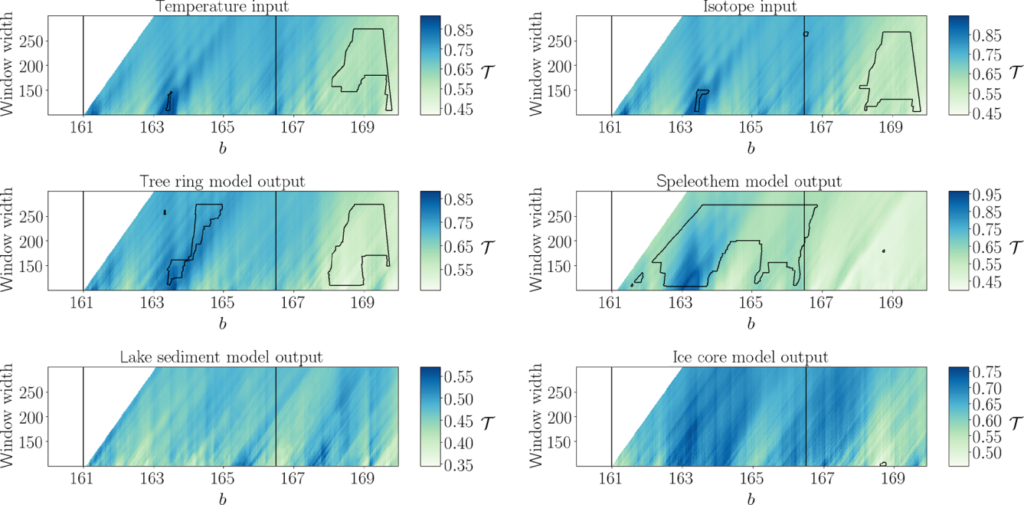
This month the NPG Paper of the Month award is achieved by Jaqueline Lekscha and Reik Donner for their paper “Detecting dynamical anomalies in time series from different palaeoclimate proxy archives using windowed recurrence network analysis” (https://npg.copernicus.org/articles/27/261/2020/). Jaqueline Lekscha did her PhD in physics at the Potsdam Institute for Climate Impact Research and Humbold ...[Read More]