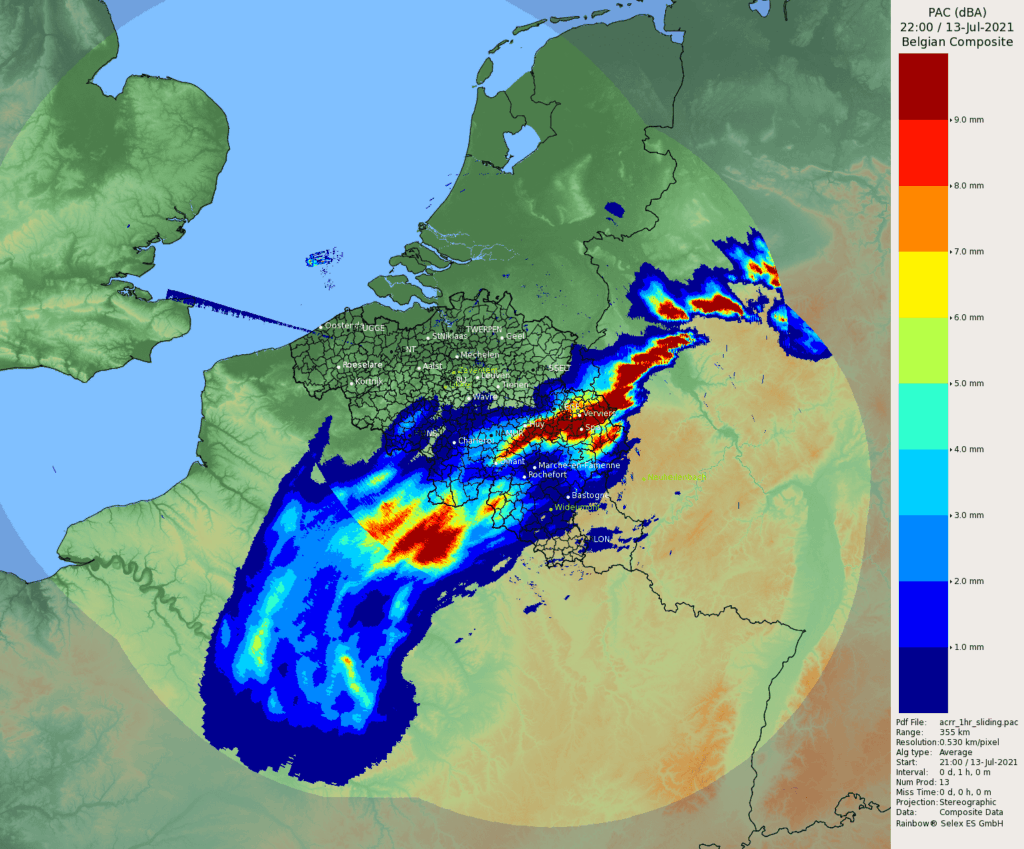
The original goal of this study was to understand how the local dimension of the attractor of a dynamical system could be used to estimate the predictability of the future state of the system, and apply this in the case of radar images of rain. The local dimension using Extreme Value Theory (EVT) has been introduced and used in Faranda et al. (2017) to infer the current predictability of different ...[Read More]
NP Paper of the Month: “Representation learning with unconditional denoising diffusion models for dynamical systems”
About the revolution of generating butterflies Imagine the most vibrant butterfly you can conceive. Congratulations – you’ve just achieved what generative AI does! This technology can create images from simple text descriptions, revolutionising image generation. But as geoscientists, how can we use it to improve the prediction of chaotic system like our weather? How can it help us to discover prop ...[Read More]
NPG Paper of the Month: “A Range of Outcomes: The Combined Effects of Internal Variability and Anthropogenic Forcing on Regional Climate Trends over Europe”
The NPG paper of the month for February 2023 was awarded to “A Range of Outcomes: The Combined Effects of Internal Variability and Anthropogenic Forcing on Regional Climate Trends over Europe” by Clara Deser and Adam S. Phillips. How much will Europe warm in the next 50 years? Will precipitation increase or decrease? Are past climate trends unique or could alternate realities have exis ...[Read More]
NPG Paper of the Month: “Brief communication: Climate science as a social process – history, climatic determinism, Mertonian norms and post-normality”
The NPG paper of the month for January 2023 was awarded to “Brief communication: Climate science as a social process – history, climatic determinism, Mertonian norms and post-normality” by Hans von Storch. One could argue that climate science is part of geophysics, or more precisely that part of climate science is part of geophysics. But when referring to ”processes” in ”Nonlinear Processes in Geo ...[Read More]
NPG Paper of the Month: “Inferring the instability of a dynamical system from the skill of data assimilation exercises”
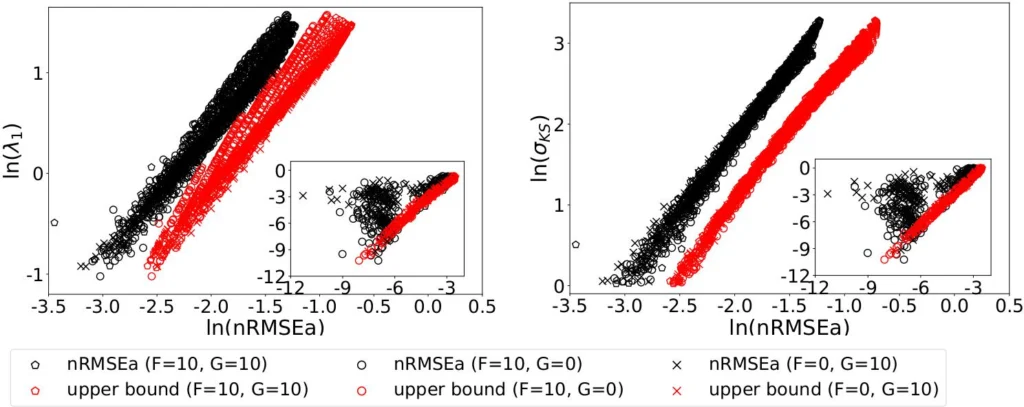
The NPG paper of the month was awarded to “Inferring the instability of a dynamical system from the skill of data assimilation exercises” by Yumeng Chen, Alberto Carrassi, and Valerio Lucarini. Geophysical systems are usually described by a set of dynamical equations that are often non-linear and chaotic (Ghil and Lucarini, 2020). Errors about the initial state can grow, shrink, or sta ...[Read More]
NPG Paper of the Month: “Comparing estimation techniques for temporal scaling in palaeoclimate time series”
The NPG paper of the month of July was awarded to Comparing estimation techniques for temporal scaling in palaeoclimate time series by Raphaël Hébert, Kira Rehfeld and Thomas Laepple (https://doi.org/10.5194/npg-28-311-2021). Raphaël Hébert is currently a post-doctoral researcher at the Alfred-Wegener-Institut in Potsdam (Germany) in the Earth System Diagnostics group of Thomas Laepple, where he a ...[Read More]
NPG Paper of the Month: “Recurrence analysis of extreme event-like data”
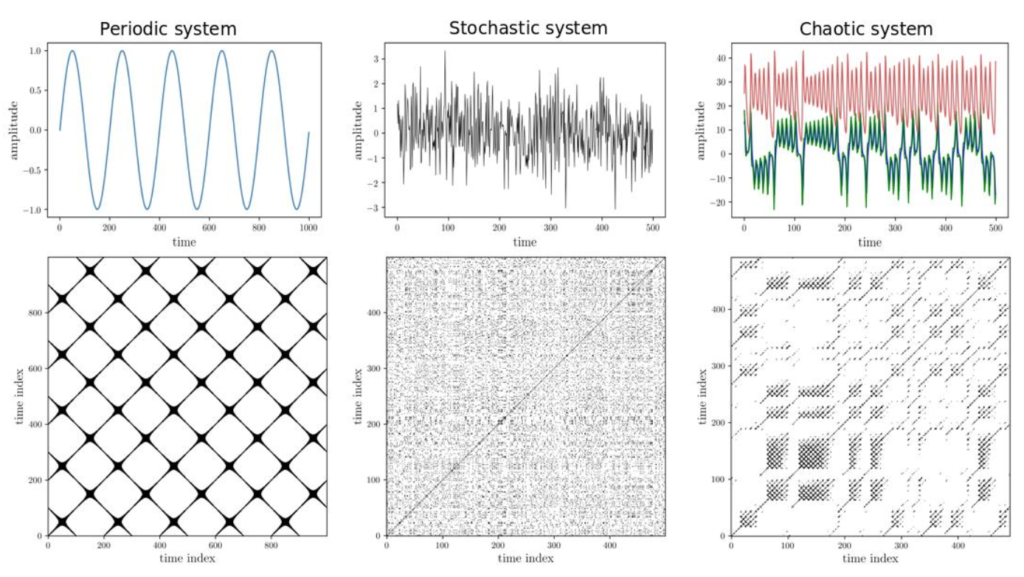
The May 2021 NPG Paper of the Month award goes Abhirup Banerjee and his co-authors for their paper “Recurrence analysis of extreme event-like data“. Abhirup is pursuing a doctoral degree in Theoretical Physics at University of Potsdam. He is working at Potsdam Institute of Climate Impact Research as a guest researcher as part of the DFG funded NatRiskChange project. In this project, he ...[Read More]
NPG Paper of the Month: “Ordering of trajectories reveals hierarchical finite-time coherent sets in Lagrangian particle data: detecting Agulhas rings in the South Atlantic Ocean”
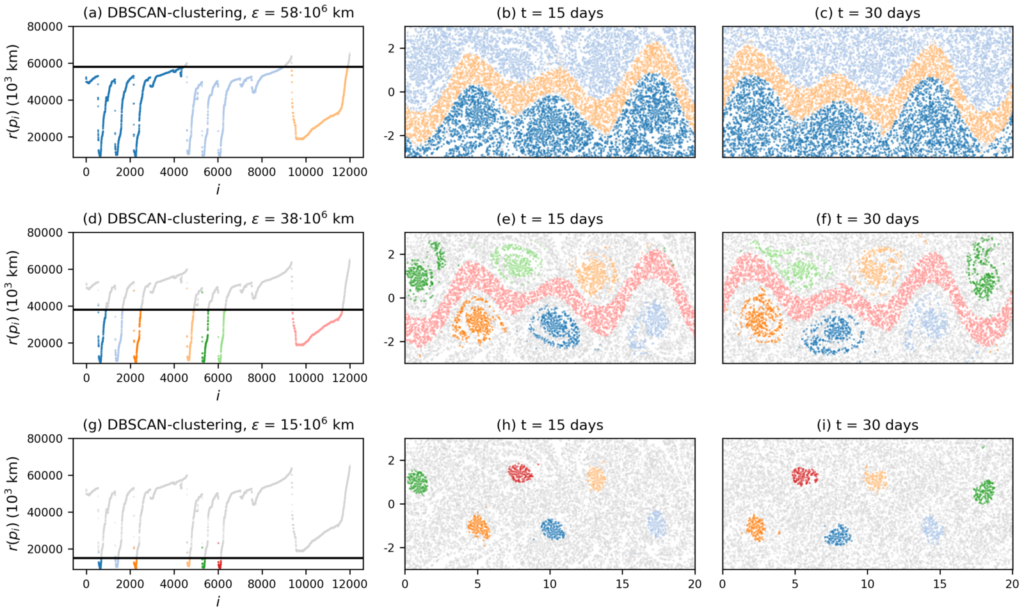
The February 2021 NPG Paper of the Month award goes David Wichmann and his co-authors for their paper “Ordering of trajectories reveals hierarchical finite-time coherent sets in Lagrangian particle data: detecting Agulhas rings in the South Atlantic Ocean“. Understanding the transport of tracers and particulates is an important topic in oceanography and in fluid dynamics in general. Th ...[Read More]
NPG Paper of the Month: “A methodology to obtain model-error covariances due to the discretization scheme from the parametric Kalman filter perspective”
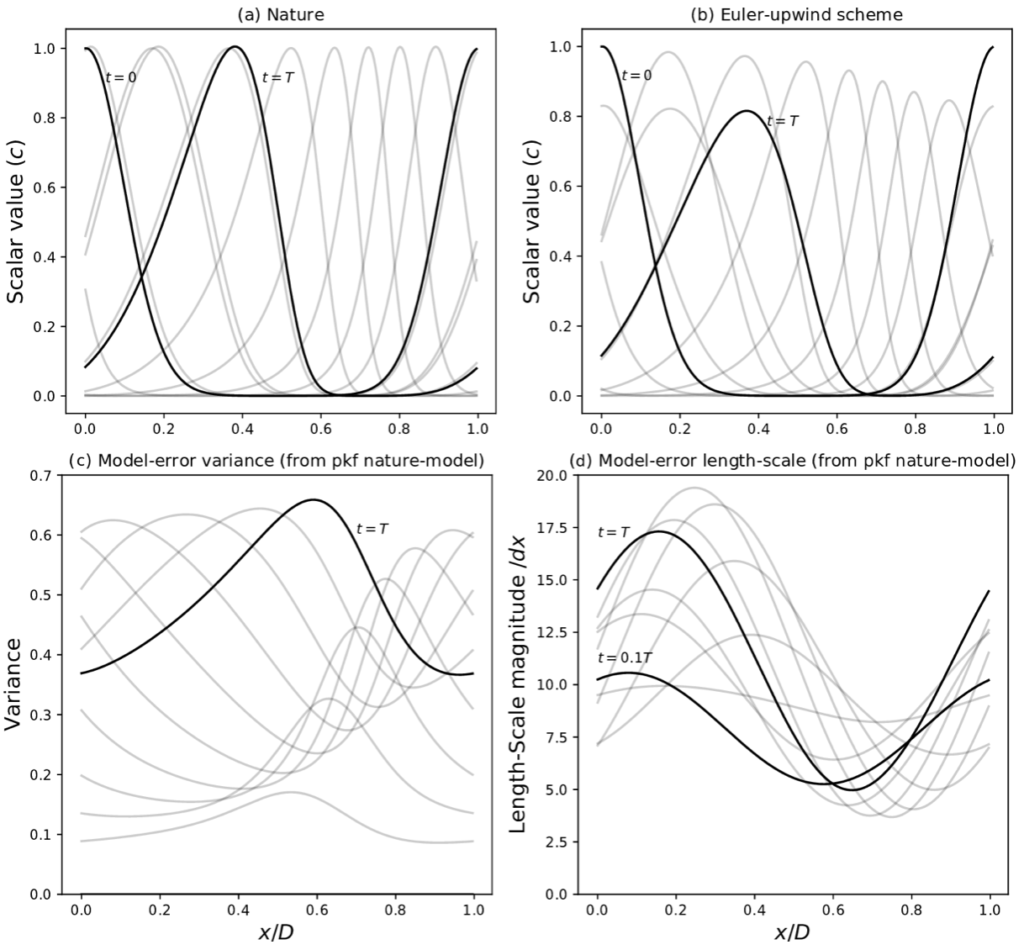
The January 2021 NPG Paper of the Month award goes to Olivier Pannekoucke and his co-authors for the paper “A methodology to obtain model-error covariances due to the discretization scheme from the parametric Kalman filter perspective“. In geophysics, forecasting is based on solving the equations of physics with the help of a computer. To calculate a forecast we need an initial conditi ...[Read More]
NPG Paper of the Month: “Statistical postprocessing of ensemble forecasts for severe weather at Deutscher Wetterdienst”
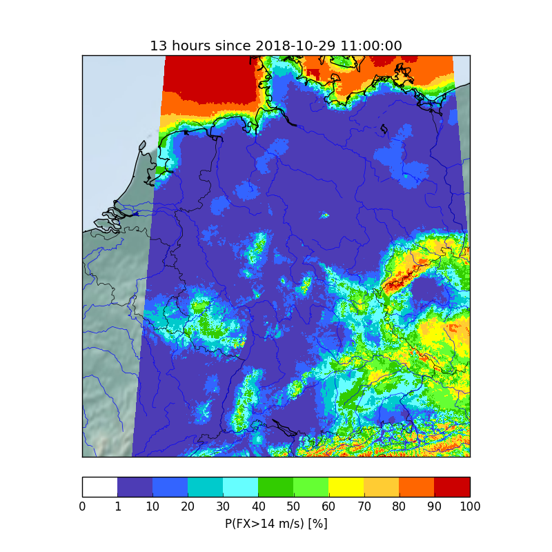
The October 2020 NPG Paper of the Month award goes to Reinhold Hess for the paper “Statistical postprocessing of ensemble forecasts for severe weather at Deutscher Wetterdienst“. Ensemble Forecasting rose with the understanding of the limited predictability of weather. In a perfect ensemble system, the obtained ensemble of forecasts expresses the distribution of possible weather scena ...[Read More]