
The Atlantic Meridional Overturning Circulation — the AMOC — has become one of the most discussed elements of the climate system. It is often portrayed as a looming tipping point, a potential disruptor of European climate, and a symbol of the uncertainties that still surround climate projections. We spoke with Didier Swingedouw, a leading researcher …[Read More]
Nonlinear
ECS Spotlight: When “Day Zero Drought” Dries the Tap: How Drought is Reshaping Water Scarcity in the Anthropocene
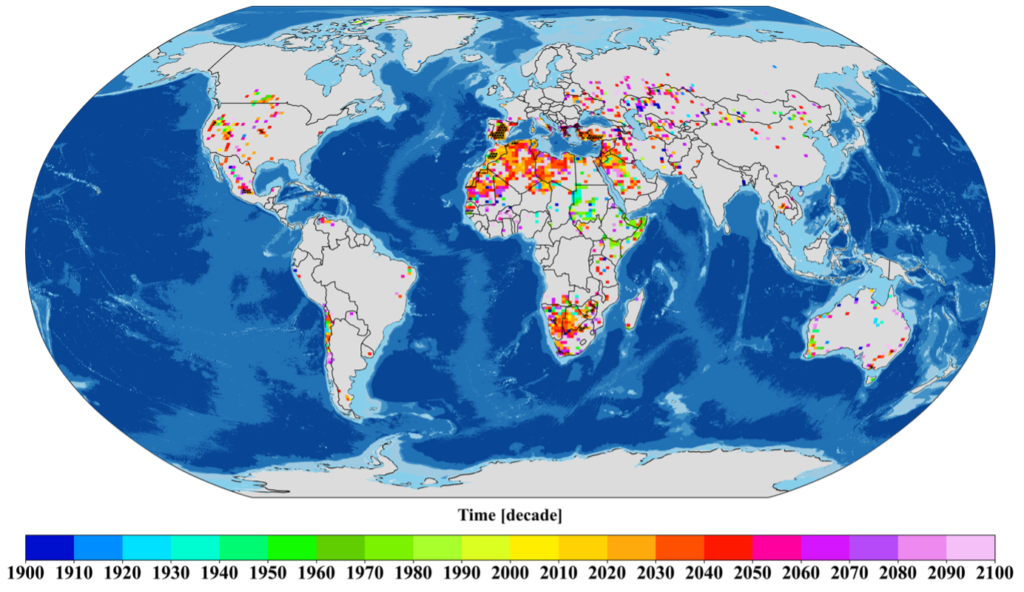
Extreme events are becoming increasingly observable, intense, and interconnected. Drought, traditionally viewed as a regional and temporary phenomenon, is now undergoing a fundamental shift. We introduce the concept of “Day Zero Drought” to describe a threshold where water demand exceeds available supply under persistent drought conditions. This study shows that water scarcity is no longer …[Read More]
Turbulence (and not only): The Legacy of Vincenzo Carbone, 2025 Richardson Medal

One year ago, Vincenzo Carbone left us. Vincenzo was a leading scientist in nonlinear geophysics, turbulence, and complex systems, influencing fluid and plasma physics, weather and space weather, solar–terrestrial relations, and climate dynamics. Yet for those who worked closely with him, his legacy goes well beyond his remarkable scientific achievements. Scientific Contributions and Impact Over …[Read More]
From Theory to Impacts: Nonlinear Perspectives on Weather Extremes at UNDERPIN#2
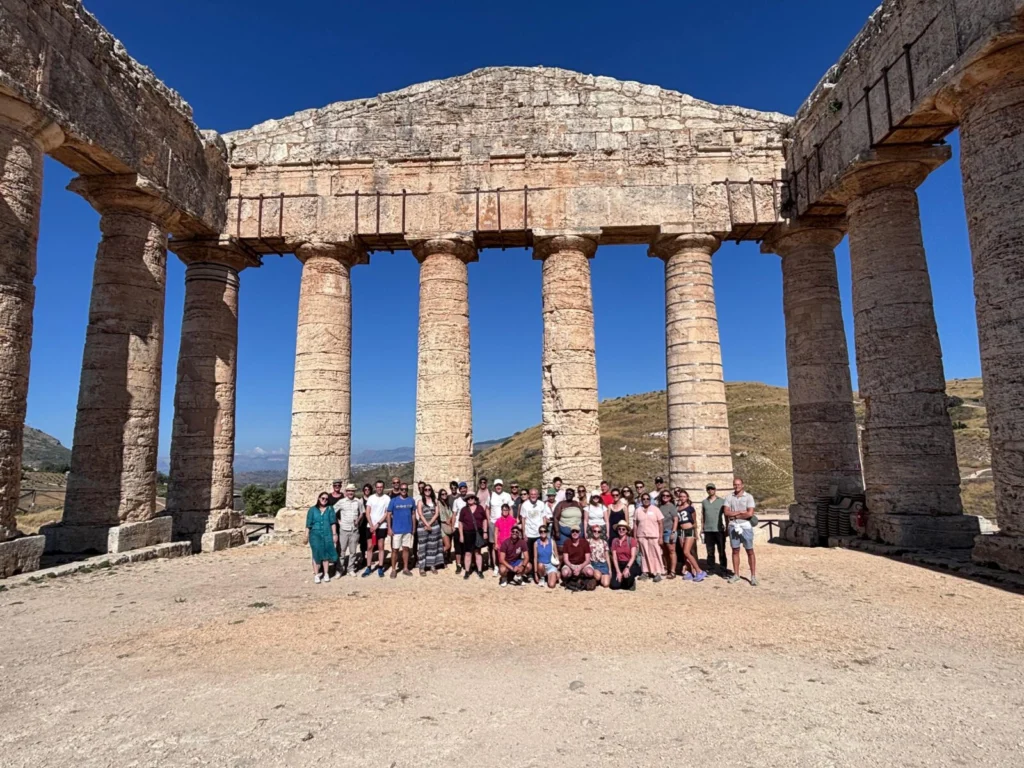
From 1–5 August 2025, the medieval hilltop town of Erice, Sicily, hosted the second UNDERPIN workshop, a meeting organised within the Nonlinear Processes in Geosciences community and dedicated to advancing the science of weather extremes. The event brought together a truly diverse group of researchers, spanning climate dynamics, attribution science, socio-economic impacts, statistical physics, and …[Read More]
AI-generated Images: the fragility of visual evidence in geosciences
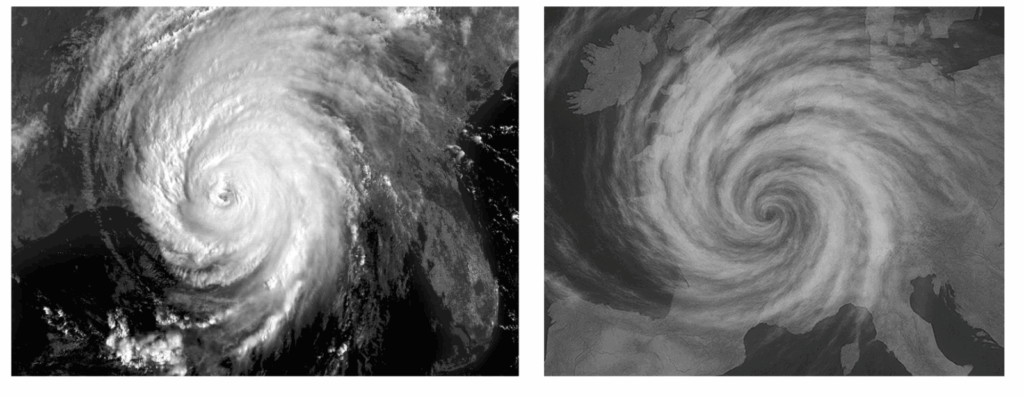
Recently, an increased number of visually striking “scientific” images have been found online: snapshots of turbulent flows with dreamlike structure, eerily symmetric cloud patterns, and what appeared to be global temperature fields annotated with plausible colormaps and scientific-looking labels. Many of these posts quickly go viral on social media. And yet, in many cases, the …[Read More]
NP Interview the incoming Nonlinear Processes in Geosciences Division President: Davide Faranda

Today’s NP Interviews hosts the incoming NP Division President Davide Faranda. Davide is Research Director in Climate Physics in the Laboratoire de Science du Climat et de l’Environnement (LSCE) of the Institute Pierre Simon Laplace at the French National Center for Scientific Research (CNRS). He is an expert of weather extreme events such as cold …[Read More]
NP Paper of the Month: “Representation learning with unconditional denoising diffusion models for dynamical systems”

About the revolution of generating butterflies Imagine the most vibrant butterfly you can conceive. Congratulations – you’ve just achieved what generative AI does! This technology can create images from simple text descriptions, revolutionising image generation. But as geoscientists, how can we use it to improve the prediction of chaotic system like our weather? How can …[Read More]
Nonlinear Processes in Earth System Dynamics
Earth System Dynamics (ESD) is an open-access EGU journal focussing on an interdisciplinary view of the functioning of the Earth system and global change. Due its broad focus, ESD receives submissions of relevance to several different EGU divisions. Here, I would like to highlight five thought-provoking ESD papers that cover topics spanning environmental governance, extreme …[Read More]
ECS SpotLight: The link between European warm-temperature extremes and atmospheric persistence
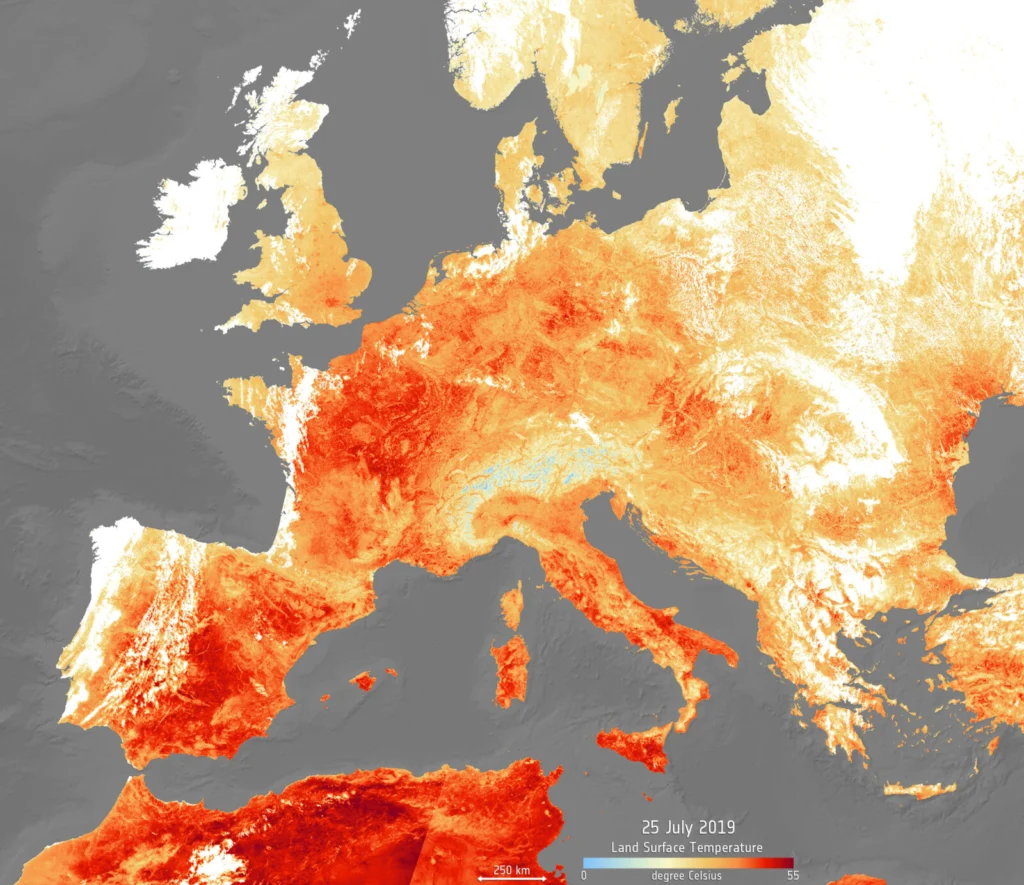
Persistent atmospheric circulation patterns are not a necessary requirement for warm temperature extremes in Europe. This key finding from a recent study led by Emma Holmberg challenges a more traditional meteorological view of persistence, which typically considers summertime heatwaves, especially in northern regions of Europe, to be synonymous with persistent atmospheric flow patterns. Furthermore, wintertime …[Read More]
How Climate Change fuels intense Thunderstorms in Italy

In the blistering heat of July 2023, a series of violent thunderstorms struck the serene landscapes of northern Italy, leaving behind a trail of devastation, despair, and grief. Unleashing their fury upon the unsuspecting region, these tempestuous storms unleashed torrential rains, hailstones the size of tennis balls, and ferocious winds exceeding 150 km/h. Amidst the …[Read More]