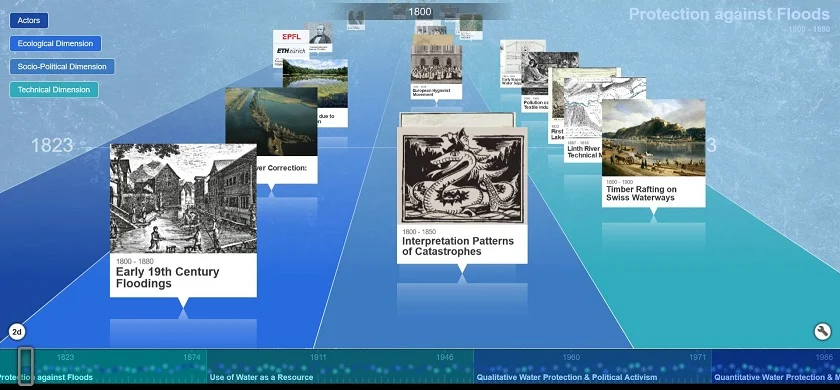
How can we use and manage natural resources more sustainably? This question stands at the core of many social, political and scientific debates about how we can reach the United Nation’s Sustainable Development Goals (SDGs). The targets are ambitious, and there is a growing consensus that rapid and extensive structural change is needed in various sectors simultaneously. However, how transformation ...[Read More]
Call for Blog Contributions: The HydroData Chronicles
We’re thrilled to announce the launch of our newest blog series dedicated to exploring the fascinating world of hydrological datasets. Join us on this exciting journey as we uncover the hidden stories within hydrological data. By highlighting cutting-edge research, insightful analyses, and captivating data, we aim to shed light on the intricacies of hydrology and draw your attention to dat ...[Read More]
Experience Hydrology at EGU24 – HS Division Highlights
The EGU General Assembly 2024 will take place in a few days, on 14–19 April 2024, with more than 19,000 presentations (orals, posters, and PICOs) that will be delivered and viewed both on-site in Vienna (Austria Center Vienna) and virtually (through Zoom & Gather Town). Format news this year: There are two on-site poster sessions per-day. The posters will be set up at the assigned poster board ...[Read More]
Heads Up: Early Career Hydrologists Highlights at EGU 2024
The upcoming annual EGU General assembly in Vienna is a fantastic opportunity for early career scientists (ECS) to engage with the international hydrological community, present their work, and build their networks. But with the multitude of sessions, events, and lectures, it can be tricky to assemble your personal program – especially if it’s your first time attending EGU. We’ve got your ba ...[Read More]
Empowering ECS Voices in Wetland Conservation: Insights from COP28
In the arena of environmental conservation, the power of youth engagement is gaining increasing recognition as a force propelling positive change. This recognition is particularly evident in the endeavours aimed towards safeguarding our wetlands – crucial ecosystems brimming with biodiversity and providing indispensable services to both humanity and the natural world. At the 28th Conference of the ...[Read More]
The water crisis in Bengaluru, India, and its direct link to the degradation of the city’s lake system
In the heart of India’s rapid urban expansion, Bengaluru city’s escalating water crisis reveals a direct connection to the deteriorating health of its lake systems, once the lifeline of this burgeoning city. Bengaluru has an area of about 741 sq km and a population of 13.6 million (2023) and has been historically celebrated as the “city of lakes.” These lakes are interconnected with canals/ ...[Read More]
HydroData Chronicles: A High-Resolution 40-Year Rainfall Dataset Covering the Entire Contiguous US
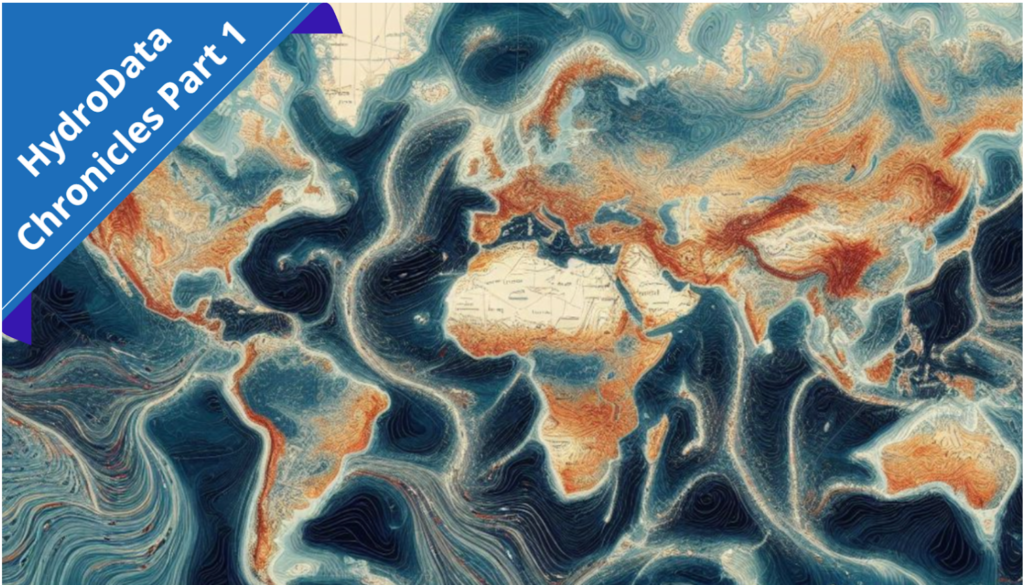
Welcome to our new blog-series focused on exploring the vast, yet fascinating world of hydrological datasets: HydroData Chronicles! Throughout this series, we embark on a journey through the intricate backend of hydrology, where data serves as the cornerstone of our understanding of water resources, as well as their potential impact on scientific research and policy-making. Join us as we navigate ...[Read More]
How to Prepare for EGU24?
Going to the General Assembly (GA) of the EGU in Vienna is a unique experience. You’ll be surrounded by thousands of scientists in dozens of disciplines, from across the world. And you’ll get the chance to hear captivating presentations, meet amazing people, and discover new research approaches. However, the GA can also get overwhelming. Vast in its layout and buzzing with attendees, t ...[Read More]
Thirsty Earth: a multiplayer online game for water resources education and research
The Rising Need for Interdisciplinary Literacy The sustainable management of water resources requires cooperative institutions whose development are rarely included in already overloaded engineering and earth sciences curricula. The resilience of such institutions in the context of climatic and demographic change is also poorly understood. Enter “Thirsty Earth,” an online open-access m ...[Read More]
Overlooked tips for the lost art of fieldwork
Not so long ago, almost all hydrologic data depended almost exclusively on fieldwork. Today, sure, you can download data from repositories, there are satellites that beam you magic numbers that you can interpret to give you almost any variable, and some (less than we might hope) long-term monitoring has been outsourced to governments (or in some cases to citizens with sensors). But somewhere in ...[Read More]