HS
Hydrological Sciences

Archives / 2026 / January

HydroTalks: Heidi Kreibich about Floods, Human-water Feedbacks, and the IAHS Scientific Decade Panta Rhei
HydroTalks: Heidi Kreibich about Floods, Human-water Feedbacks, and the IAHS Scientific Decade Panta Rhei
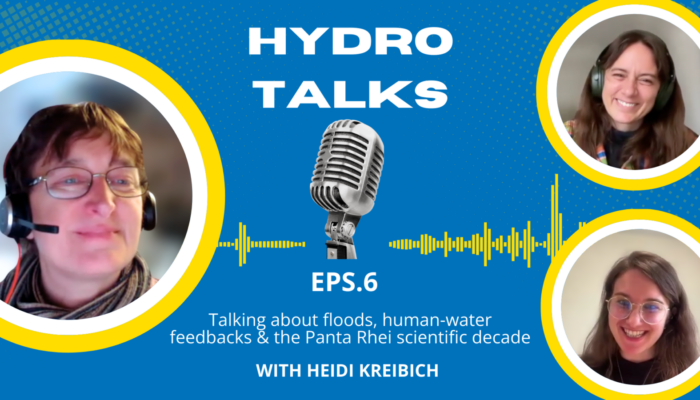
For this month’s episode of HydroTalks, we’re thrilled to welcome Heidi Kreibich. She is  head of the Section Hydrology at GFZ Helmholtz Centre for Geosciences and senior lecturer at the Geography Department of Humboldt-Universitat zu Berlin. Heidi is also president of the Natural Hazards division of the EGU and president of the International Commission on Human-Water Feedbacks in the IAHS. In add ...[Read More]

Prevent before repair: What a new hydrology-based index reveals about river ecological status

Prevent before repair: What a new hydrology-based index reveals about river ecological status

When I first began analysing agricultural pressures in German river networks, I expected the familiar story of nutrient loads, pesticide traces and differences between landscapes. What I did not expect was how narrow the ecological safe operating space has become for many rivers. Even small increases in agricultural pressure, especially from pesticides, reduced the likelihood of achieving good eco ...[Read More]

Last minute information for EGU26 abstract submission

Last minute information for EGU26 abstract submission

If you have not yet submitted your abstract for this year’s General Assembly (GA2026), do not forget to submit as early as possible this week (instructions here), this avoids any last minute technical challenges. . You can submit only one abstract (except for invited speakers or if you submit to an EOS-session). For your hydrology-related research, the call-for-abstracts programme proposes t ...[Read More]

Comparing Apples to Apples: Filtering Water Storage Compartments for GRACE

Comparing Apples to Apples: Filtering Water Storage Compartments for GRACE

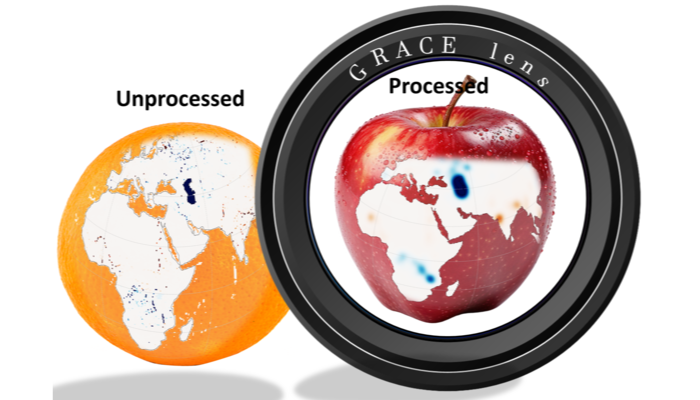
Have you ever heard that we can “weigh” water on Earth from space?  Since 2002, the GRACE and GRACE-FO satellite missions have been mapping month-to-month variations of the Earth’s gravity field. Because gravity responds to mass, these data can reveal how water is redistributed at the surface and in the subsurface.  The result is a global time series of terrestrial water storage anomalies (TWSA)—h ...[Read More]