NP
Nonlinear Processes in Geosciences

Nonlinear

Is climate change making the weather more extreme?
Is climate change making the weather more extreme?
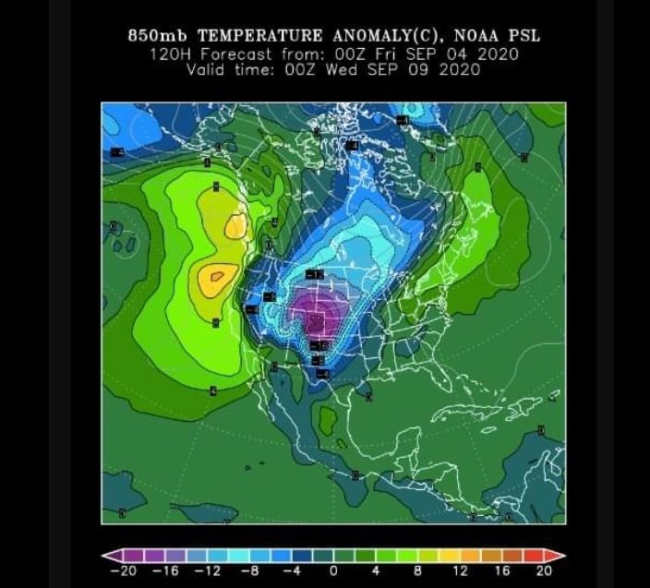
Denver, Sept. 06: it is midday and Jonathan and Maria are sunbathing at City Park. They feel uncomfortable as the temperature has already reached 36°C. While they decide to go back home, their favoured weather app displays an unbelievable snowstorm watch for Tuesday Sept. 08. The forecast turns out to be rather accurate as all Colorado experiences one of the earliest snowstorms on record in Septem ...[Read More]

NPG Paper of the Month: “Correcting for model changes in statistical postprocessing – an approach based on response theory”

NPG Paper of the Month: “Correcting for model changes in statistical postprocessing – an approach based on response theory”

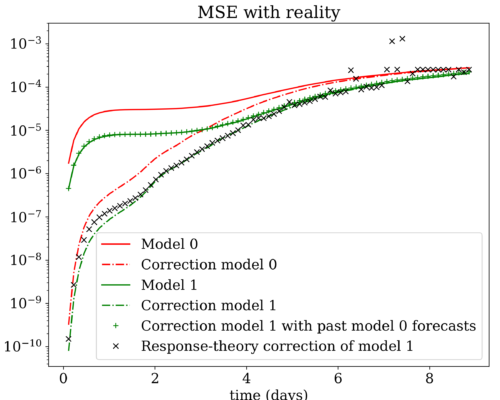
This month the NPG Paper of the Month award is achieved by Jonathan Deameyer and Stéphane Vannitsem for their paper “Correcting for model changes in statistical postprocessing – an approach based on response theory” (https://doi.org/10.5194/npg-27-307-2020). Jonathan did his PhD in statistical mechanics at the Université Libre de Bruxelles under the supervision of Pierre Gaspard and he is currentl ...[Read More]

NPG Paper Highlight: “Baroclinic and barotropic instabilities in planetary atmospheres: energetics, equilibration and adjustment”

NPG Paper Highlight: “Baroclinic and barotropic instabilities in planetary atmospheres: energetics, equilibration and adjustment”

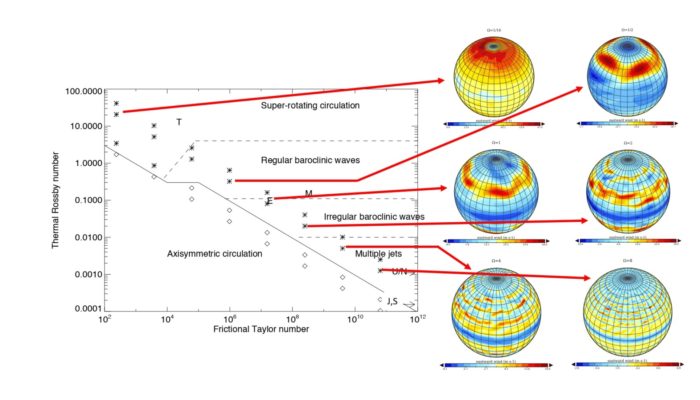
Today’s our blog hosts a review article by the 2016 EGU Richardson medallist Peter Read, together with Daniel Kennedy, Neil Lewis, Hélène Scolan, Fachreddin Tabataba-Vakili, YixiongWang, Susie Wright, and Roland Young for the special issue of NPG celebrating 100 years of IUGG (https://npg.copernicus.org/articles/27/147/2020/npg-27-147-2020.html). One of the great achievements of the past 100 ...[Read More]

NPG Paper of the Month: “Detecting dynamical anomalies in time series from different palaeoclimate proxy archives using windowed recurrence network analysis”

NPG Paper of the Month: “Detecting dynamical anomalies in time series from different palaeoclimate proxy archives using windowed recurrence network analysis”

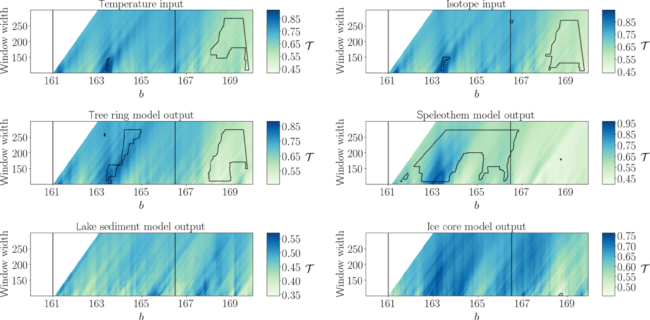
This month the NPG Paper of the Month award is achieved by Jaqueline Lekscha and Reik Donner for their paper “Detecting dynamical anomalies in time series from different palaeoclimate proxy archives using windowed recurrence network analysis” (https://npg.copernicus.org/articles/27/261/2020/). Jaqueline Lekscha did her PhD in physics at the Potsdam Institute for Climate Impact Research and Humbold ...[Read More]

Is planting trees a feasible large-scale solution to mitigate climate change?

Is planting trees a feasible large-scale solution to mitigate climate change?

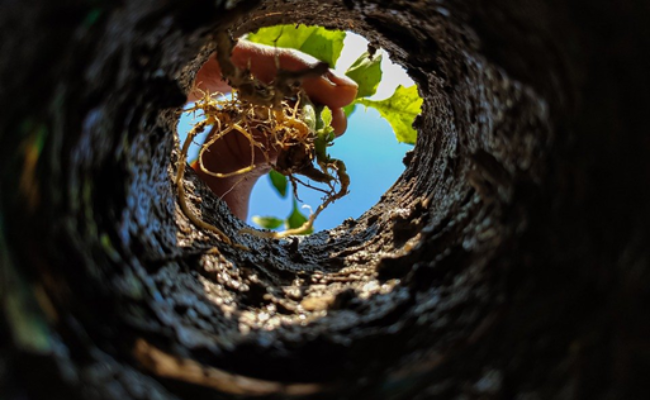
In the last few years it has become a common practice to compensate carbon dioxide (CO2) emissions by planting trees. This idea is simple and rooted on a very basic principle: trees get the energy of sunlight, and by photosynthesis they take water from the ground and CO2 from the air, releasing oxygen in the atmosphere. The CO2 is then stored in trees and surrounding soil. Tree planting efforts ar ...[Read More]

NP Interviews: the 2020 Lewis Fry Richardson Medal Valerio Lucarini

NP Interviews: the 2020 Lewis Fry Richardson Medal Valerio Lucarini

Today’s NP Interviews hosts the 2020 Lewis Fry Richardson Medal Valerio Lucarini. Valerio (b. Ancona, Italy, 1976) is the Director of the Centre for the Mathematics of Planet Earth and Professor of Statistical Mechanics at the University of Reading, and former Professor of Theoretical Meteorology at the University of Hamburg. His main expertise is in Climate Dynamics, Extreme Events, Statist ...[Read More]

NPG Paper of the Month: “Application of a local attractor dimension to reduced space strongly coupled data assimilation for chaotic multiscale systems”

NPG Paper of the Month: “Application of a local attractor dimension to reduced space strongly coupled data assimilation for chaotic multiscale systems”

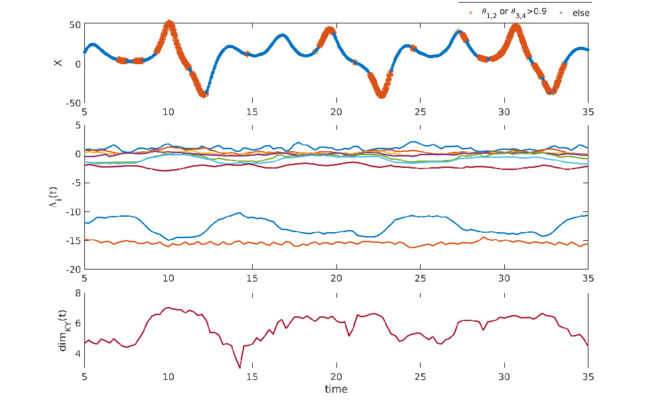
This month the NPG Paper of the Month award is achieved by Courtney Quinn for her paper “Application of a local attractor dimension to reduced space strongly coupled data assimilation for chaotic multiscale systems” (https://www.nonlin-processes-geophys.net/27/51/2020/). Dr. Courtney obtained her PhD in Mathematics at the University of Exeter (UK) researching critical transitions in dynamical syst ...[Read More]

How Climate Sciences can help in understanding uncertainties in Covid-19 epidemic projections

How Climate Sciences can help in understanding uncertainties in Covid-19 epidemic projections

COVID-19 is currently affecting over 180 countries in the world and poses serious threats to public health as well as economic and social stability of many countries. Modeling and extrapolating in near real-time the evolution of COVID-19 epidemics is a scientific challenge, which requires a deep understanding of the factors undermining the dynamics of the epidemics. Despite the importance of havin ...[Read More]

NP Interviews: the 2019 Lewis Fry Richardson Medallist Shaun Lovejoy

NP Interviews: the 2019 Lewis Fry Richardson Medallist Shaun Lovejoy

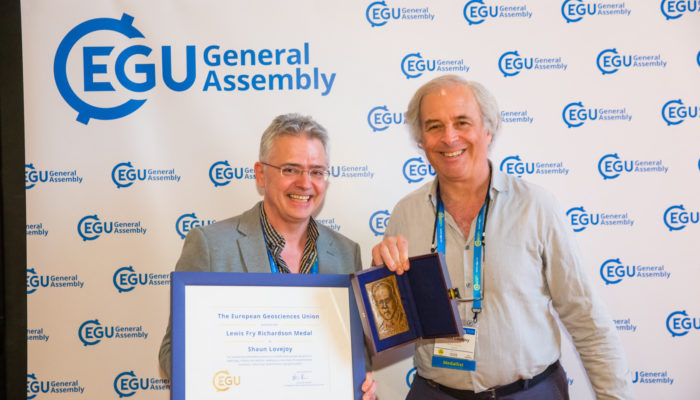
Today’s NP Interviews hosts the Lewis Fry Richardson Medallist Shaun Lovejoy. Shaun has degrees in physics from Cambridge and McGill University; he has been a McGill professor since 1985. For four decades, he has developed fractal, scaling ideas in the geosciences, contributing to advances in cascade processes, multifractals, anisotropic scale invariance, space-time multifractal modeling as well a ...[Read More]

NPG Paper of the Month: “Unravelling the spatial diversity of Indian precipitation teleconnections via a non-linear multi-scale approach”

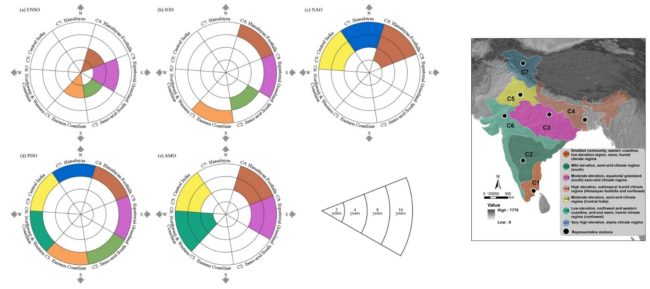
Schematic map of spatial diversity of Indian precipitation teleconnections at different time scales. (a) ENSO, (b) IOD, (c) NAO, (d PDO, and (e) AMO. Colors are consistent with the Indian community shown in the right figure. Presence of color in community segment indicates significant synchronization between teleconnection and Indian precipitation. Every single segment of circle shows the temporal scale. Cardinal direction has been projected in the background of each circle.

Today’s we launch one of our promised activities: the NPG Paper of the Month. This month the award is achieved by Jürgen Kurths and co-authors for their paper “Unravelling the spatial diversity of Indian precipitation teleconnections via a non-linear multi-scale approach” (https://www.nonlin-processes-geophys.net/26/251/2019/). Ankit Agarwal, one of the authors of the manuscript, tells ...[Read More]