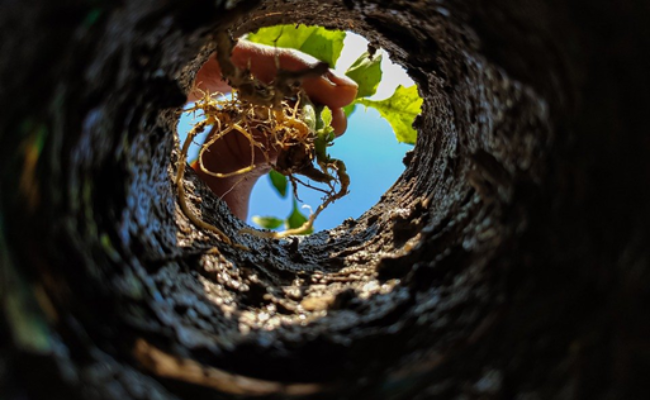
In the last few years it has become a common practice to compensate carbon dioxide (CO2) emissions by planting trees. This idea is simple and rooted on a very basic principle: trees get the energy of sunlight, and by photosynthesis they take water from the ground and CO2 from the air, releasing oxygen in the atmosphere. The CO2 is then stored in trees and surrounding soil. Tree planting efforts ar ...[Read More]
COVID-19-related drop in anthropogenic aerosol emissions in China and corresponding cloud and climate effects
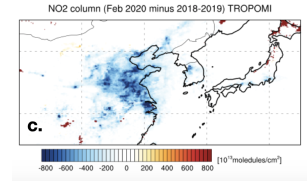
While a previous blog entry dealt with the question whether we can use lessons from the nonlinear nature of climate for projections of the Covid-19 pandemic, there is now a first example of how the pandemic can teach us something on climate. The several weeks long lockdown of China made February 2020 an exceptional month in terms of air quality; aerosol emissions were tremendously reduced leading ...[Read More]
The 2020 extra-tropical monster cyclones and their (possible) relations with climate change
On February 9th, a British Airways Boeing 747 landed in London Heathrow airport just four hours and 56 minutes after its take-off in JFK, New York, setting the shortest flight-time for non-supersonic jets over this route. The jumbo jet took advantage of the fast upper-tropospheric winds associated with an exceptionally strong jet-stream which created tail winds of about 400km/h. Over the United Ki ...[Read More]
Why Bushfires raged out of control across Australia?
Australian wildfires have burned an impressively large surface and caused the death of at least 24 citizens as well as of numerous animals. This immense disaster raises questions about its linkage with climate change, the possibility of controlling these events and the future of Australian wildlife ecosystems. While the first question will be addressed by soon to come attribution studies, and the ...[Read More]