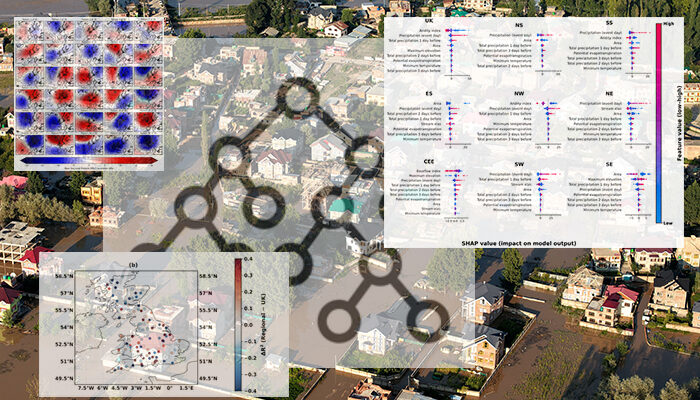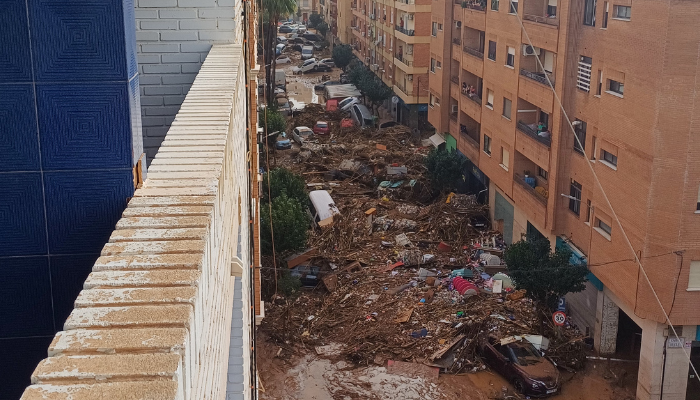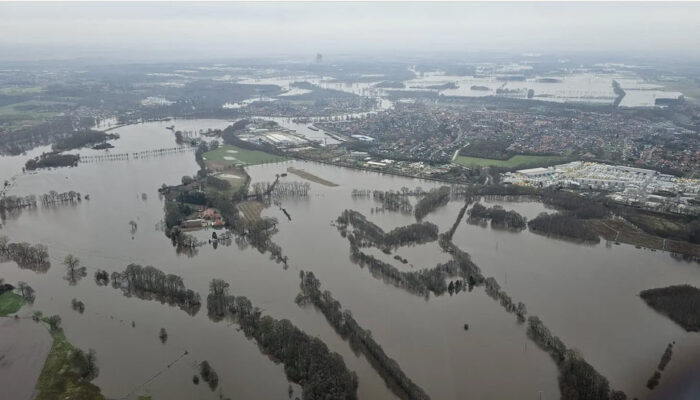
The aim of risk management is to prepare society in order to limit loss and damage when an extreme event occurs and to restore the functioning of society afterwards . While current risk management practices are helpful in many regards, they fall short when it comes to unprecedented events. An analysis of event pairs and recent disasters show that societies often fail to cope with events that are l ...[Read More]
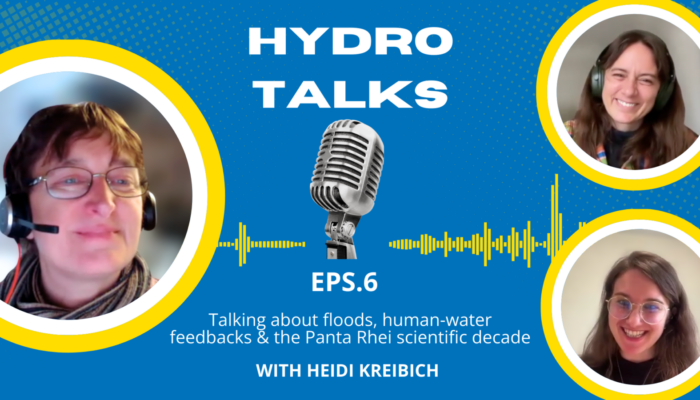
HydroTalks: Heidi Kreibich about Floods, Human-water Feedbacks, and the IAHS Scientific Decade Panta Rhei
For this month’s episode of HydroTalks, we’re thrilled to welcome Heidi Kreibich. She is head of the Section Hydrology at GFZ Helmholtz Centre for Geosciences and senior lecturer at the Geography Department of Humboldt-Universitat zu Berlin. Heidi is also president of the Natural Hazards division of the EGU and president of the International Commission on Human-Water Feedbacks in the IAHS. In add ...[Read More]
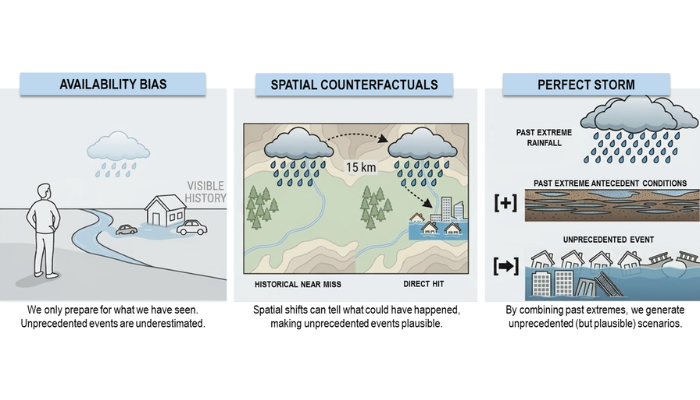
“What if …?” – Creativity in flood risk management using counterfactual scenarios
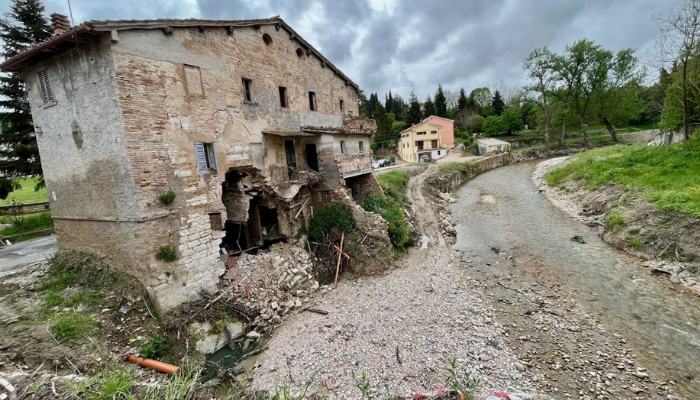
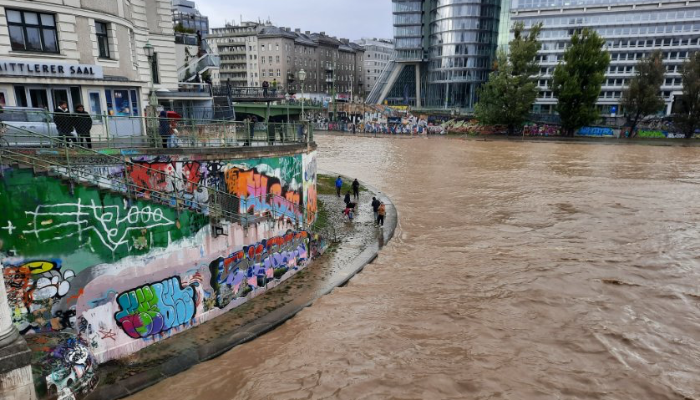
Floods are among the most devastating natural hazards, claiming lives and damaging infrastructure. The question of how we can be prepared for these extreme events quickly reaches an almost philosophical level: First of all, what is an extreme event? Second, how can we know what the future will bring? For the last century hydrologists have relied on statistical concepts, which are based on observ ...[Read More]
My Riverside journey by bike to EGU, part 2
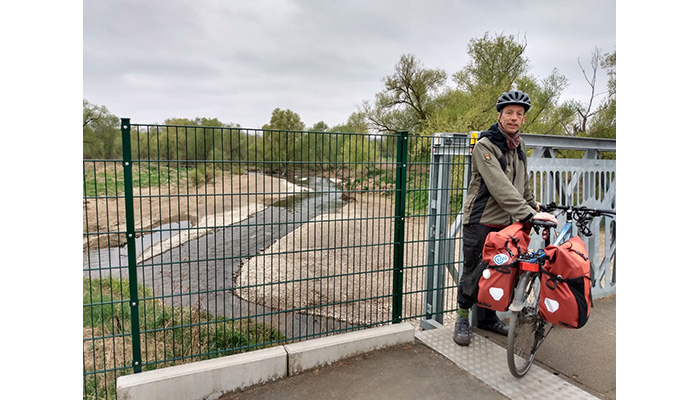
We’ve now been pedalling (unaided by batteries, in case you were wondering) for six days along the Rhine. I’m writing this in the warmth of the evening sun, sparkling off the river, flowing gently past tonight’s campsite, which occupies the hundred metre wide floodplain between the left bank and a steeply-sloping vineyard. Today’s ride took us through Koblenz, where the Mos ...[Read More]