
HS
Hydrological Sciences

Natalie Ceperley

Natalie Ceperley is a senior scientist at the University of Bern. Her career doing field work started as a biologist documenting the behavior of the common loon (Gavia immer) on a lake in Northern Minnesota (USA) and took her to diverse parts of the USA (California, Alaska, Iowa), Belize, Senegal, Mauritania, Benin, Burkina Faso, and currently, Switzerland. She also evolved from a biologist to a hydrologist via dry-land ecohydrology and now mostly can be found sampling water and snow for stable isotope analysis in the Swiss Alps.

Co-creating water knowledge (Part 2): Our achievements and ongoing activities of our working group

Co-creating water knowledge (Part 2): Our achievements and ongoing activities of our working group

The story so far, and how it developed We left you in part 1 of our blog (Hydrological Sciences | Co-creating water knowledge (Part 1): The history and future of an interdisciplinary working group) two days ago, anticipating what we are doing and how you can get involved with us.  The IAHS Working Group on “Co-creating Water Knowledge” developed a “baseline paper”, defining core co-creation concep ...[Read More]

Co-creating water knowledge (Part 1): The history and future of an interdisciplinary working group

Co-creating water knowledge (Part 1): The history and future of an interdisciplinary working group

HELPING and the co-creation of a working group In 2023, the International Association of Hydrological Sciences (IAHS), inaugurated a new Scientific Decade, called HELPING – IAHS Science for Solutions decade, with Hydrology Engaging Local People IN one Global world. This third decade was established through  a bottom-up process, by investigating the interests and the urgency of  local hydrolo ...[Read More]

Overlooked tips for the lost art of fieldwork

Overlooked tips for the lost art of fieldwork

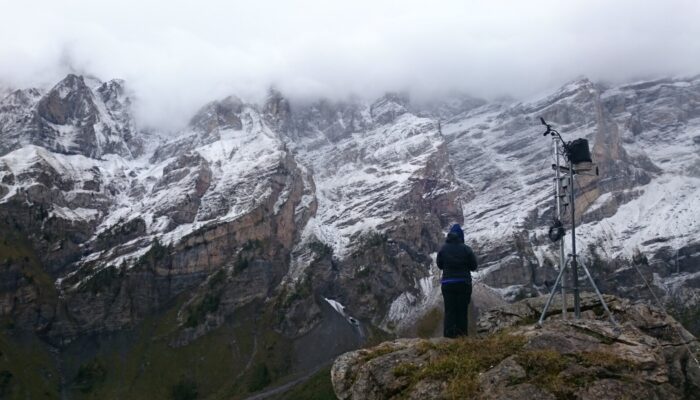
Not so long ago, almost all hydrologic data depended almost exclusively on fieldwork.  Today, sure, you can download data from repositories, there are satellites that beam you magic numbers that you can interpret to give you almost any variable, and some (less than we might hope) long-term monitoring has been outsourced to governments (or in some cases to citizens with sensors).  But somewhere in ...[Read More]