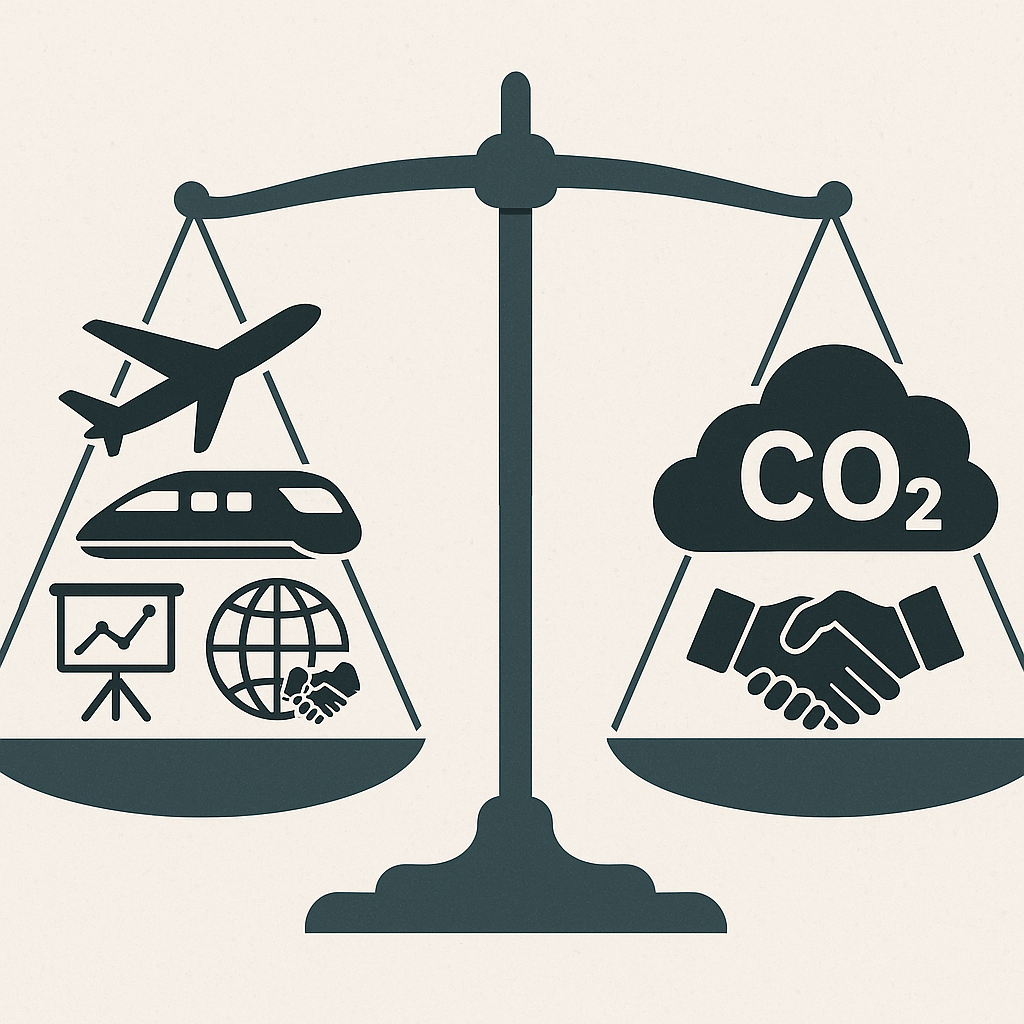
The carbon footprint of scientific collaboration has become an increasingly debated topic. Conferences, workshops, and research travel remain central to how science function, yet they also contribute to global greenhouse gas emissions. Since the pandemic era scientists also learned to work virtually and to attend workshops and conferences online. Understanding the carbon footprint, and how it comp ...[Read More]
EGU General Assembly
NP Interview the incoming Nonlinear Processes in Geosciences Division President: Davide Faranda
Today’s NP Interviews hosts the incoming NP Division President Davide Faranda. Davide is Research Director in Climate Physics in the Laboratoire de Science du Climat et de l’Environnement (LSCE) of the Institute Pierre Simon Laplace at the French National Center for Scientific Research (CNRS). He is an expert of weather extreme events such as cold spells, heatwaves, cyclones and severe thund ...[Read More]
Socio-economic and security implications of global heating
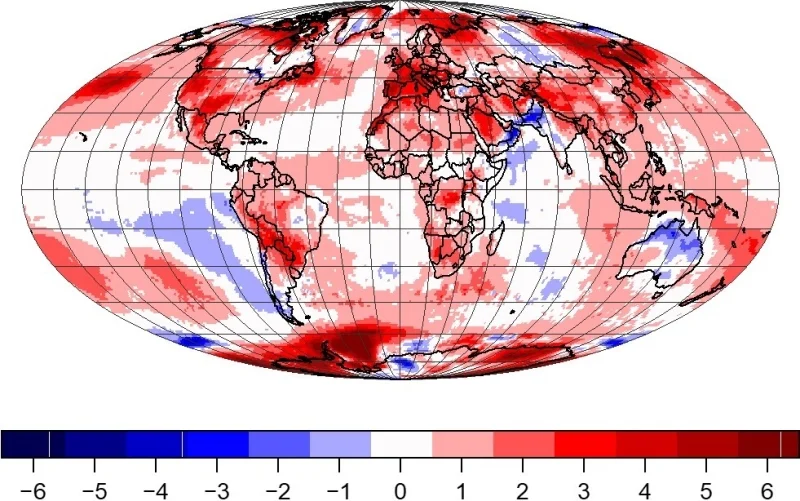
This year, like in the last few years, we are experiencing the effects of global heating in increasingly personal ways. The summer of 2022 exposed us to ever more extreme heat waves in North America, Europe, and Asia. For instance, the heat wave in India and Pakistan reached temperatures of 49C in Nawabshah, Pakistan. North America too experienced devastating heat waves and wildfires. Los Angeles ...[Read More]
ClimarisQ: A game on the complexity of the climate systems and the extreme events
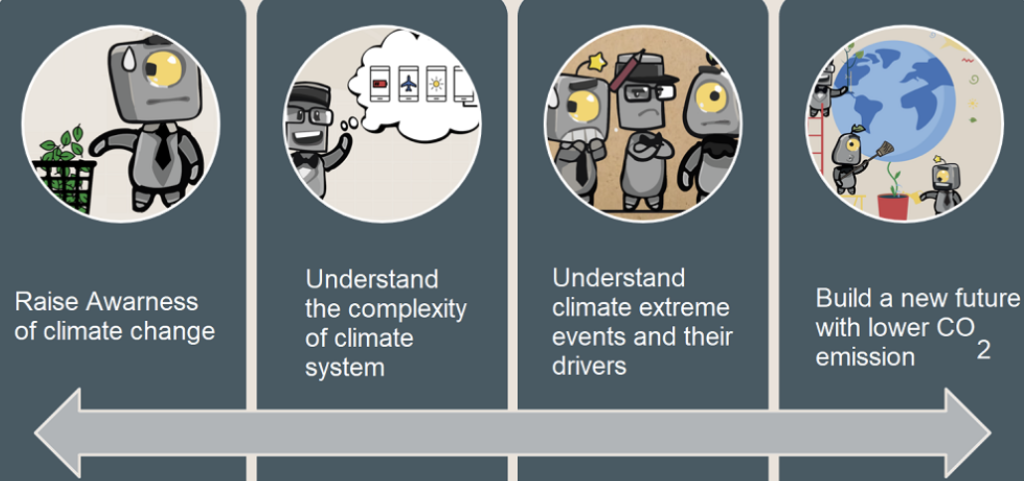
ClimarisQ is a smartphone/web game from a scientific mediation project that highlights the complexity of the climate system and the urgency of collective action to limit climate change. It is available in four languages: English, French, Spanish and Italian. It is an app-game where players must make decisions to limit the frequency and impacts of extreme climate events and their impacts on human s ...[Read More]
NP Campfire: “Scaling and multifractals : from historical perspectives to recent developments”
Scaling law behaviours are ubiquitous in geosciences both from a theoretical and practical point of view. They are required to better understand, analyse and simulate the underlying processes, which yields the observed variability of geophysical fields over wide ranges of spatio-temporal scales. A group of scientists within the Nonlinear Processes in Geosciences (NP) Division of the European Geosc ...[Read More]
NPG Paper of the Month: “Comparing estimation techniques for temporal scaling in palaeoclimate time series”
The NPG paper of the month of July was awarded to Comparing estimation techniques for temporal scaling in palaeoclimate time series by Raphaël Hébert, Kira Rehfeld and Thomas Laepple (https://doi.org/10.5194/npg-28-311-2021). Raphaël Hébert is currently a post-doctoral researcher at the Alfred-Wegener-Institut in Potsdam (Germany) in the Earth System Diagnostics group of Thomas Laepple, where he a ...[Read More]
NP Interviews: the 2021 Lewis Fry Richardson Medal Berengere Dubrulle
Today’s NP Interviews hosts the 2021 Lewis Fry Richardson Medal Berengere Dubrulle. Berengere is senior scientist at the Centre National de la Recherche Scientifique and presently Director of the Les Houches Physics School. She received her PhD in astrophysics in 1990 under the supervision of J.-P. Zahn. She is a specialist of turbulence, and its application to astro and geophysical flows using th ...[Read More]
NPG Paper of the Month: “Empirical evidence of a fluctuation theorem for the wind mechanical power input into the ocean”
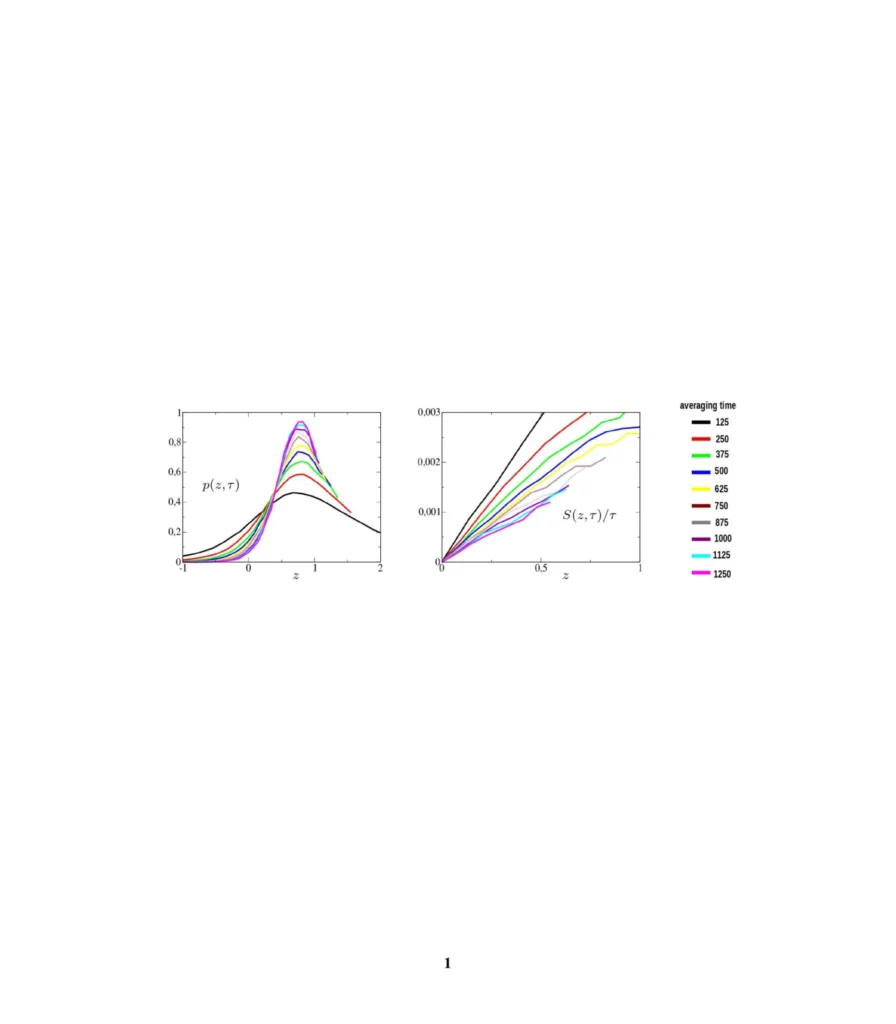
This month the NPG Paper of the Month award is achieved by Achim Wirth for his paper “Empirical evidence of a fluctuation theorem for the wind mechanical power input into the ocean“. Achim obtained his PhD at the University of Nice (Franc), doing research on turbulence theory. He then moved to oceanography working at UCLA (USA) and Geomar (Germany). Since 2005 he holds a permanent position a ...[Read More]
NP Campfire: “Perspectives on Climate Science: from historical developments to research frontiers”
Recently, the European Geosciences Union (EGU) started to support a new type of event called ‘Campfires’ that will give the Divisions the freedom to run online interactive events in a way that suits their needs. This allows the EGU Divisions to encourage interactions in their research communities through virtual informal meetings. In this framework, and thanks to a group of young and established s ...[Read More]
NP Interviews: the Division President Stéphane Vannitsem
Today’s NP Interviews hosts the Nonlinear Processes Division President Stéphane Vannitsem. Stéphane is the head of the Dynamical Meteorology and Climatology Unit of the Research division of the Royal Meteorological Institute of Belgium, and lecturer at the Free University of Brussels. He is currently president of the Nonlinear Processes division of the European Geosciences Union and executive edit ...[Read More]