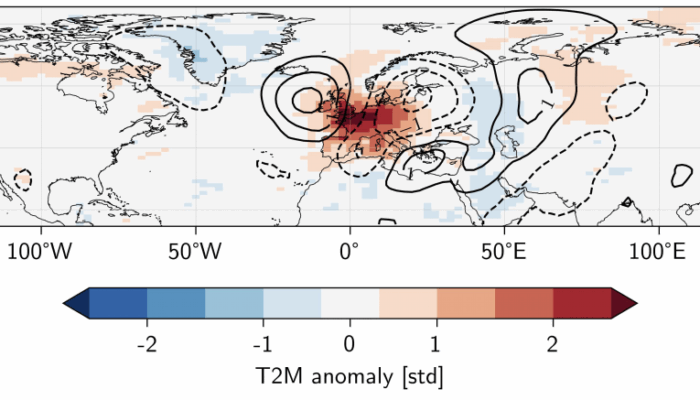
Extreme meteorological and climatological events can be immensely damaging and disruptive to society. Understanding the physical mechanisms driving these events, and how they will evolve with climate change is crucial for informing societal adaptation to our changing climate. However, extreme events are, by definition, rare. Our capacity to understand these events is, therefore, hindered by the sm ...[Read More]
Rethinking the carbon cost of scientific exchange: Nonlinear effects of reducing scientific mobility
The carbon footprint of scientific collaboration has become an increasingly debated topic. Conferences, workshops, and research travel remain central to how science function, yet they also contribute to global greenhouse gas emissions. Since the pandemic era scientists also learned to work virtually and to attend workshops and conferences online. Understanding the carbon footprint, and how it comp ...[Read More]
Where is climate science heading? Views from the community
At the recent UNDERPIN2 conference (Understanding rare events and their climatic impacts, in Erice, Sicily), we held a discussion on the future of climate science. To guide the conversation, I ran an interactive survey to capture how climate scientists see the current challenges, opportunities, and blind spots in climate research, communication, and the use of artificial intelligence. The response ...[Read More]
From Theory to Impacts: Nonlinear Perspectives on Weather Extremes at UNDERPIN#2
From 1–5 August 2025, the medieval hilltop town of Erice, Sicily, hosted the second UNDERPIN workshop, a meeting organised within the Nonlinear Processes in Geosciences community and dedicated to advancing the science of weather extremes. The event brought together a truly diverse group of researchers, spanning climate dynamics, attribution science, socio-economic impacts, statistical physics, and ...[Read More]