NP
Nonlinear Processes in Geosciences

Nonlinear Processes in Geosciences

EGU NP Paper of the Month “Finite-size local dimension as a tool for extracting geometrical properties of attractors of dynamical systems”
EGU NP Paper of the Month “Finite-size local dimension as a tool for extracting geometrical properties of attractors of dynamical systems”

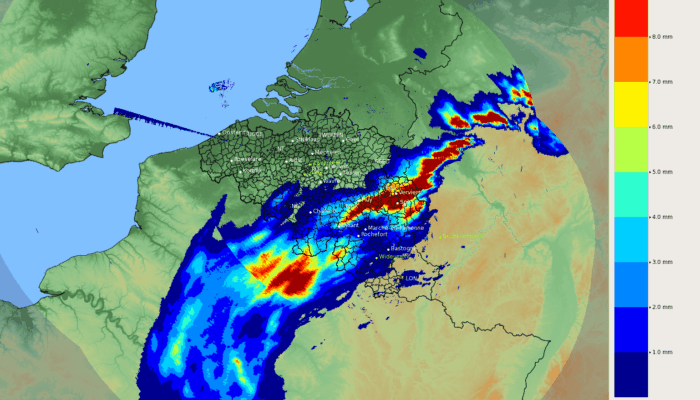
The original goal of this study was to understand how the local dimension of the attractor of a dynamical system could be used to estimate the predictability of the future state of the system, and apply this in the case of radar images of rain. The local dimension using Extreme Value Theory (EVT) has been introduced and used in Faranda et al. (2017) to infer the current predictability of different ...[Read More]

NP Interview the incoming Nonlinear Processes in Geosciences Division President: Davide Faranda

NP Interview the incoming Nonlinear Processes in Geosciences Division President: Davide Faranda

Today’s NP Interviews hosts the incoming NP Division President Davide Faranda. Davide is Research Director in Climate Physics in the Laboratoire de Science du Climat et de l’Environnement (LSCE) of the Institute Pierre Simon Laplace at the French National Center for Scientific Research (CNRS). He is an expert of weather extreme events such as cold spells, heatwaves, cyclones and severe thund ...[Read More]

NP Interview the outcoming Nonlinear Processes in Geosciences Division President: François Schmitt

NP Interview the outcoming Nonlinear Processes in Geosciences Division President: François Schmitt

Today’s NP Interviews hosts the outcoming NP Division President François Schmitt. François has a PhD degree from Université Pierre et Marie Curie in Paris (1993), in atmospheric turbulence, and an Habilitation degree from the same university (2001). He has stayed in Belgium during 6 years as a post-doc, working in meteorology and in fluid mechanics. He is CNRS researcher in Wimereux (North of Fran ...[Read More]

NP Paper of the Month: “Representation learning with unconditional denoising diffusion models for dynamical systems”

NP Paper of the Month: “Representation learning with unconditional denoising diffusion models for dynamical systems”

About the revolution of generating butterflies Imagine the most vibrant butterfly you can conceive. Congratulations – you’ve just achieved what generative AI does! This technology can create images from simple text descriptions, revolutionising image generation. But as geoscientists, how can we use it to improve the prediction of chaotic system like our weather? How can it help us to discover prop ...[Read More]

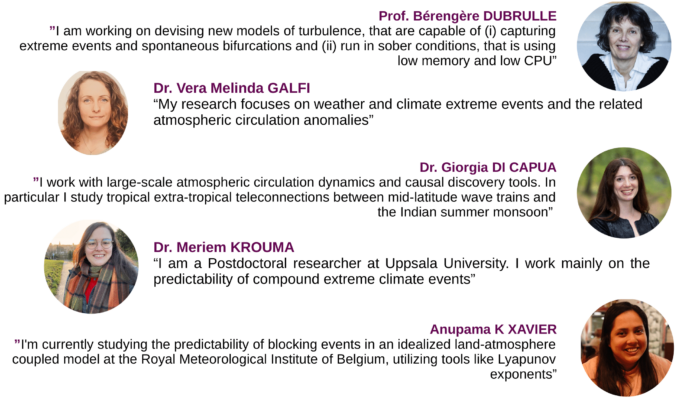
Interviews with Women in Nonlinear Processes in Geosciences: Exploring Inspiration and Challenges

Interviews with Women in Nonlinear Processes in Geosciences: Exploring Inspiration and Challenges

In celebration of Women in Science day, we delve into the experiences and insights of five accomplished women scientists in the field of Nonlinear Processes in Geosciences: Prof. Bérengère Dubrulle, Dr. Vera Melinda Galfi, Dr. Giorgia di Capua, Dr. Meriem Krouma, and Anupama K Xavier. Through a series of interviews, these women share their journeys, addressing challenges faced as women in science, ...[Read More]

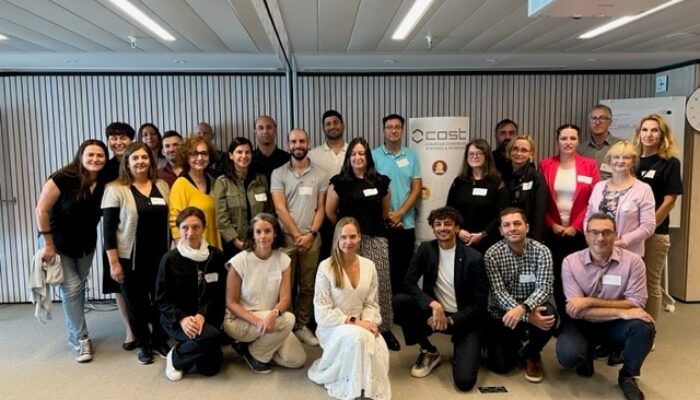
Bridging Mathematics and Climate Science: the AMS MRC programme for June-July 2024

Bridging Mathematics and Climate Science: the AMS MRC programme for June-July 2024

The American Mathematical Society’s Mathematics Research Communities (MRC) continues to be a beacon for early-career mathematicians seeking professional development. This esteemed program offers opportunities to hone collaborative research skills, cultivate networks within active research domains, and benefit from mentorship by leaders in the field. As part of the MRC initiative, the upcoming conf ...[Read More]

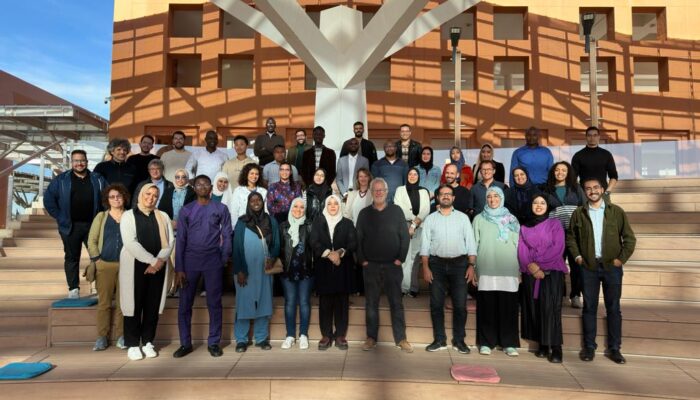
Training the new generation of scientists to address Climate Change issues in Africa: Insights from the Marrakech-Benguerir Climate Change, Projections and Services Summer School

Training the new generation of scientists to address Climate Change issues in Africa: Insights from the Marrakech-Benguerir Climate Change, Projections and Services Summer School

In the ever-evolving landscape of climate change, the Université Mohammed VI Polytechnique (Buengerir, Marocco) and Institut Pierre Simon Laplace (Paris,France) Summer School has emerged as a beacon of knowledge, equipping participants with the tools to comprehend, navigate, and mitigate the impacts of a changing climate. The inaugural edition of the summer school focused on “climate change, ...[Read More]

Bridging Science and Society: FutureMed’s Transdisciplinary Approach to Tackling Climate Change in the Mediterranean

Bridging Science and Society: FutureMed’s Transdisciplinary Approach to Tackling Climate Change in the Mediterranean

The Mediterranean region stands as a poignant testament to the far-reaching impacts of climate change. From extreme weather events to rising sea levels and increased pollution, the consequences of global warming are acutely felt. In this climate change hotspot, the interconnection of risks creates a complex web that affects ecosystems, economic activities, and human health. Recognizing the need fo ...[Read More]

Nonlinear Processes in Earth System Dynamics

Nonlinear Processes in Earth System Dynamics

Earth System Dynamics (ESD) is an open-access EGU journal focussing on an interdisciplinary view of the functioning of the Earth system and global change. Due its broad focus, ESD receives submissions of relevance to several different EGU divisions. Here, I would like to highlight five thought-provoking ESD papers that cover topics spanning environmental governance, extreme events, palaeo-climates ...[Read More]

ClimaMeter: Putting Extreme Weather in Climate Perspective

ClimaMeter: Putting Extreme Weather in Climate Perspective

ClimaMeter offers a dynamic approach to contextualize and analyze weather extremes within a climate context. This framework provides both easily understandable immediate contextualization of extreme weather events as well as more in-depth technical analysis shortly after the events. Methodology: The foundation of ClimaMeter’s methodology lies in identifying weather conditions similar to those resp ...[Read More]