NP
Nonlinear Processes in Geosciences

Dynamical systems

Climate Tipping Points through the “eyes” of the Masters: a virtual art exhibition
Tipping points in the climate system

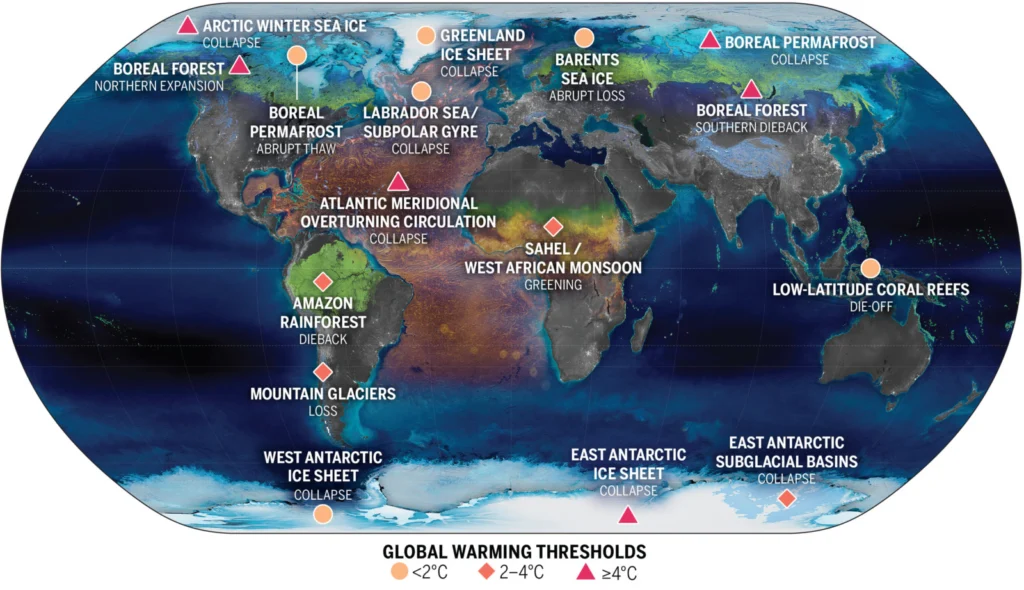
We are running out of time in fighting the effects of climate change. With the greenhouse gasses emissions steady, the planet is reaching warming levels that could cause some large ecosystems to tip in different states. A tipping point in the climate system refers to a threshold beyond which a small change in a particular variable can cause a significant and potentially irreversible change in the ...[Read More]

NP Interview: Federico Grazzini on Climate Change casts shadows on the present and the future of the Mediterranean Basin

NP Interview: Federico Grazzini on Climate Change casts shadows on the present and the future of the Mediterranean Basin

Weather extreme events in the year 2022 are really hitting the  Mediterranean basin very hard. Since the beginning of the year we are observing a widespread drought, heatwaves but also severe thunderstorms. Few days before the COP meeting in Sharm-el-sheik we discussed one of the experts of Mediterranean climate, Federico Grazzini, to unveil whether these events can be linked to climate change. Fe ...[Read More]

What the 2022 summer thunderstorms in the Mediterranean tell us about the ongoing climate change?

What the 2022 summer thunderstorms in the Mediterranean tell us about the ongoing climate change?

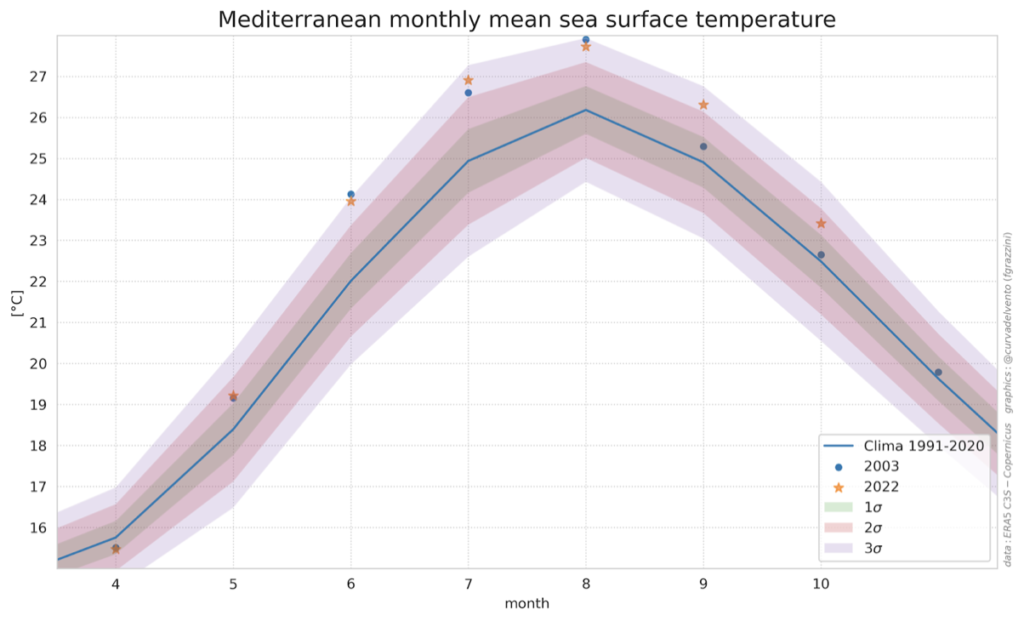
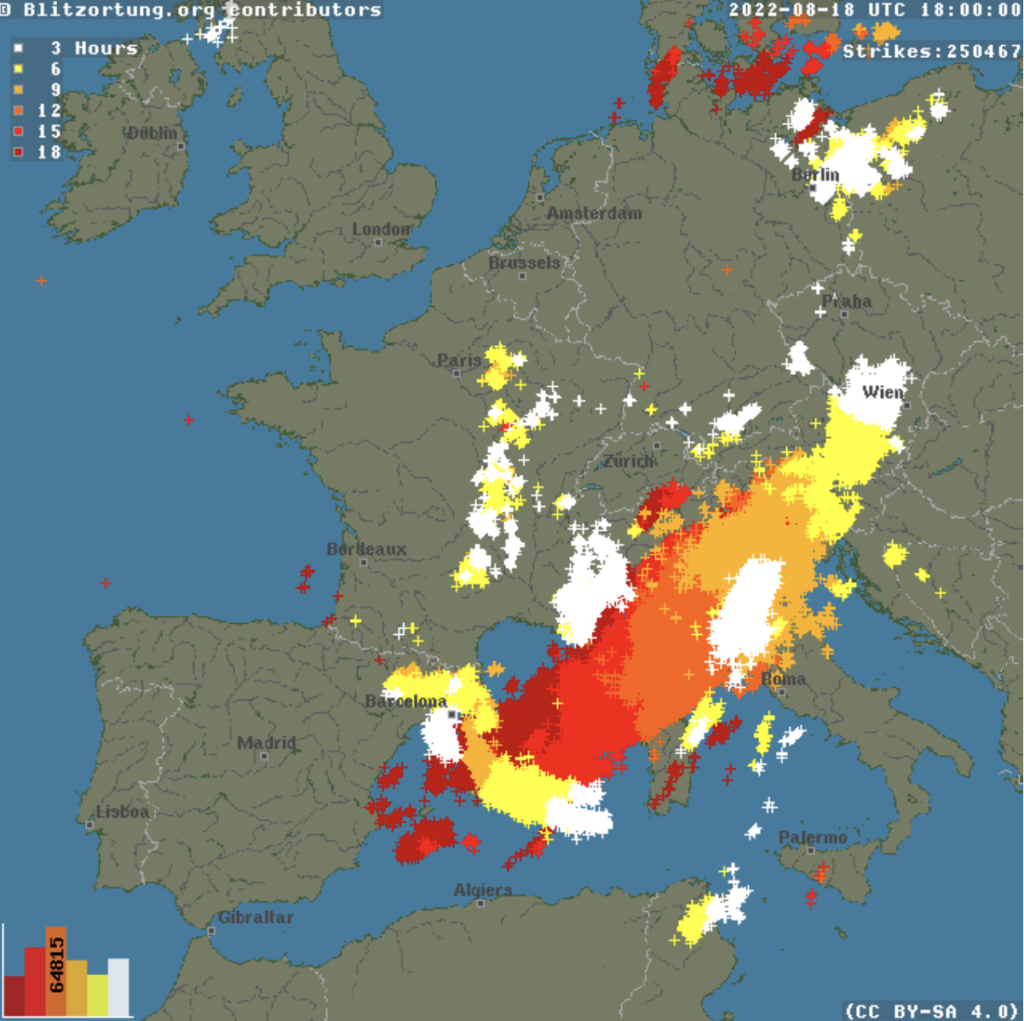
The 2022 European summer was governed by the presence of a persistent cold drop (low pressure area) located between Portugal and France. The change in its position has determined the alternation between hot conditions (low pressure center over Portugal) and stormy conditions (cold drop over France). The warming of the Mediterranean Sea (up to +6°C compared to the period 1990-2020) has largely cont ...[Read More]

NP Interviews: Davide Faranda (CNRS) on the topic “global warming and extreme events in Europe”

NP Interviews: Davide Faranda (CNRS) on the topic “global warming and extreme events in Europe”

Davide Faranda is a physicist at the French National Center for Scientific Research (CNRS). His main interests are devoted to the construction of a statistical mechanical and dynamical systems framework for the study of atmospheric motions. In particular, his works aim at the characterization of the metastable states of the atmospheric circulation with simple mathematical and statistical tools, an ...[Read More]

A new virtual seminar series on Climate Physics organized by the American Physical Society (APS) group in Physics of Climate

The APS Topical Group on the Physics of Climate (APS-GPC) is excited to launch a new virtual monthly seminar series on climate physics and variability. These seminars are aimed at introducing the broader physics community (and math, engineering, and other communities) to the fundamentals of climate science as well as cutting-edge research and open questions in this field. APS invites you to attend ...[Read More]

NPG Paper of the Month: “Inferring the instability of a dynamical system from the skill of data assimilation exercises”

NPG Paper of the Month: “Inferring the instability of a dynamical system from the skill of data assimilation exercises”

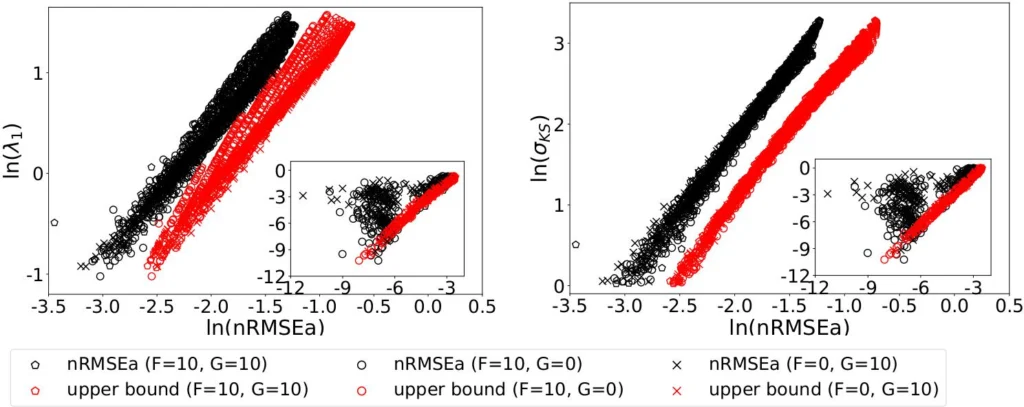
The NPG paper of the month was awarded to “Inferring the instability of a dynamical system from the skill of data assimilation exercises” by Yumeng Chen, Alberto Carrassi, and Valerio Lucarini. Geophysical systems are usually described by a set of dynamical equations that are often non-linear and chaotic (Ghil and Lucarini, 2020). Errors about the initial state can grow, shrink, or sta ...[Read More]

Exploring the multistable and multiscale climate system via noise

Could our present day “warm” climate turn into a frozen fully glaciated one, as if the whole Earth is a huge “snowball”? That was a question put forward independently by Mikhail Budyko and William Sellers in the late 60s [1,2] who made a first estimate of the necessary changes of incoming solar radiation, such that either the Arctic ice sheet completely melts, or the planet gets fully frozen. Base ...[Read More]

From the eyes of tropical cyclones to flooded strands : how climatologists use weather events to make climate predictions?

From the eyes of tropical cyclones to flooded strands : how climatologists use weather events to make climate predictions?

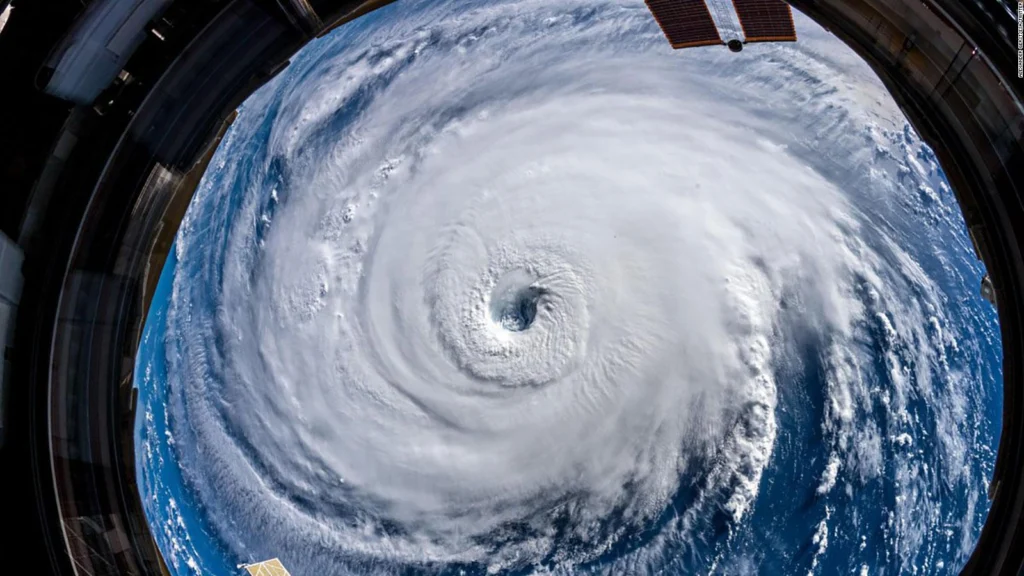
While extreme events are meteorological in nature, climatologists collect them to draw conclusions about the state of the present climate and to get clues how they possibly change in the future. Thus, climate and weather find common ground. If we consider an event alone, we are not studying the climate, we are in the field of meteorology, the goal of climatologists is therefore to put extreme even ...[Read More]

The 2021 Nobel Prize on Physics awarded to the physics of complex systems!

The 2021 Nobel Prize on Physics awarded to the physics of complex systems!

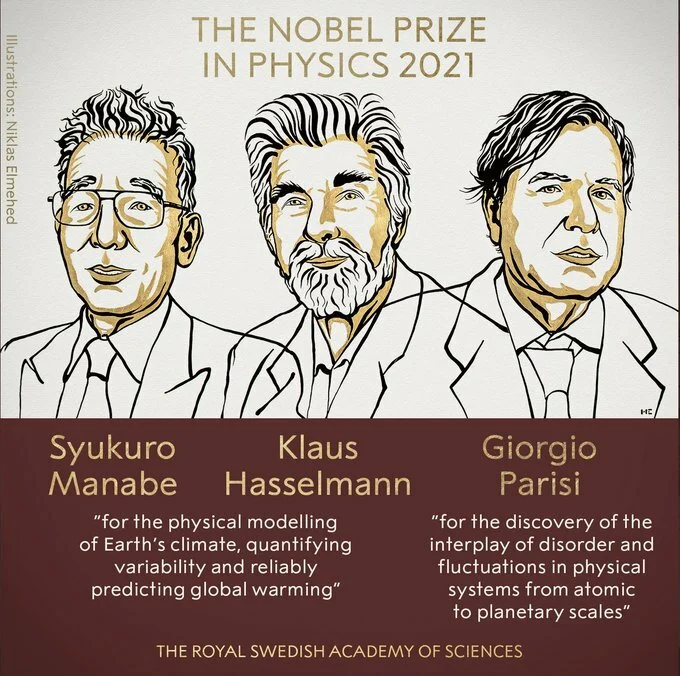
On October 7th, the Nobel Prize in Physics 2021 was announced. It came as a stunning surprise for the Non-linear Processes and Climate communities, the recipients of this year’s award being two outstanding senior climate scientists, Klaus Hasselmann and Syukuro Manabe, and a theoretical physicist specialized in complex systems, Giorgio Parisi. For many, this award was welcomed as a long-awaited re ...[Read More]

NPG Paper of the Month: “Recurrence analysis of extreme event-like data”

NPG Paper of the Month: “Recurrence analysis of extreme event-like data”

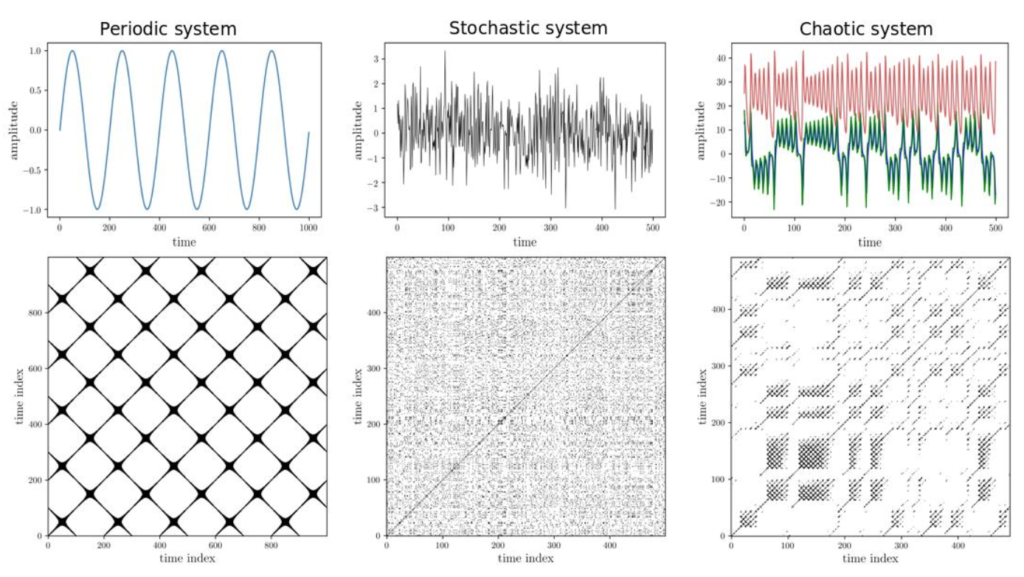
The May 2021 NPG Paper of the Month award goes Abhirup Banerjee and his co-authors for their paper “Recurrence analysis of extreme event-like data“. Abhirup is pursuing a doctoral degree in Theoretical Physics at University of Potsdam. He is working at Potsdam Institute of Climate Impact Research as a guest researcher as part of the DFG funded NatRiskChange project. In this project, he ...[Read More]