GD
Geodynamics

Geodynamics

The quest of a numerical modelling hero

The quest of a numerical modelling hero

Numerical modelling is not always a walk in the park. In fact, it resembles a heroic quest more often than not. In this month’s Wit & Wisdom post, Cedric Thieulot, assistant professor at the Mantle dynamics & theoretical geophysics group at Utrecht University in The Netherlands, tells the story of his heroic quest to save the princess from the dragon clear a code from bugs and shows ...[Read More]

One month to AGU!

One month to AGU!

As the leaves are falling; the sun is going down before you leave the office; and the stores are stacking up on Christmas decorations, it’s time to face the facts: it’s almost AGU! It shouldn’t come as a surprise, but just in case. Don’t worry, there is still time to reread your abstract to see what you’re supposed to be presenting, figure out how to do that in the se ...[Read More]

The jelly sandwich lithosphere: elastic bread, the jelly, and gummy bears

The jelly sandwich lithosphere: elastic bread, the jelly, and gummy bears

The Geodynamics 101 series serves to showcase the diversity of research topics and methods in the geodynamics community in an understandable manner. We welcome all researchers – PhD students to Professors – to introduce their area of expertise in a lighthearted, entertaining manner and touch upon some of the outstanding questions and problems related to their fields. This month Vojtěch Patočka fro ...[Read More]

Going with the toroidal mantle flow

Going with the toroidal mantle flow

Subduction zones host one of the most complex and fascinating tectonic systems on the planet. Numerical models by Király and colleagues recently published in Earth and Planetary Science Letters reveal that the strength of the toroidal flow depends on the mantle viscosity and the magnitude of the slab pull force while the characteristic size of the toroidal cells mainly depends on the size of the c ...[Read More]

Planting seeds of deformation in numerical models

Planting seeds of deformation in numerical models

The Geodynamics 101 series serves to showcase the diversity of research topics and methods in the geodynamics community in an understandable manner. We welcome all researchers – PhD students to Professors – to introduce their area of expertise in a lighthearted, entertaining manner and touch upon some of the outstanding questions and problems related to their fields. This month we continue the con ...[Read More]

Poster presentation tips

Poster presentation tips

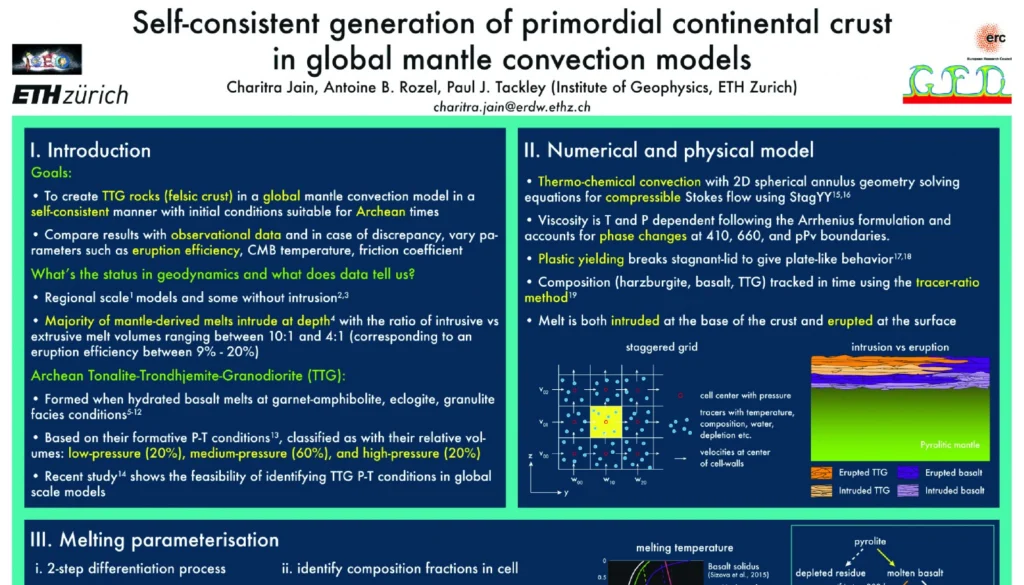
Being a scientist is more than just doing research and science. You also need to be able to communicate your findings to your peers and/or the general public (outreach). At conferences, you usually have two options for presenting your work: a talk or a poster (although at EGU, you also have the PICO sessions). A poster is often preferred if you would like to start a discussion and get lots of feed ...[Read More]

The lost Tethyan seaways: A deep-Earth and deep-time perspective on eastern Tethyan tectonics

The lost Tethyan seaways: A deep-Earth and deep-time perspective on eastern Tethyan tectonics

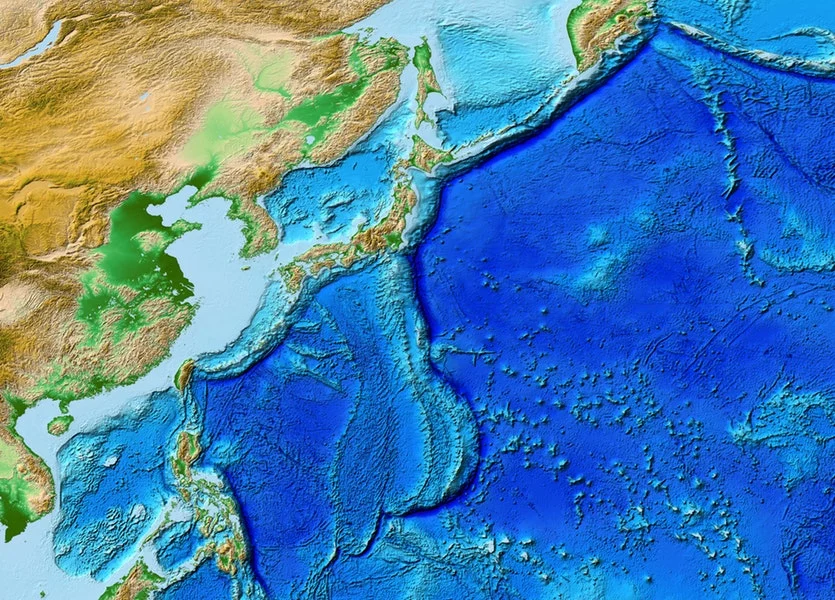
Every 8 weeks we turn our attention to a Remarkable Region that deserves a spot in the scientific limelight. Following from the first entry which showcased the Eastern Mediterranean, we move further east, and back in time, to the realm of the Tethys. The post is by postdoctoral researcher Sabin Zahirovic of the EarthByte Group and Basin GENESIS Hub, The University of Sydney. The southern and south ...[Read More]

The EUGEN e.V. meeting – a unique (geological) experience

The EUGEN e.V. meeting – a unique (geological) experience

Extracurricular activities for current and former geosciences students provide great value to early career scientists in terms of networking and broadening their scientific horizon. PhD student Maximilian Döhmann, who studies rock deformation with numerical models based on high temperature and pressure torsion experiments in the Geodynamic Modelling group of GFZ Potsdam, shares his experiences wit ...[Read More]

Why there should (not) be more women in geodynamics

Why there should (not) be more women in geodynamics

Nowadays, equality is cool. Everyone is always going on about how women and men should get the same opportunities. In science, and hence, geodynamics, women are still a bit behind men for both historical (women only recently started graduating more in exact sciences) and unconscious-bias reasons. Therefore, there are lots of programs in order to stimulate women to go into science and, more importa ...[Read More]

How good were the old forecasts of sea level rise?

How good were the old forecasts of sea level rise?

The Geodynamics 101 series serves to showcase the diversity of research topics and methods in the geodynamics community in an understandable manner. We welcome all researchers – PhD students to Professors – to introduce their area of expertise in a lighthearted, entertaining manner and touch upon some of the outstanding questions and problems related to their fields. Our latest entry for the serie ...[Read More]