NP
Nonlinear Processes in Geosciences

EGU blog

New Editorial Voices at NPG

New Editorial Voices at NPG

As part of welcoming new members to the editorial team of Nonlinear Processes in Geophysics (NPG), we are pleased to present short interviews with two newly appointed editors, Dr. Kira Rehfeld and Dr. Jezabel Curbelo. They share their scientific backgrounds, motivations for joining the journal, editorial goals, and perspectives on emerging research directions in nonlinear geosciences. Their insigh ...[Read More]

Turbulence (and not only): The Legacy of Vincenzo Carbone, 2025 Richardson Medal

Turbulence (and not only): The Legacy of Vincenzo Carbone, 2025 Richardson Medal

One year ago, Vincenzo Carbone left us. Vincenzo was a leading scientist in nonlinear geophysics, turbulence, and complex systems, influencing fluid and plasma physics, weather and space weather, solar–terrestrial relations, and climate dynamics. Yet for those who worked closely with him, his legacy goes well beyond his remarkable scientific achievements. Scientific Contributions and Impact Over m ...[Read More]

Rethinking the carbon cost of scientific exchange: Nonlinear effects of reducing scientific mobility

Rethinking the carbon cost of scientific exchange: Nonlinear effects of reducing scientific mobility

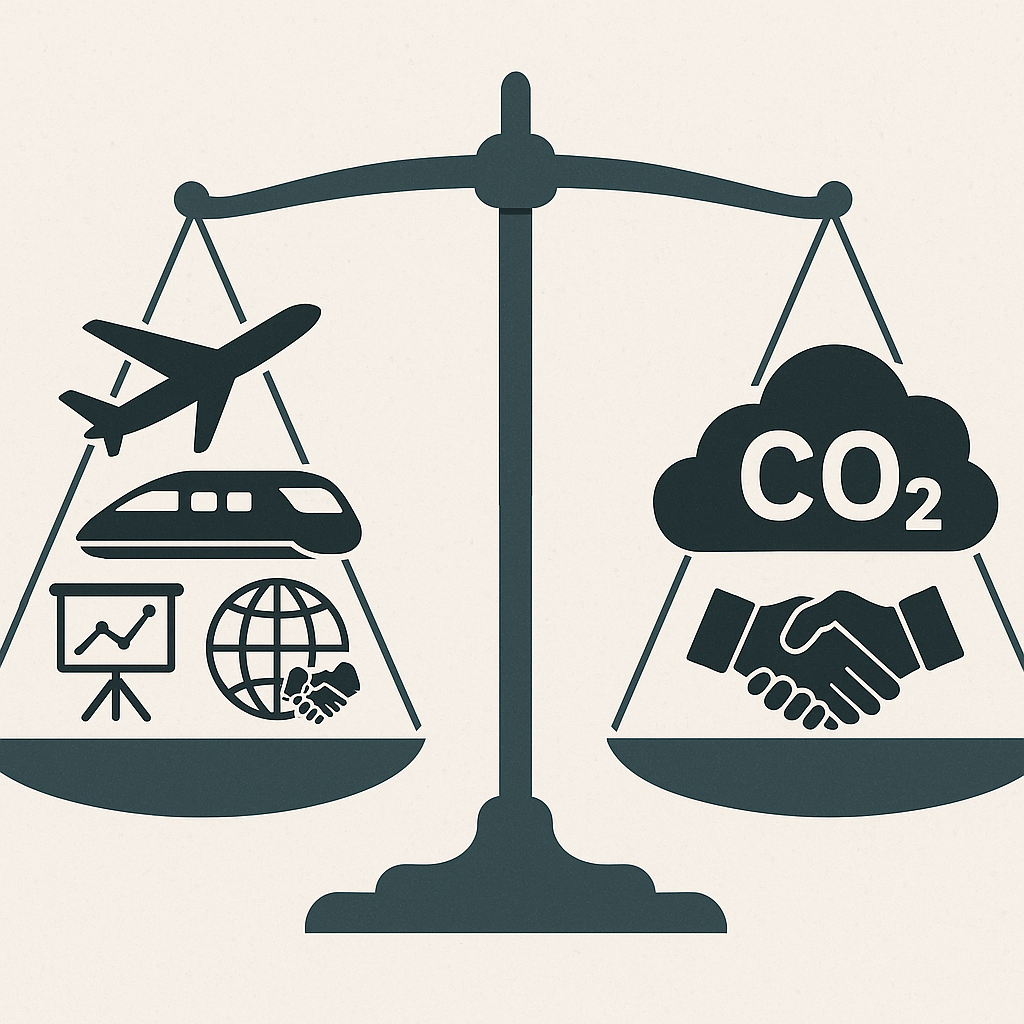
The carbon footprint of scientific collaboration has become an increasingly debated topic. Conferences, workshops, and research travel remain central to how science function, yet they also contribute to global greenhouse gas emissions. Since the pandemic era scientists also learned to work virtually and to attend workshops and conferences online. Understanding the carbon footprint, and how it comp ...[Read More]

Where is climate science heading? Views from the community

Where is climate science heading? Views from the community

At the recent UNDERPIN2 conference (Understanding rare events and their climatic impacts, in Erice, Sicily), we held a discussion on the future of climate science. To guide the conversation, I ran an interactive survey to capture how climate scientists see the current challenges, opportunities, and blind spots in climate research, communication, and the use of artificial intelligence. The response ...[Read More]