
As part of welcoming new members to the editorial team of Nonlinear Processes in Geophysics (NPG), we are pleased to present short interviews with two newly appointed editors, Dr. Kira Rehfeld and Dr. Jezabel Curbelo. They share their scientific backgrounds, motivations for joining the journal, editorial goals, and perspectives on emerging research directions in nonlinear geosciences. Their insights reflect both the interdisciplinary spirit of NPG and its commitment to advancing high-quality, constructive scientific exchange.
Dr. Kira Rehfeld is a Professor of Climatology and the Biosphere in the Departments of Geosciences and Physics at the University of Tübingen. The central focus of her research is to explain the state- and timescale-dependence of climate variability from a past-to-future perspective. In particular, her work investigates dynamic regional changes within the Earth system under conditions of global warming and cooling. She is also interested in understanding the level of complexity required in Earth system models to accurately capture key climate features, as well as in developing options for climate change mitigation. Her major funding and awards awards include the Award for Courageous Science, the 2021 Manfred Fuchs Prize  from the Heidelberg Academy of Sciences, the 2019 Hengstberger Award for Young Scientists, and the 2018 DFG Emmy Noether Fellowship.


Dr. Jezabel Curbelo is Professor at the Universitat Politècnica de Catalunya. She is also deputy chair of research of the Department of Mathematics at UPC and Scientific Officer for NP6: Turbulence, Transport, and Diffusion within the Nonlinear Processes in Geosciences division of the European Geosciences Union. Her research focuses mainly on applied mathematics for geophysical flows, more specifically in the simulation and modelling of the complicated processes underlying fluid motion and in the description of transport, mixing and stirring in the ocean and atmosphere from the standpoint of dynamical systems theory. She received her PhD in Mathematics from Universidad Autónoma de Madrid in 2014. Her doctoral thesis was awarded the 2015 Donald L. Turcotte Award (AGU) for outstanding work in nonlinear geophysics, as well as the 2015 Vicent Caselles Award (RSME – FBBVA). She has also received the 2020 Antonio Valle SEMA Prize for Young Researchers and the “L’ORÉAL-UNESCO For Women in Science” award, edition "Spain - National Young Talents Programme 2020/2021"
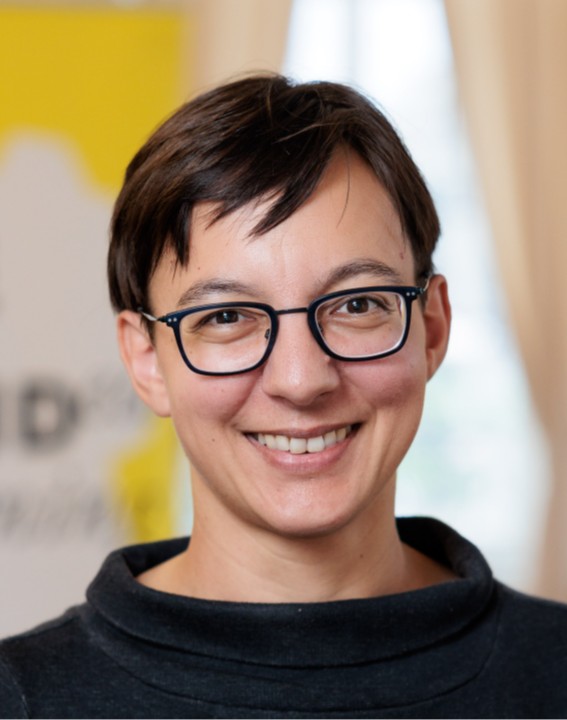
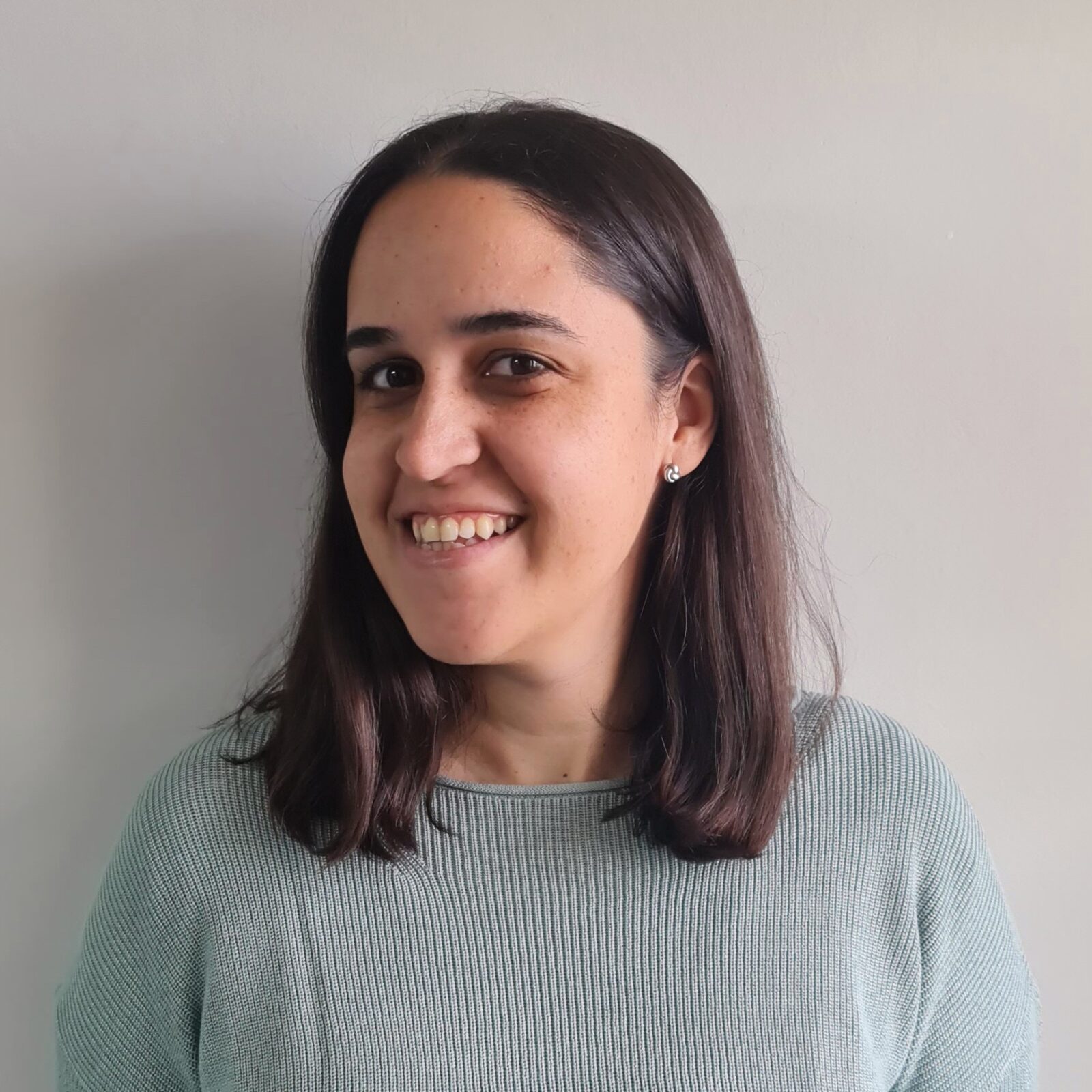
- What motivated you to join the editorial team of the NP EGU journal?
Kira: Nonlinear processes are crucial for our understanding of the Earth System. We have nonlinear dynamics governing ice sheets, atmosphere, ocean, vegetation dynamics, and even the orbital motion of our planet. Without nonlinearities there would be no chaos, extreme variability,or tipping behaviour in Earth system components, and I find these topics crucial to study for system understanding, and improving future projections. Nonlinearities are challenging to constrain and model, and therefore the conceptual, methodological and interdisciplinary approach of the journal of Nonlinear Processes in Geophysics is crucial.
Jezabel: I had published in NPG before and always felt it was a great fit for my work. I really appreciate its focus on interdisciplinary science and the connection between applied mathematics and geophysical applications. Joining the editorial team felt like a natural way to give back to a community I’ve learned a lot from and continue to grow with.
- What are your main goals as a new editor?
Kira: My goal as an editor is to contribute to the scientific progress in the area of interdisciplinary climate and earth system dynamics.
Jezabel: Ensure a fair and constructive peer-review process, I really try to do my best!
- Are there specific topics or trends that you believe the journal should focus on?
Kira: New data-driven paradigms to explore Earth and Space sciences are emerging, and extremely powerful. The journal should focus on the characterization of such AI-based approaches, including their failure modes in the face of nonlinearities, and evolving boundary conditions.
Jezabel: Topics such as machine learning, AI, and data-driven modeling are becoming increasingly relevant, especially when combined with physical insight and theory. I believe using these tools to better understand geophysical processes is a direction worth encouraging. But at the same time, NPG should continue to support the more “classical” topics that have laid the foundation of the journal and remain essential to its identity.
- What advice would you give to early career researchers submitting their work to NP?
Kira: Trust the process! And if you haven’t heard from the journal for a couple of months but you need this paper for your dissertation, write a polite inquiry and point this out. Even overworked editors and reviewers understand this.
Jezabel: My advice for early career researchers is to be clear about what makes your work special and why it matters. Explain your methods and results as simply as you can, and don’t be afraid of feedback, it’s there to help you improve!
We thank Kira and Jezebel for sharing their perspectives and enthusiasm for Nonlinear Processes in Geophysics. Their commitment to research excellence, fair peer review, and support for both emerging and established research themes highlights the strength and diversity of the NPG editorial team.