One of the biggest challenges anyone leaving their undergraduate degree faces is often what to do next? Do you pursue a career inside academia, or seek work in a different field, in industry or policy, or something completely different? What if you change your mind part way down one of those paths and want to change, either moving back into academic research at a later stage, or leaving academia a ...[Read More]
Jobs
How to EGU22: Jobs and Career opportunities at the General Assembly
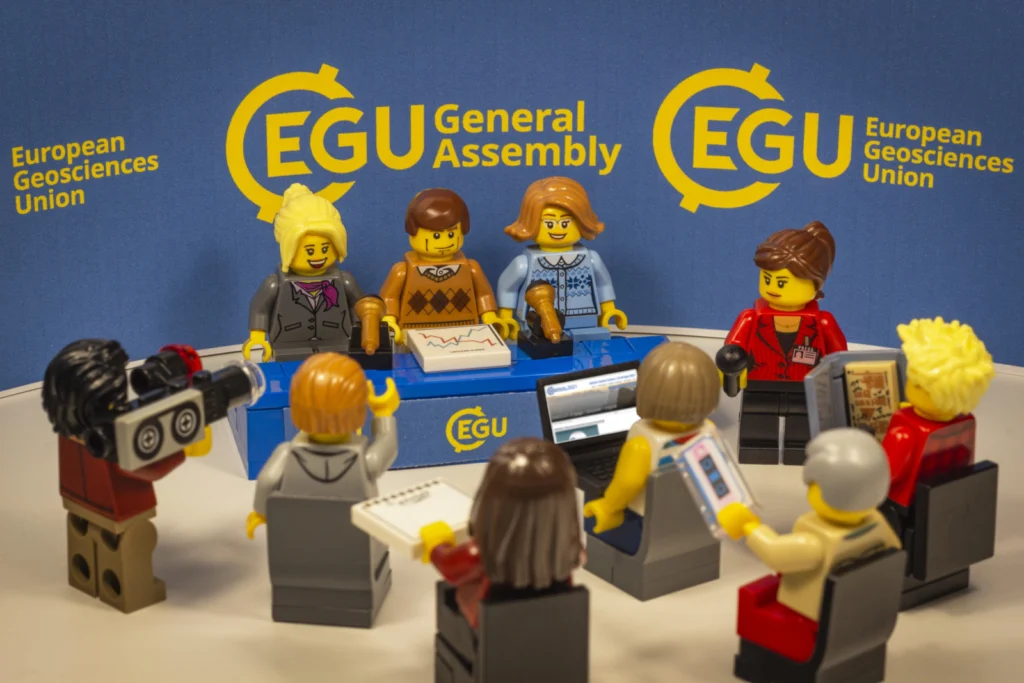
Attending conferences is a great way to widen your existing network, meet potential employers and grow your professional skills. At EGU22, we bring you some exciting and useful career networking opportunities, regardless of whether you attend virtually or on-site in Vienna! Great debates and career development short courses Fixed-term contracts: opportunity or exploitation? A lack of perman ...[Read More]
EGU22: What makes a good CV?
This year for EGU22 we wanted to make participation in the Jobs and Careers events equally accesible whether you are participating remotely or on-site, so we added the ‘Ask me for my CV’ sticker that you can put in your profile to let people know that your CV is available. But what about the actual CV itself? Seismology Division Early Career Scientist Michaela Wenner, supported by the ...[Read More]
The Early Career Scientists group ‘Jobs and Careers’ is here to help all ECS!
Early Career Scientists (ECS) often face challenges when it comes to finding and pursuing their career path. Science offers a wide variety of options, so building a career in or around science can be quite daunting, with no clear single path to follow. While research is an obvious career choice for ECS, it can be conducted in a variety of different settings; from academic and governmental institut ...[Read More]
Job opportunity at the EGU General Assembly: photography press assistant
We have one vacancy for a photographer with an interest in science communication to work at the press centre of the EGU22 General Assembly which will be held in Vienna, Austria and online, from 23–27 May. The successful candidate will be required to attend the General Assembly in-person in Vienna. Applications from geoscience students with experience in science communication are also very welcome. ...[Read More]
vEGU21: What makes a good CV?
This year for vEGU21 we couldn’t have our normal CV board for our attendee’s to share their skills and talents, so instead we added the ‘Ask me for my CV’ sticker that you can put in your profile to let people know that your CV is available. But what about the actual CV itself? Seismology Division Early Career Scientist Michaela Wenner has collected some of the best advice ...[Read More]
GeoPolicy: Your guide to science for policy at #vEGU21!
The EGU General Assembly is the largest geoscience meeting in Europe. It has a wide range of scientific sessions that you can attend to gain a greater understanding about specific topics both within and outside of your research area. Every year there are also numerous non-scientific sessions that can attend to expand your network, diversify your expertise, and develop new skills – including those ...[Read More]
GeoPolicy: A window into a career in Science Policy, as EGU’s first Policy Intern.
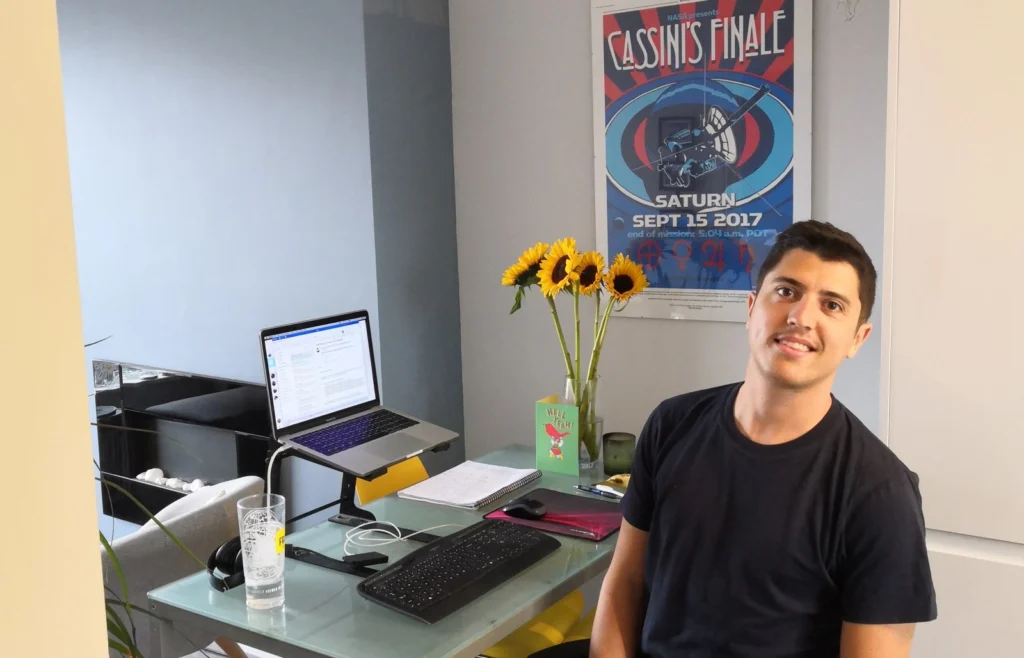
My name is Ned Staniland and I am a third year PhD student in space physics at Imperial College London. I study the magnetic field of Saturn using data from the Cassini-Huygens mission that was launched in 1997. In July 2020, I was lucky enough to be EGU’s first intern where I worked in their policy and communications team. Finding an Internship Since the beginning of my PhD, I have kept an eye ...[Read More]
GeoPolicy: How to become a Seconded National Expert for the European Commission
The European Seconded National Expert programme is a fantastic opportunity for scientists who are currently working in a national, regional or local public administration of an EU member state or an intergovernmental organisation to gain experience working within a European policy institution. In most cases, secondments are between six months and four years during which time the Seconded National ...[Read More]
GeoPolicy: My experience with the EGU’s science-policy pairing scheme
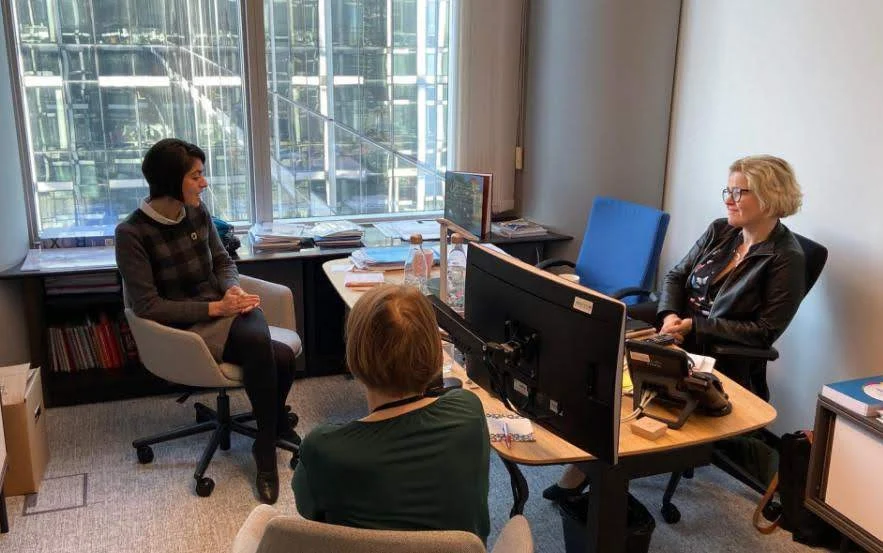
“Thanks for coming, but no time for celebratory drinks,” I told my colleagues. I arrived in Brussels right after defending my doctoral thesis to brief the Finnish Member of the European Parliament (MEP) Miapetra Kumpula-Natri and her team about the impact of sea-level rise and climate change on the coastal communities of the Baltic Sea. Climate science? Baltic Sea? EU Parliament? I was soon bombar ...[Read More]