
While spooky season is officially in the rearview mirror, it’s not too late to talk about ghosts, is it?
Not the bedsheet-wearing, candy-hunting ones that may have haunted our doorsteps last week, but a much older, more elusive kind: the geochemical phantoms of Earth’s first living organisms.
Nearly thirty years ago, a team of geologists thought they had unearthed the ultimate ghost story on the remote, windswept shores of Akilia Island in southwest Greenland. In 1996, scientists led by Stephen Mojzsis cracked open the geological world with a mind-blowing announcement: they had found traces of life dating back 3.85 billion years.
To put that deep time into perspective, this discovery placed the emergence of a biological world right at the tail end of the Late Heavy Bombardment, an era when Earth was still being battered by cosmic debris. The idea that life was not just clinging on, but, in fact, thriving in ancient oceans so soon after the planet’s violent birth, has challenged our understanding of how quickly biology can take hold.
The evidence was invisible to the naked eye. Scientists pointed to microscopic inclusions of graphite trapped inside apatite crystals. Using advanced mass spectrometry, they found that this carbon was severely depleted in the heavier Carbon-13 isotope. Because biological enzymes have a natural preference for lighter carbon, this distinct isotopic signature has long been considered the metabolic fingerprint of life. For a moment in the late 1990s, Akilia was celebrated as the undisputed cradle of the earliest known biosphere.
But the beautiful thing about the scientific method is its ruthless demand for verification. Science is a crucible.
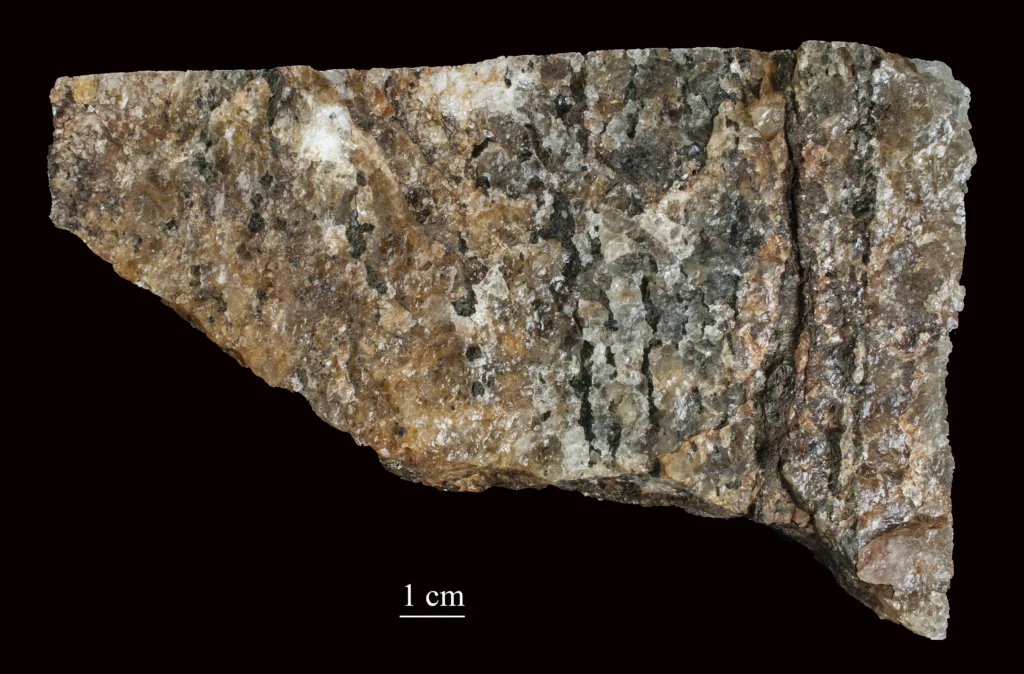
Within a few years, an interdisciplinary wave of geologists, metamorphic petrologists, and isotope geochemists descended upon the Akilia claims to cross-examine the rocks. Researchers like Christopher Fedo and Martin Whitehouse began to dismantle the original hypothesis piece by piece. They argued that the quartz-pyroxene rocks hosting the carbon were not ancient marine sediments where life would naturally accumulate. Instead, field mapping and chemical analysis suggested these were actually igneous volcanic rocks that had been cooked and chemically altered by extreme hydrothermal fluids: a violent process known as metasomatism.
The biological smoking gun itself was suddenly in doubt. If the rocks weren’t ocean sediments, the carbon trapped inside them could have formed through entirely non-biological, high-temperature chemical reactions deep within the Earth’s crust. Furthermore, the heat and pressure that these rocks endured over nearly four billion years made it nearly impossible to prove (and in a definitive way) that the graphite and the apatite formed at the exact same time.
What followed was a fierce, decades-long debate that fundamentally transformed modern geobiology. While the Akilia graphite is no longer accepted by the broader scientific consensus as definitive proof of life, its legacy is incredibly vital. The controversy forced scientists to build a much more rigorous framework for claiming deep-time biosignatures. Because of Akilia, any scientist hoping to claim they have found early life must now clear quite the high bar: they must prove the rock is genuinely sedimentary, that the carbon was trapped when the rock originally formed, and that every possible non-biological chemical reaction has been thoroughly ruled out.
Today, the search for our earliest ancestors has shifted to slightly younger, better-preserved environments, like the 3.48-billion-year-old stromatolites of Western Australia. Yet the icy outcrops of Akilia remain a significant monument to the scientific journey. They remind us that the quest to understand our origins is about having the courage to ask the hardest possible questions of them, knowing that Earth will only give up its earliest secrets to those of us who look closest.
