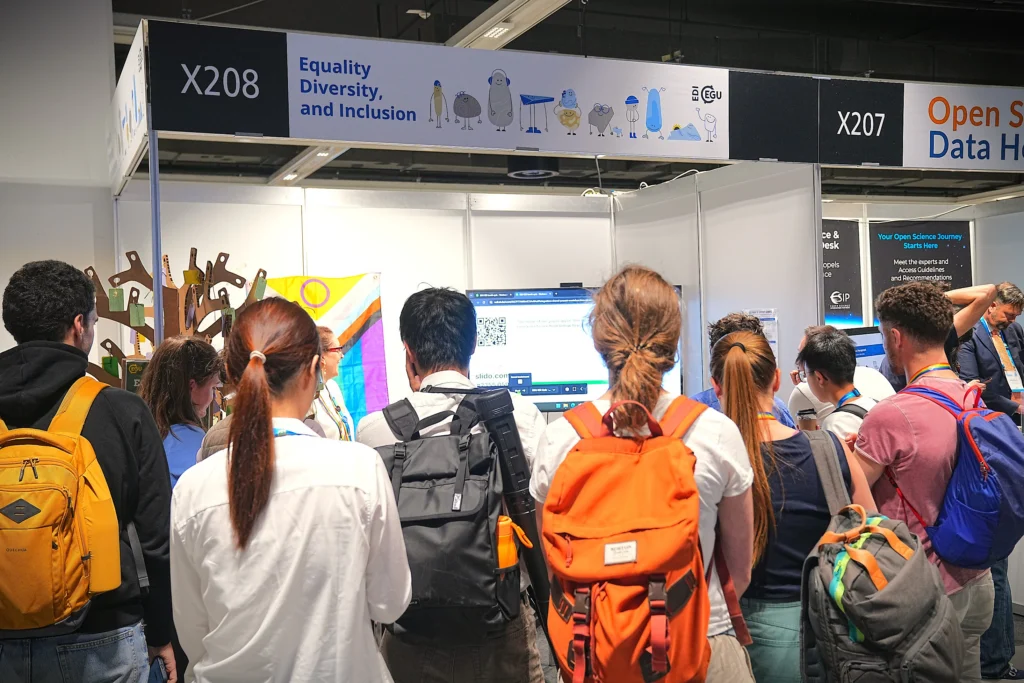
The reflections below were composed EU’s Neurodiversity Network following the EGU26 Short Course “How to navigate EGU as a neurodivergent participant”.
The term “neurodivergent” refers to individuals who think, communicate, function, and experience the world in ways that do not conform with societal norms. It includes, for example, autistic, ADHD, dyslexic, and dyspraxic individuals.
Large conferences and meetings pose additional and specific challenges for neurodivergent attendees due to, for example, heightened sensory sensitivities, as well as executive function challenges and communication differences. Additionally, the social rules governing networking, either during sessions or in the conference halls, which might be intuitive to others seem an impossible code to crack.
Recent reports estimate that the fraction of neurodivergent people amounts to about 15-20% of the global population. If we consider the 20,000 yearly attendees of the EGU General Assembly, then about 3,000 to 4,000 of them may be neurodivergent.
What we struggle with, and the solutions we could implement to alleviate these issues, motivated the EGU Neurodiversity Network to organise the EGU26 Short Course “How to navigate EGU as a neurodivergent participant”, complementing the “How to navigate EGU” event, with a specific focus on challenges faced by neurodivergent participants.
Communicating whilst connecting
The event was organised to be by and for neurodivergents, including the presenting speakers, panel members, conveners and participants, between which the short course aimed to foster connections.
Most of the participants were neurodivergent (or were exploring their own identity), with some also being neurotypical who joined to learn how to better support their neurodivergent colleagues and students. Of the neurodivergent attendees, most were ADHD-ers, autistic, or both (AuDHD), while a few other types of neurodivergence were also represented, such as dyslexia and hypersensitivity.
The short course delivered tips on how to navigate various aspects of conferences and academic life, and participants also viewed this as an opportunity to connect with others and feel less alone in their struggles.
Stories from the panel
Ana Bastos; more responsibility requires effective regulation
Ana is a professor for land-atmosphere interactions at Leipzig University, and an AuDHD-er. Ana has talked openly about her neurodivergence and mental health for several yearss, alongside developing her role volunteeringh with EGU where she is now President of the EGU Biosciences Scientific Division and a member of the the Equality, Diversity, and Inclusion Committee.
The additional responsibilities that accompany Ana’s career progression and volunteering haves demanded more her time and made it increasingly challenging to accommodate her needs as a neurodivergent individual. As a result, Ana has to be more selective in the sessions she attends, and focuses more on recovery activities during the evenings, dining alone and swimming. She also has a “sensory rescue kit” with her at all times to help when she gets overwhelmed, which includes fidget toys, various types of noise-cancelling, snacks, and medications.
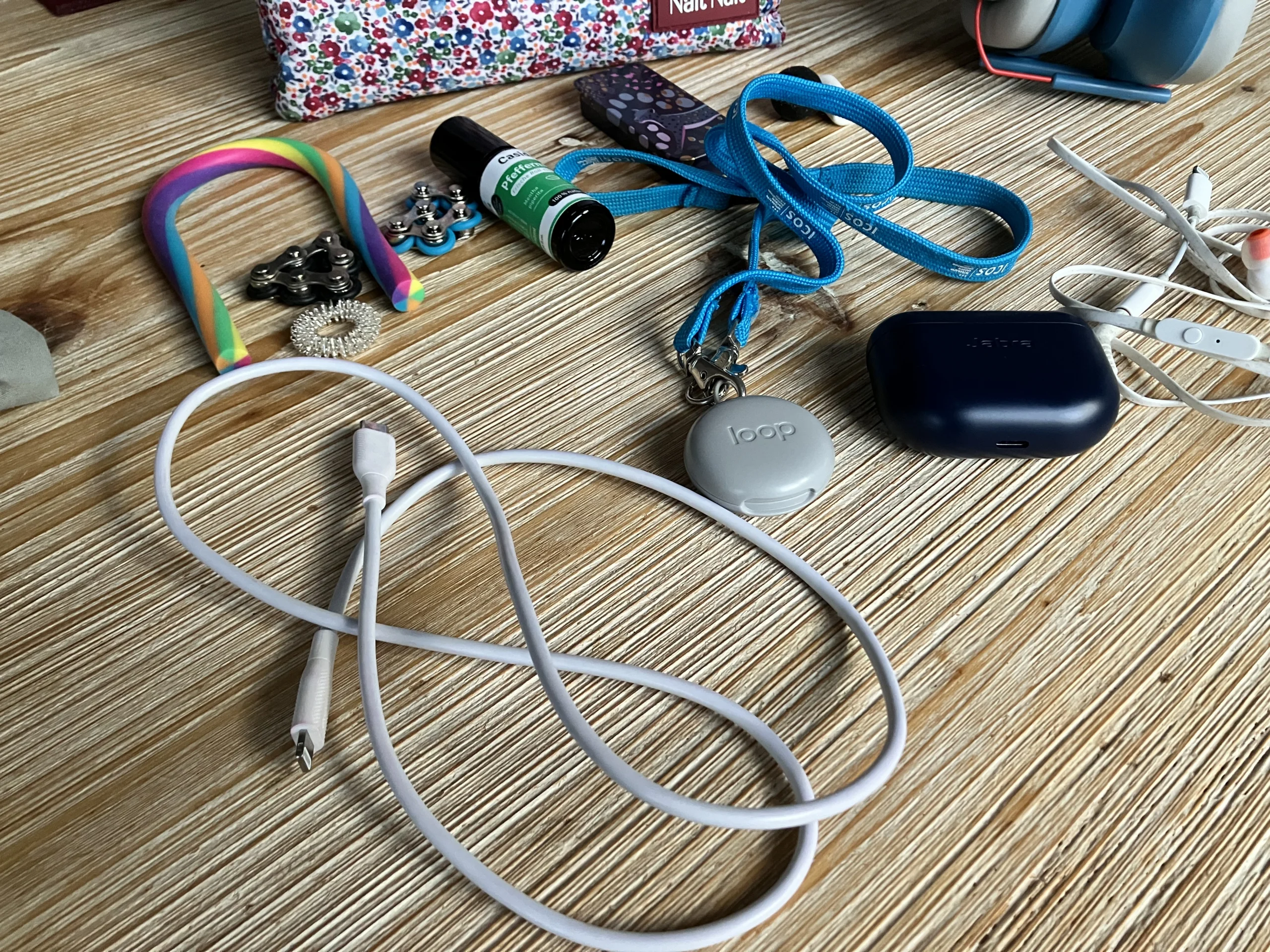
Ana Bastos’s sensory kit for attending conferences.
Anja Dufresne: recognise the positives alongside the negatives
Anja is a senior scientist in landslide geology at RWTH Aachen University, and a highly sensitive person; she discussed recently what it means to be a highly sensitive person in a recorded webinar. Anja is also a coach for career re-orientation and high sensitivity.
Anja discussed how her relationship with herself and navigating conferences improved when she realised that many of these challenges she was facing had positive flipsides: her overthinking, overwhelm and tendency to be hurt are also accompanied by a high empathy and emotional intensity, which includes a deep processing of emotions, a strong sense of justice, and the ability to detect issues before they become problems.
Adam Jeffery: curate meetings to include your communication style
Adam is a lecturer in Forensic Geoscience at Keele University, and an autistic person. Adam’s research interests include developing inclusive practices in higher education in an effort to improve the experience of autistic students, who are often underrepresented in inclusion efforts in the geoscieinces.
Adam told us about the challenges he has faced, including how his different communication style has led him to be excluded from many opportunities and how poster presentations were difficult due to noisy halls and the pressure to social perform a certain way. To improve this experience, Adam recommended organising asynchronous, one-to-one discussions held in a quieter environment throughout the conference week.
Common audience challenges
Our audience members encountered similar challenges to those reported by our speakers, such as difficulties maintaining focusing, struggling with anxiety, and overwhelm. Two of the most common challenges were:
Networking: How do you network? We are rarely given any clear guidelines how to build connections, or what even “counts” as networking.
Disclosure: Should you be open about your diagnosis at work? The outcomes varies with the workplace, and so it may be more efficient to describe the impact and concrete solutions than directly disclosing you are neurodivergent; most people only have limited knowledge of what being neurodivergent entails, but can understand a request to move to a quieter office due to difficulty focusing.
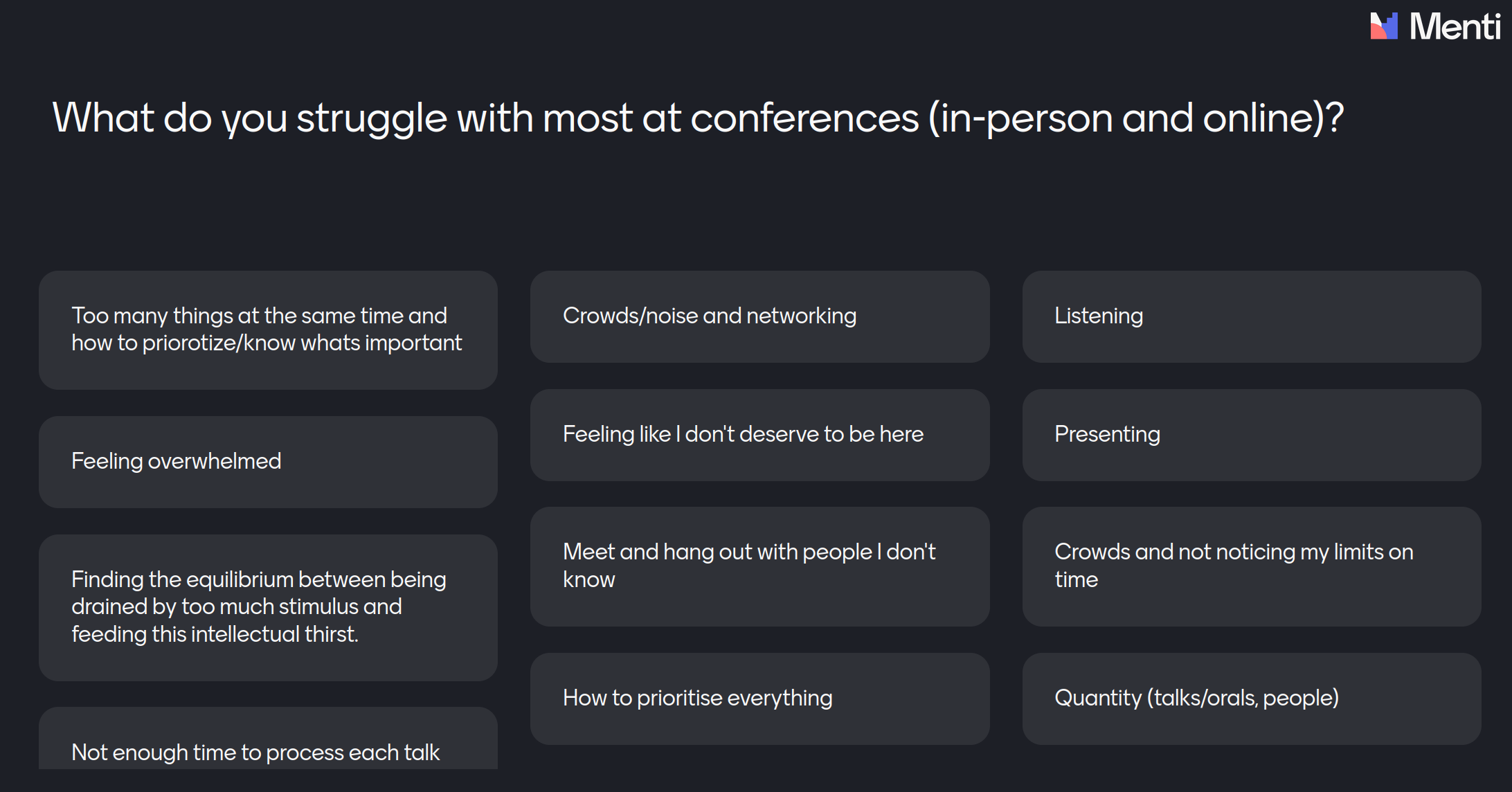
Some of the challenges identified by workshop participants.
Strategies to support regulation
The panellists shared general strategies for accommodate their regulate themselves below:
- Schedule your programme ahead of time: include time for breaks, focus on what is important, and be mindful about not overcommitting.
- Identify one or two quiet spaces where you can take your breaks.
- “Dip in and dip out” – do not force yourself to stay to an entire session, but rather focus on what is essential, and give yourself time to decompress.
- Meet only a select number of people per day to avoid social overwhelm, and organise smaller meetings to make the time for deeper discussions.
- Do what you a comfortable doing: do not be afraid to say “no, thank you”.
- Use noise-cancelling headphones, earplugs and background noise filters.
- Attend with someone else, who can support you, understand you and help communicate your needs.
- Book a hotel close to the conference center and close to nature; check the reviews to make sure the hotel provides quiet rooms.
For more advice on how to navigate the EGU General Assembly and similar conferences, you can check out last year’s guide here.
How to make conferences more accesible for neurodivergent participants
Accessibility at EGU
EGU is already doing a lot in terms of accessibility compared to many other conferences:
- EGU provides quiet rooms, the number of which has had increased and which provide sensory regulation items such as colouring books and sweets.
- Blogs are uploaded before the event, including guides for accessibilitiy as well as attending as a neurodivergent, the latter produced by the EGU Neurodiversity Network.
- Posters, PICO and presentation slides alongside supplementary materials are uploaded for public commentary, allowing attendees with content throughout the conference and return to presentations after the conference after via EGUsphere.
- Sunflower lanyards are provided at the EGU Booth, which indicate a hidden disability and help to connect with other neurodivergent participants.
- The EGU EDI Participation Support fund can support participants with particular accessibility needs, such as the request for a support/accompanying person to help them navigate the conference.
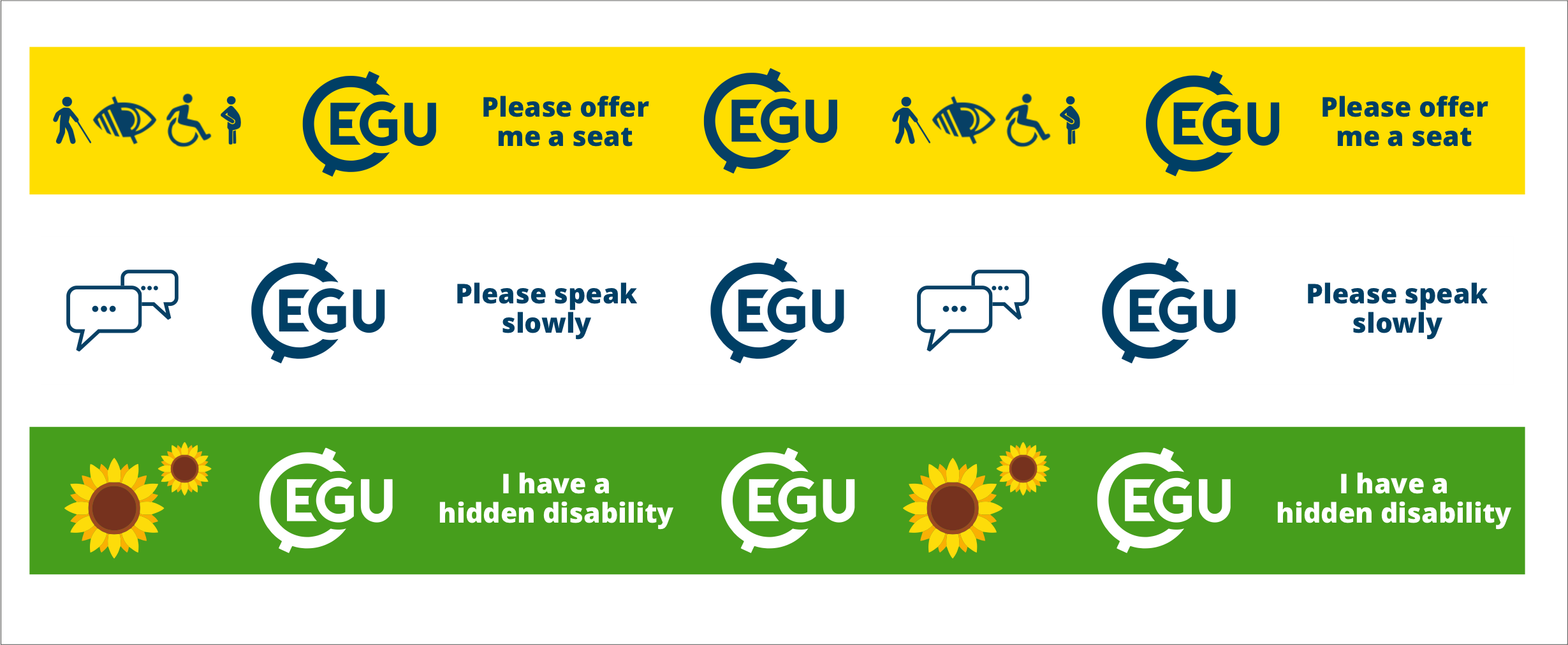
EGU provides lanyards to help people communicate and identify their accessibility needs.
Improving The Conference Experience
Participants were encouraged the participants to propose other ways to make the conference more accessible. Suggestions include:
- More communication about the meaning behind the sunflower lanyards, as it was clear that their meaning is still not known to many.
- More attendees should upload pre-session media for scientific sessions, such as short videos or pictures, and earlier, to help pre-select, identify and return to presentations.
- Include more structured activities in networking sessions (e.g., playing games or puzzles) to make approaching people less intimidating.
- Create fun items to encourage positive engagement and focus during presentation, such as bingo cards with common phrases or themes.
Join the EGU neurodiversity network
The EGU Neurodiversity Network provides a forum for neurodivergent geoscientists to connect with and support each other and to facilitate advocating for their needs as a community.
The netwrorks has since initiatied several events at the 2026 General Assembly, including a short course on navigating the conference, a networking event, and by contributing to a broader Union Symposium on “Redefining excellence and academic career pathways in the geosciences” .
If you would like to contribute to the EGU27 short course, join the network or get in touch, please reach out to the short course conveners via email, or find us on the EGU Neurodiversity Network Mattermost.