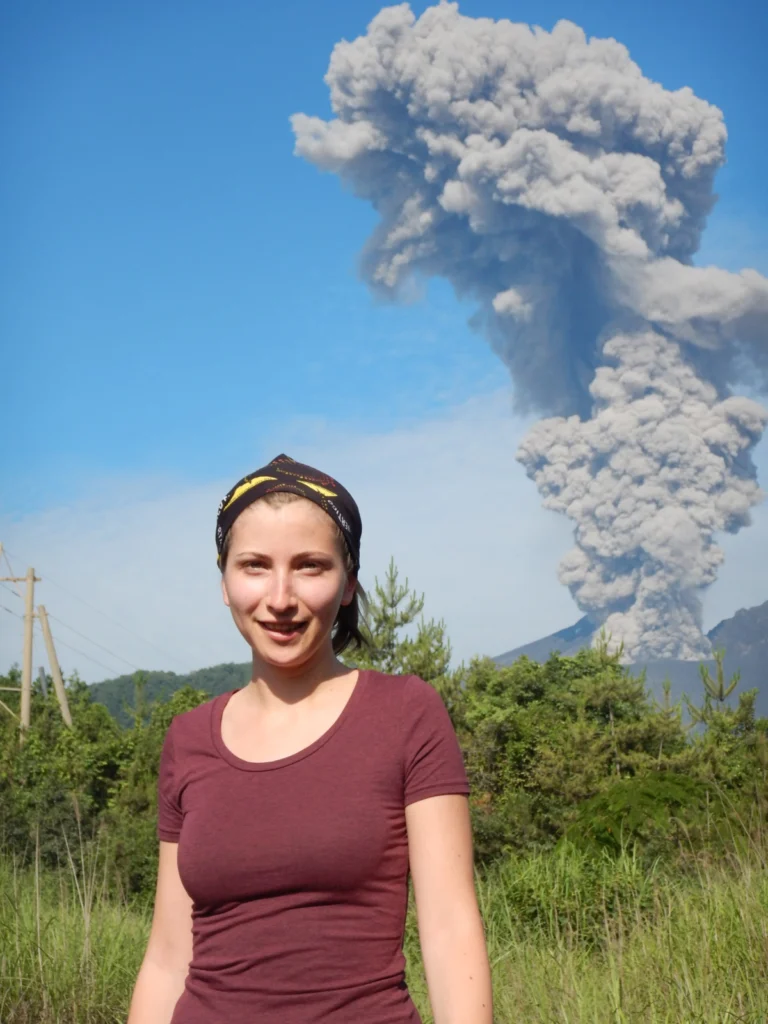
Hello Valeria, thank you for talking with us today! Could you tell us a bit about yourself? Hi Simon, I’m delighted to talk with you today; thank you for the opportunity! I originally come from Italy, and I work as a postdoc researcher at Ludwig-Maximilians-Universität (LMU) Munich, in Germany, in experimental and physical volcanology. In particular, I’m working on my DFG funded projec ...[Read More]
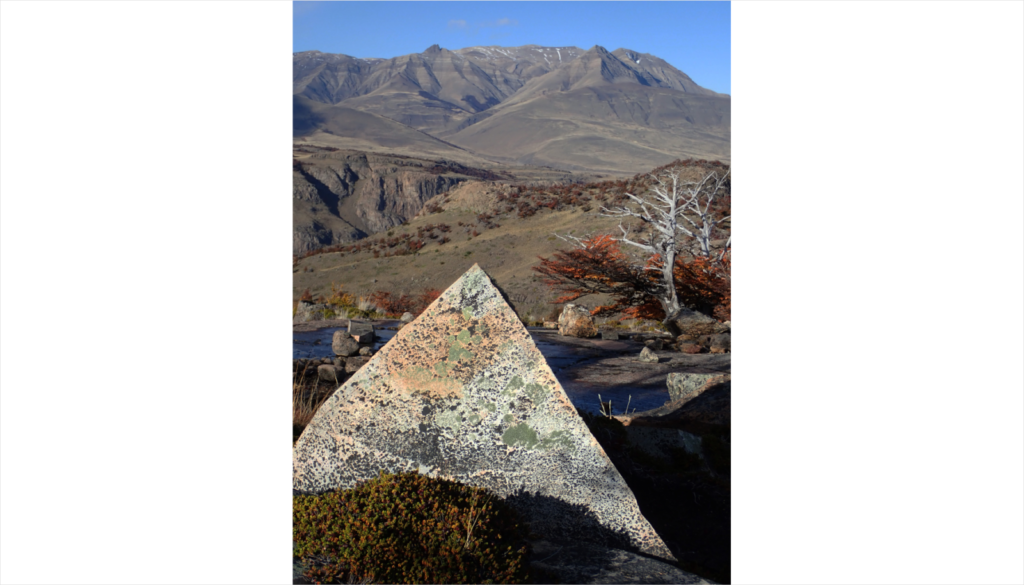
Imaggeo On Monday: Rock pyramid shaped by weathering
The almost perfect rock pyramid in the foreground was formed by physical weathering and found in the Los Glaciares National Park in southern Argentina. The block was deposited on top of a rock surface polished by glacial erosion. The pyramidal peaks in the background are also the result of glacial erosion, albeit on a much larger scale. Description by Christoph Mayr, after the description o ...[Read More]
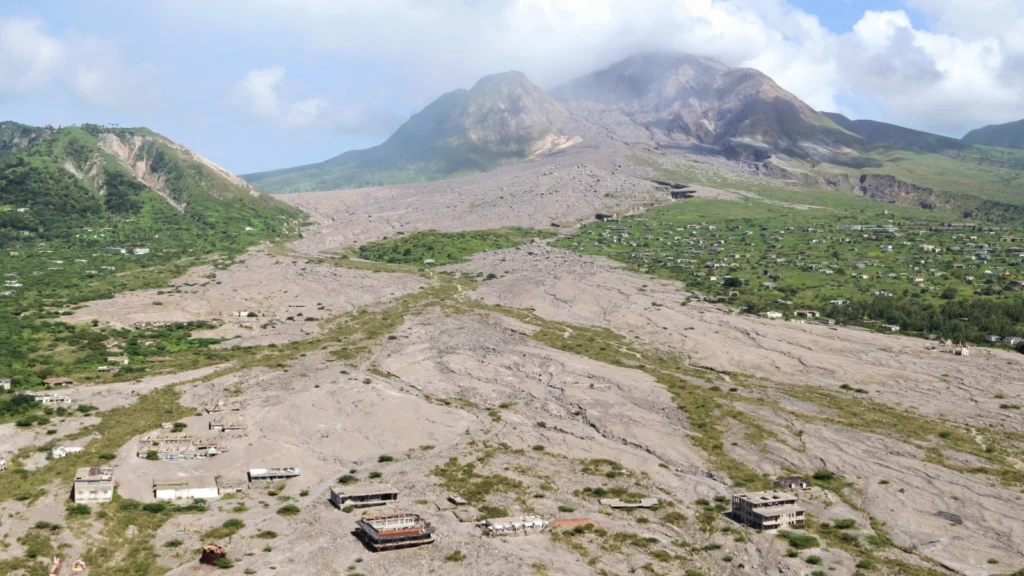
Imaggeo On Monday: The lost capital of Montserrat
Plymouth, the capital of Montserrat, was evacuated in 1995 after the nearby Soufrière Hills Volcano (background of the image) had reactivated. Later on the town was struck by pyroclastic flows, and its centre was almost completely buried by material relocated from the upper slopes through lahars. The suburb of Town Hill can still be seen in the right centre of the photo. It remains an exclusion zo ...[Read More]
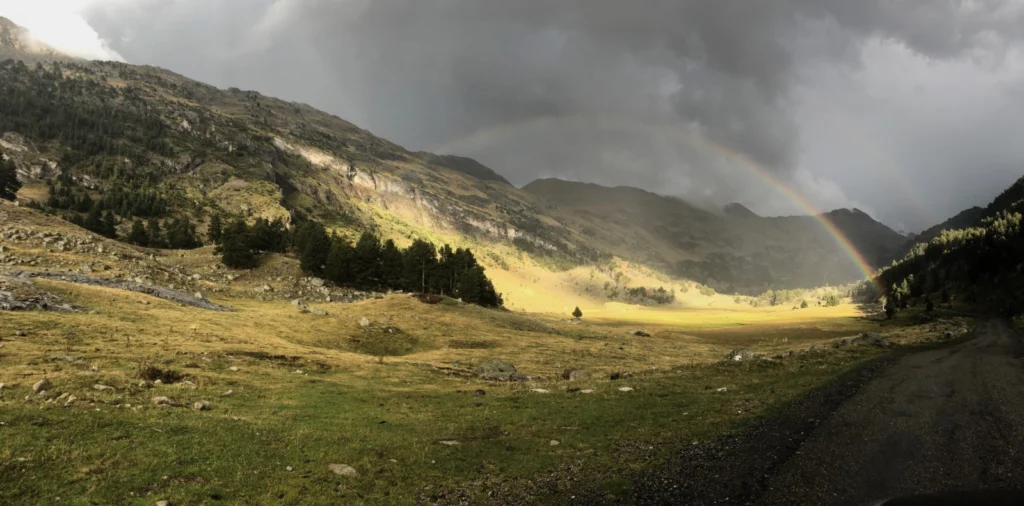
Imaggeo On Monday: Both Ends of the Rainbow
A double rainbow was captured when heading through the glaciated Benasque valley, located in the heart of the Pyrenees. The photo was taken just before the sunset, after heavy rainfall. A rainbow is caused by reflection and dispersion of light in water droplets. Second rainbow arc results from one reflection more than in the first one, thus the rainbow colours are “reverted”. The geome ...[Read More]
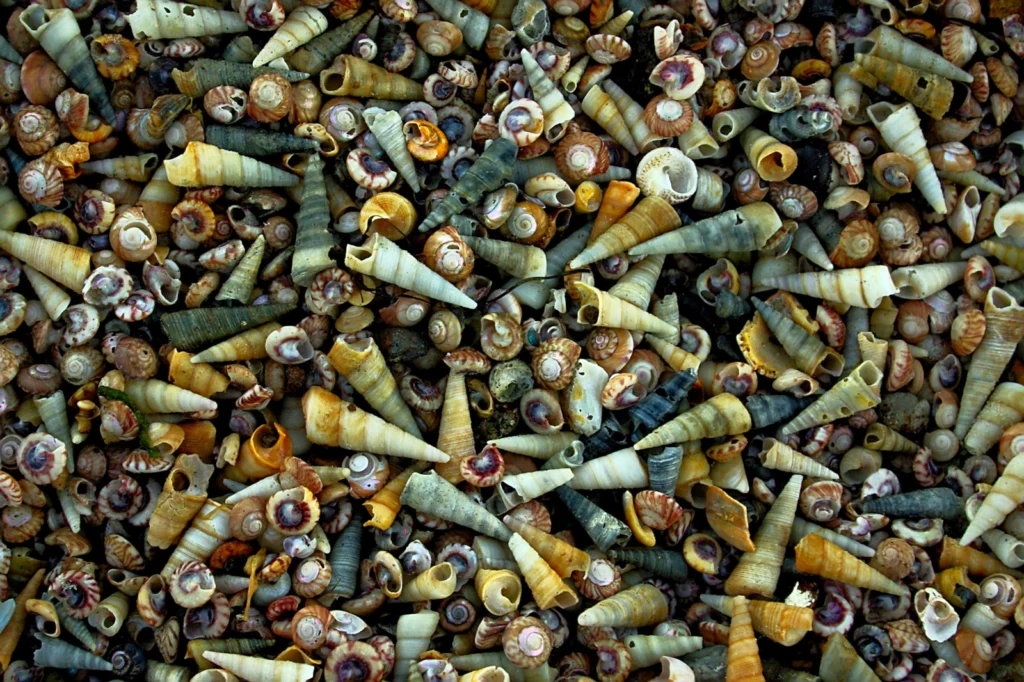
Imaggeo On Monday: A drift of sea-snail shells
A collection of washed-up shells on a beach on the south island of New Zealand. Shore transport processes have produced a well-sorted drift of similarly sized (approx. 1-2 cm) shells and shell fragments. The main species represented are the common turret shell (Maoricolpus roseus) and wheel shell (Zethalia zelandica), both sea snails endemic to New Zealand. Description by Pontus Lurcock, af ...[Read More]
Pride on board: working on an ocean-going research vessel as an LGBTQI+ person
Working from home during the pandemic has allowed many of us to look back on past experiences and to long for the days when our work in marine science took us to amazing places all around the world. Pride month is another great opportunity for reflection and to consider how things have changed for us as LGBTQI+ individuals and the community within STEM, including, on the International Day of the S ...[Read More]
Imaggeo On Monday: Giant Australian Cuttlefish in the Spencer Gulf, South Australia
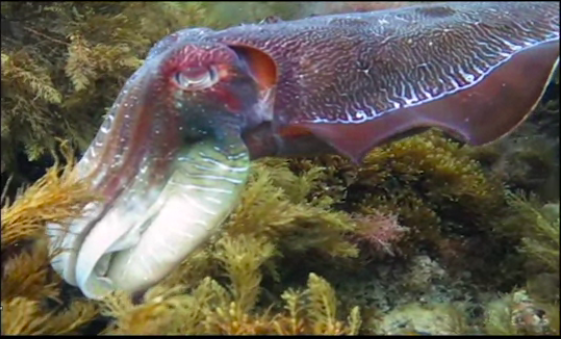
In the shadow of the Santos oil and gas processing plant and export terminal lies the only place in the world where cuttlefish come together by the tens of thousands to mate every winter. The unique geology of the area, with a seafloor composed of bedrock and tabular quartzite blocks, makes for an ideal egg-laying habitat, and thus is an attractive breeding ground for the Australian Giant Cuttlefi ...[Read More]
GeoPolicy: When policymakers misuse science
Most of the EGU’s GeoPolicy blog posts focus on overarching topics that I believe will be useful for the majority of scientists who read them. I see myself as a facilitator who connects scientists and policymakers, providing impartial information to promote more effective knowledge exchange and subsequently evidence-informed policies. This month’s GeoPolicy post however, takes a differ ...[Read More]
GeoTalk: Meet Meriel Bittner, the Ocean Science Division’s Early Career Scientist Representative
Hello Meriel, thank you for speaking with us today! Could you introduce yourself? My name is Meriel Bittner and I am the Early Career Scientist Representative for the Ocean Sciences (OS) Division of EGU. Currently, I am a PhD fellow at the University of Copenhagen. Originally from Germany, I did my Bachelor and Master at the University of Vienna in Austria, hence I have attended multiple general a ...[Read More]
Imaggeo On Monday: Studying shell morphodynamics to improve climate models
Profile of a specimen of Arctica islandica, one of the longest lived marine bivalves known, undergoing a 3D scan. Their longevity is exploited for reconstruction of climate patterns in the North Atlantic. However, mathematical models of their morphodynamics are necessary to account for bias induced by their asymmetric growth (“morphodynamics” is the study of how an organisms’ gro ...[Read More]