
GD
Geodynamics

rate-and-state friction

Modeling the full spectrum of observed seismicity: Insights from friction laws, fault instability, and fault-zone mechanics
Modeling the full spectrum of observed seismicity: Insights from friction laws, fault instability, and fault-zone mechanics

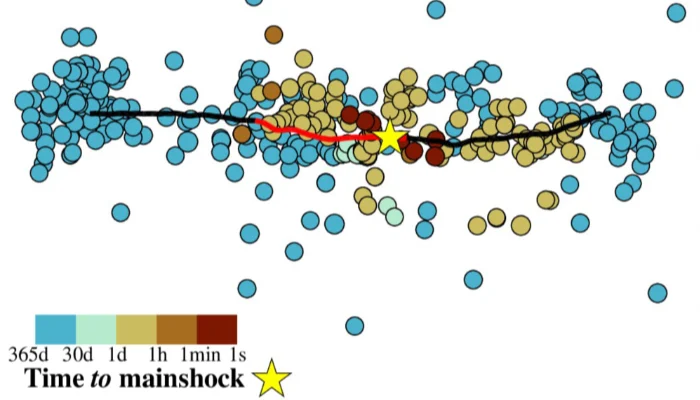
Introduction Despite advances in our understanding of rock mechanics, the frictional behavior of rocks, and the physics of instability in geological materials, the coexistence of slow and fast earthquakes, as well as various types of fault-zone seismic radiation such as tremor, remains enigmatic. Can fault mechanics and friction laws reproduce the full spectrum of observed seismicity? In this week ...[Read More]

Don’t Stop Me Now: A Fracture Mechanics Perspective on Earthquake Nucleation

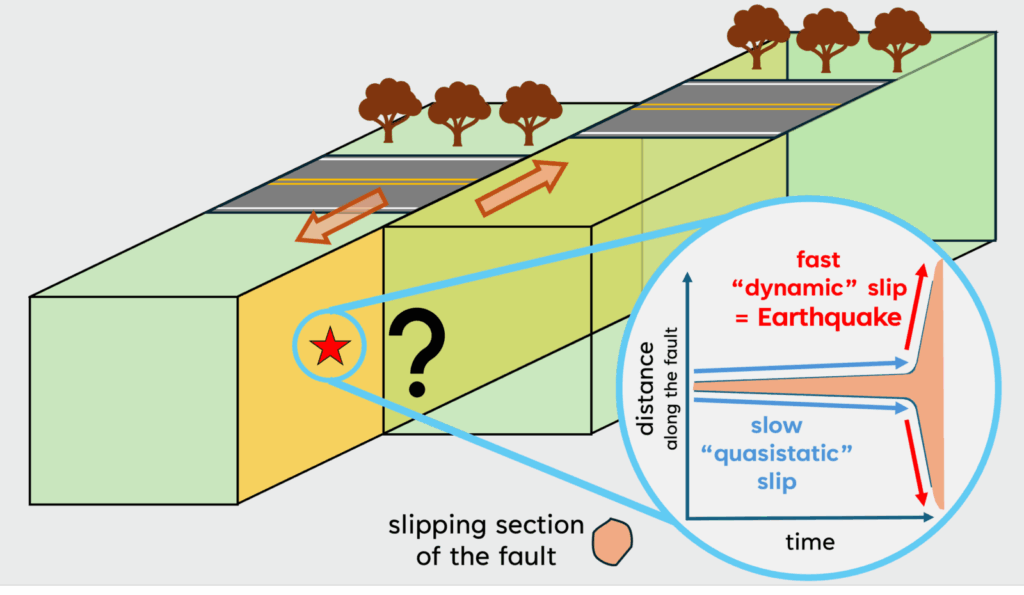
Schematic for a possible earthquake nucleation scenario. Inset figure adapted after Lebihain et al. (2021) and McLaskey (2019).

How do earthquakes start? Earthquakes occur when a block of rock rapidly slides past another along an interface or a discontinuity in the medium and release energy in the form of seismic waves. Turns out, the surface of the earth is riddled with a lot of these discontinuities, which we call “faults”. If we plot the locations of earthquakes on a world map (Figure 1a), we will see that they highligh ...[Read More]

The Sassy Scientist – Earthquake Exoteries Nr. IV

The Sassy Scientist – Earthquake Exoteries Nr. IV

Every week, The Sassy Scientist answers a question on geodynamics, related topics, academic life, the universe or anything in between with a healthy dose of sarcasm. Do you have a question for The Sassy Scientist? Submit your question here or leave a comment below. In a comment on a post about the key papers in geodynamics, the Curmudgeonly Commenter asked: Could you please point out some exceptio ...[Read More]