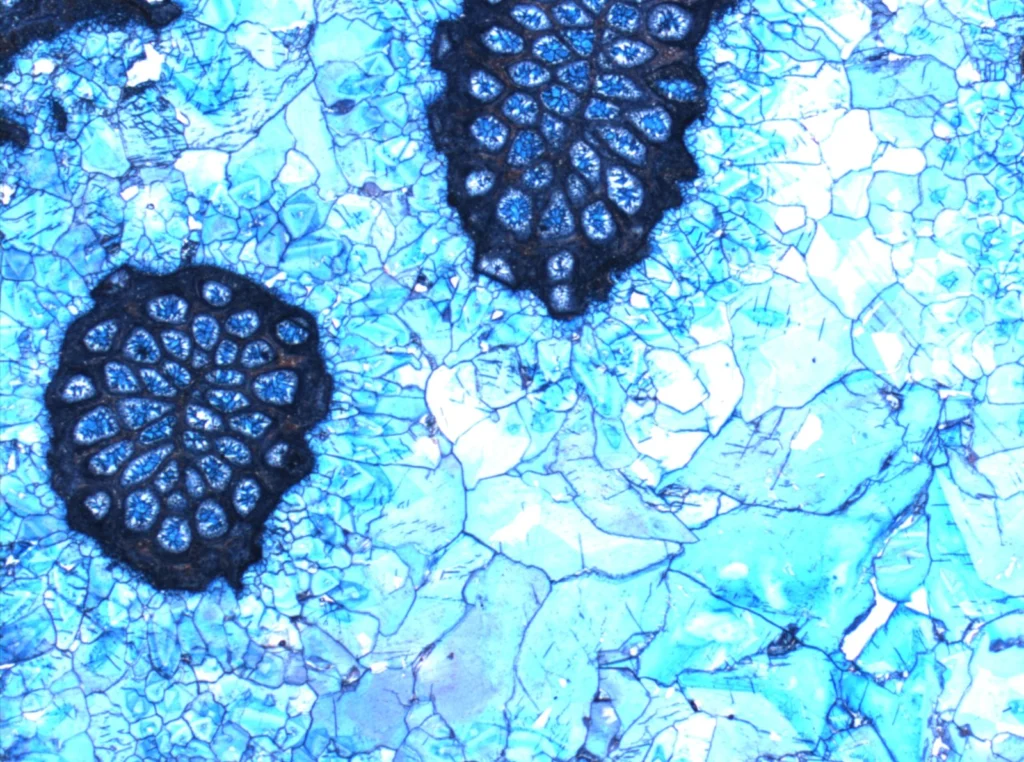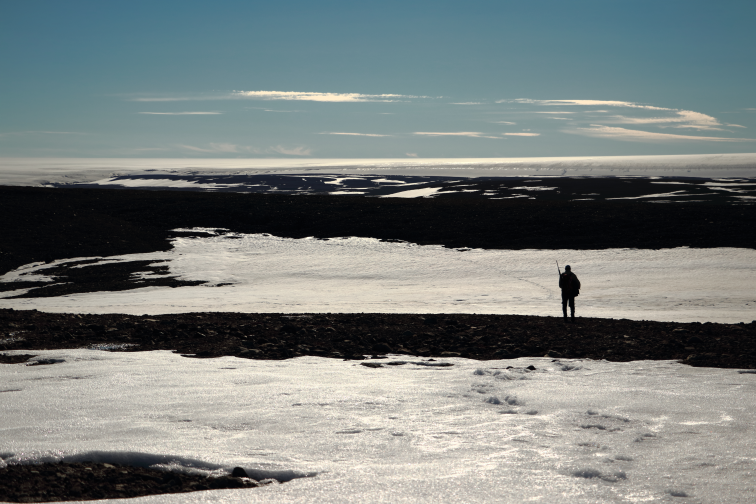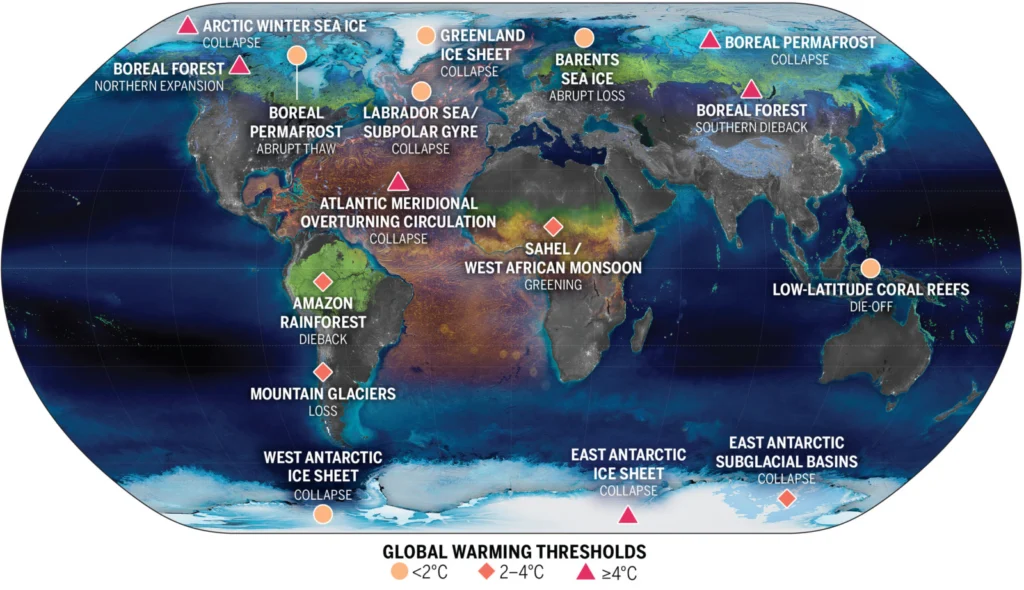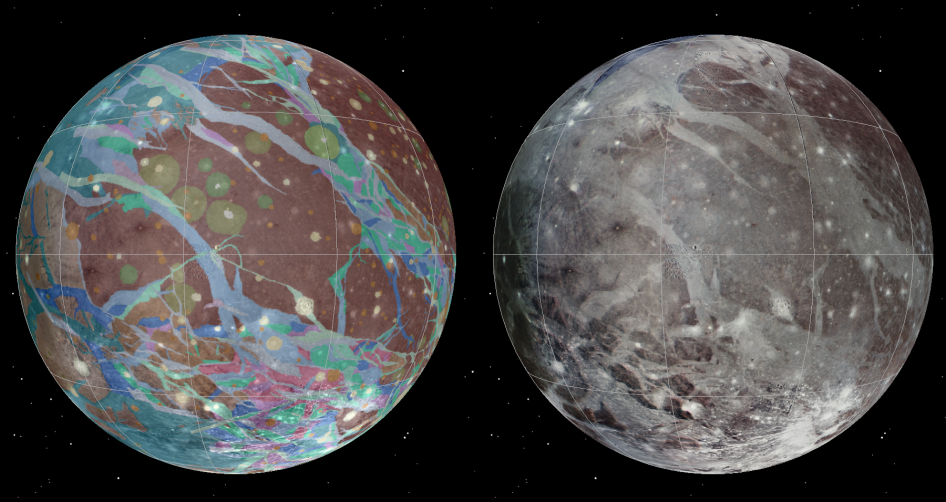
2022 was an exciting GeoPolicy year with many new science for policy projects and opportunities beginning and others being restored after a 2020/2021 pause due to COVID19. In 2023, we hope to build on EGU’s current initiatives and bring you yet more opportunities to engage and get involved in European policy! This blog post will kick-off the New Year by outlining a few of the key science for polic ...[Read More]
GeoLog
A touch of space weather! An EGU funded outreach project for blind and visually impaired students
We can all probably agree that the Northern Lights are one of the world’s most spectacular natural displays. But how do we share this beauty with children who are blind? How do we explain the processes behind the aurora creation to the visually impaired when all the illustrations of Earth’s magnetosphere are in 2D? The Northern Lights are just one of the consequences of ‘space weather’. Space weat ...[Read More]
Nonlinear Processes in Geosciences
Can Artificial Intelligence replace scientists to explain Climate Change? Find it out in our first interview to… ChatGPT!
Figure: DallE (the visual cousin of ChatGPT) has produced this image when I asked for “a cartoon showing a climatologist with research articles walking on a weather map” As a communication officer of the division of Nonlinear Processes I started to write posts for the EGU blog a few years ago and I found it a very difficult task: one has to find the right scientific sources about arguments ...[Read More]
GeoLog
Imaggeo On Monday: Aurora show on the road
In Sweden a beautiful Northern Lights show proceeds unnoticed by the busy drivers passing by. The Northern Lights or Aurora Borealis are spectacular lights created as a result of disturbances in the Earth’s magnetosphere caused by solar winds. They are visible at both polar regions and or often seen as veils or lines of greenish-blue light. Photo by Junbin Zhao shared on imaggeo.egu.eu. &nbs ...[Read More]
Hydrological Sciences
2022 Recap of the HS Blog
Thinking about the past year, one of the highs of the year was definitely seeing the EGU General Assembly back to Vienna in May. The first-ever fully hybrid EGU meeting was a great success with over 12,000 presentations. Most of all, it was great seeing our hydrological sciences community meeting in person again. Many constraints prevented us from having all the features we love in the GA meeting, ...[Read More]
Nonlinear Processes in Geosciences
The Great Cold Debate: Is Climate Change to Blame for Extreme Cold Spells?
In December 2022, the United States experienced a severe cold spell, with record-low temperatures being recorded in many parts of the country. While it is natural for cold spells to occur, the question has arisen as to whether climate change is playing a role in the intensity and frequency of these events. There is ongoing debate among scientists about the relationship between climate change and ...[Read More]
GeoLog
EGU’s Life-Work Balance Group shares their New Year’s resolutions
With 2023 just around the corner, we asked EGU’s Life-Work Balance Group members what their New Year’s resolutions are, and we want to share them with you! ‘I live in the Arctic, where we don’t get much sunlight and the brightest part of the day I usually spend in my (windowless) office. I will make a better attempt to go outside for a quick walk, or to get some fresh air during the d ...[Read More]
Geodynamics
Holiday movies to watch
Iris and Menno have made fantastic science movie recommendations in the past couple of years – covering the base for bad-science movies. Since the AGU frenzy is finally over and the upcoming holidays beckon us, I went in a different direction and prepared a list of some of my feel-good holiday movies. 1. The Little Prince This is a fantasy movie based on a popular children’s book. The movie is cen ...[Read More]
GeoLog
Imaggeo On Monday: Melt water lake on 79°N Glacier in Greenland
Melt water lakes are an impressive and beautiful consequence of warm summer temperatures on Greenlands glaciers. This photo of such a lake with clear blue water was taken from a helicopter on the 79°N Glacier in northeast Greenland during an expedition in July 2018. Supraglacial melt water runs along the surface slope into depressions where the water is accumulating until it refreezes or drains. P ...[Read More]
Geodynamics
The Sassy Scientist – Who Let The Dogs In?
Who doesn’t want to make themselves more at home at the office? We spend a lot of time there and there is nothing wrong in making it more homey for ourselves. But you wouldn’t want your colleagues to make themselves too much at home at the office. My office mates wouldn’t want me to keep my pet tarantula at the office. That’s why I had a sweet and short answer to Bob’ ...[Read More]