EGU Blogs

Latest posts

GD
Geodynamics

Join the EGU GD Blog Team!

Join the EGU GD Blog Team!

We are looking for new blog team members for the new ‘EGU year’ (May 2021 – May 2022)! By being part of the blog team, you will have the opportunity to meet lots of people from the geodynamics community and beyond and boost your own profile. This year, we are looking for many different kinds …[Read More]

CL
Climate: Past, Present & Future

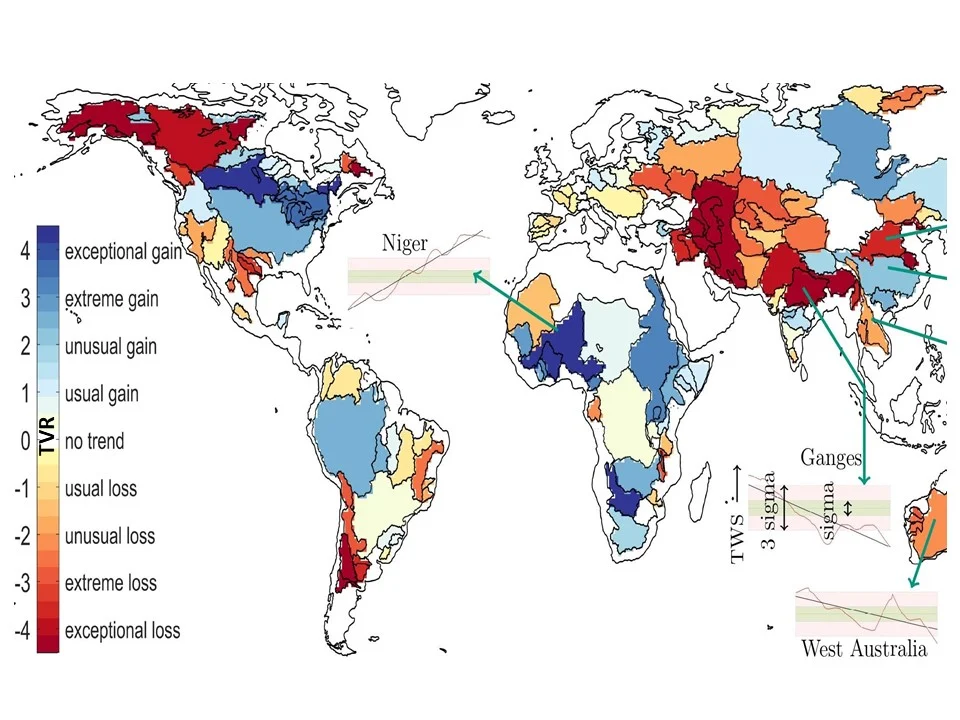
New metric to interpret linear trends from short time series: Trend to variability ratio (TVR)

New metric to interpret linear trends from short time series: Trend to variability ratio (TVR)

  Availability of good quality data is essential to deduce meaningful information in all disciplines of science and technology. This statement is especially relevant in climate research, which is under constant scrutiny from sceptics. In order to better understand the Earth system response to the ongoing anthropogenic global warming, we require global observations of climate …[Read More]

NP
Nonlinear Processes in Geosciences

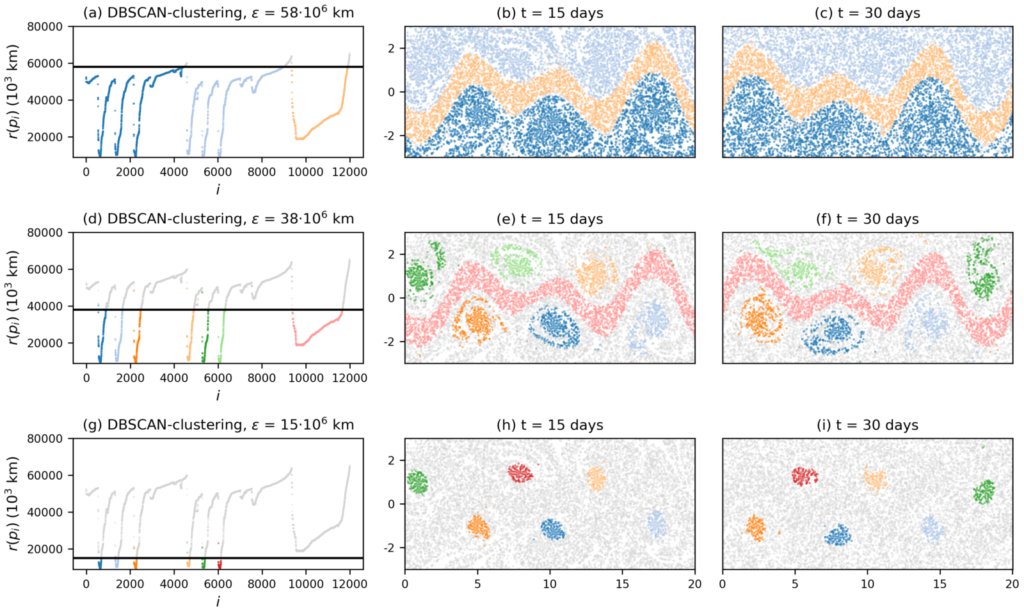
NPG Paper of the Month: “Ordering of trajectories reveals hierarchical finite-time coherent sets in Lagrangian particle data: detecting Agulhas rings in the South Atlantic Ocean”

NPG Paper of the Month: “Ordering of trajectories reveals hierarchical finite-time coherent sets in Lagrangian particle data: detecting Agulhas rings in the South Atlantic Ocean”

The February 2021 NPG Paper of the Month award goes David Wichmann and his co-authors for their paper “Ordering of trajectories reveals hierarchical finite-time coherent sets in Lagrangian particle data: detecting Agulhas rings in the South Atlantic Ocean“. Understanding the transport of tracers and particulates is an important topic in oceanography and in fluid dynamics …[Read More]

CR
Cryospheric Sciences

Do you know about OGGM-Edu? An open-source educational platform about glaciers and glacier modelling

Do you know about OGGM-Edu? An open-source educational platform about glaciers and glacier modelling

Are you teaching about glaciers and looking for fun educational activities for your students? Are you planning a workshop about glacier modelling and want to make it interactive, with a low entry level? Are you interested in learning about glaciers and glacier modelling, and looking for a simple way to get started? On top of …[Read More]

GD
Geodynamics

The Sassy Scientist – Growing Pains

The Sassy Scientist – Growing Pains

Despite the emergence of some minor ailments, Antti is still going strong with his research. With a slight declination in his productivity levels whilst stubbornly grunting along, he feels he should (and perhaps could) do better. Annoyed, he growls: Academia has cost me my 20/20 vision (and given me a sore ass). Who do I …[Read More]

TS
Tectonics and Structural Geology

TS Must-Read – Davis et al. (1983) Mechanics of Fold-and-Thrust Belts and Accretionary Wedges

TS Must-Read – Davis et al. (1983) Mechanics of Fold-and-Thrust Belts and Accretionary Wedges

The establishment of plate tectonics in the 1960s triggered a reappraisal of the development of mountain belts and facilitated the physics-based understanding of mountain building processes. Many models for mountain building were, however, mostly conceptual, and there was no appropriate theory that described the first-order mechanics of mountain belts. In 1983, this gap was – …[Read More]

NP
Nonlinear Processes in Geosciences

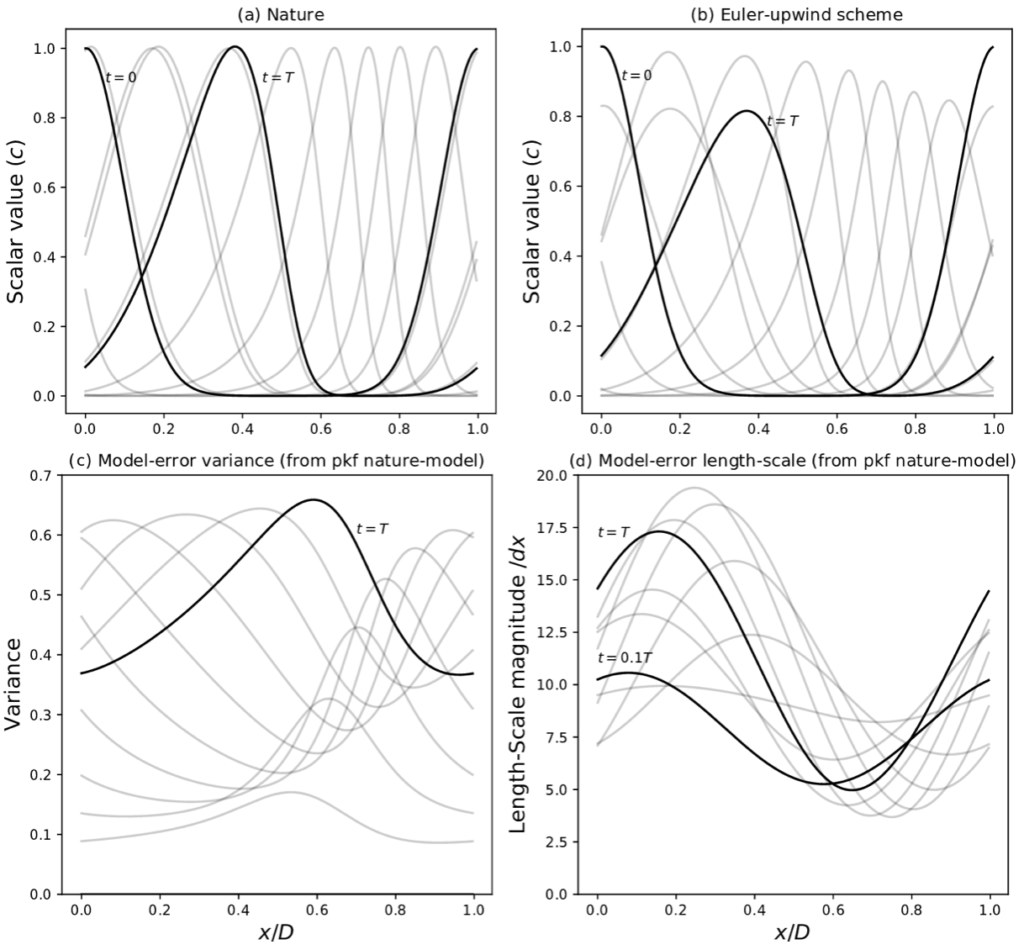
NPG Paper of the Month: “A methodology to obtain model-error covariances due to the discretization scheme from the parametric Kalman filter perspective”

NPG Paper of the Month: “A methodology to obtain model-error covariances due to the discretization scheme from the parametric Kalman filter perspective”

The January 2021 NPG Paper of the Month award goes to Olivier Pannekoucke and his co-authors for the paper “A methodology to obtain model-error covariances due to the discretization scheme from the parametric Kalman filter perspective“. In geophysics, forecasting is based on solving the equations of physics with the help of a computer. To calculate …[Read More]