
Dear climate enthusiasts, EGU lovers, and early/senior climate scientists, With #EGU22 approaching, we wanted to give you a quick overview of the great short courses and great debates that are planned for this years’ General Assembly! If you want to learn more about the scientific sessions offered, please have a look at our Seasonal love …[Read More]
Seasonal love letter
Dear Climate enthusiasts, dear EGU lovers, dear early and senior climate scientists, I write to you in the second of two very challenging years for each and everyone of us. We faced many difficulties, hardships, and maybe even some opportunities and it is the time of the year to reflect on that. For geoscientists it …[Read More]
Presenting the EGU Climate Division Team 2021
Every year at the General Assembly all EGU members have a chance to vote for their representatives during the different division meetings. In the Climate Division, we have a team of President and Deputy President, a Programme Group Chair, Science Officers, as well as Representatives for the Early Career Scientists and an Outreach Team. There …[Read More]
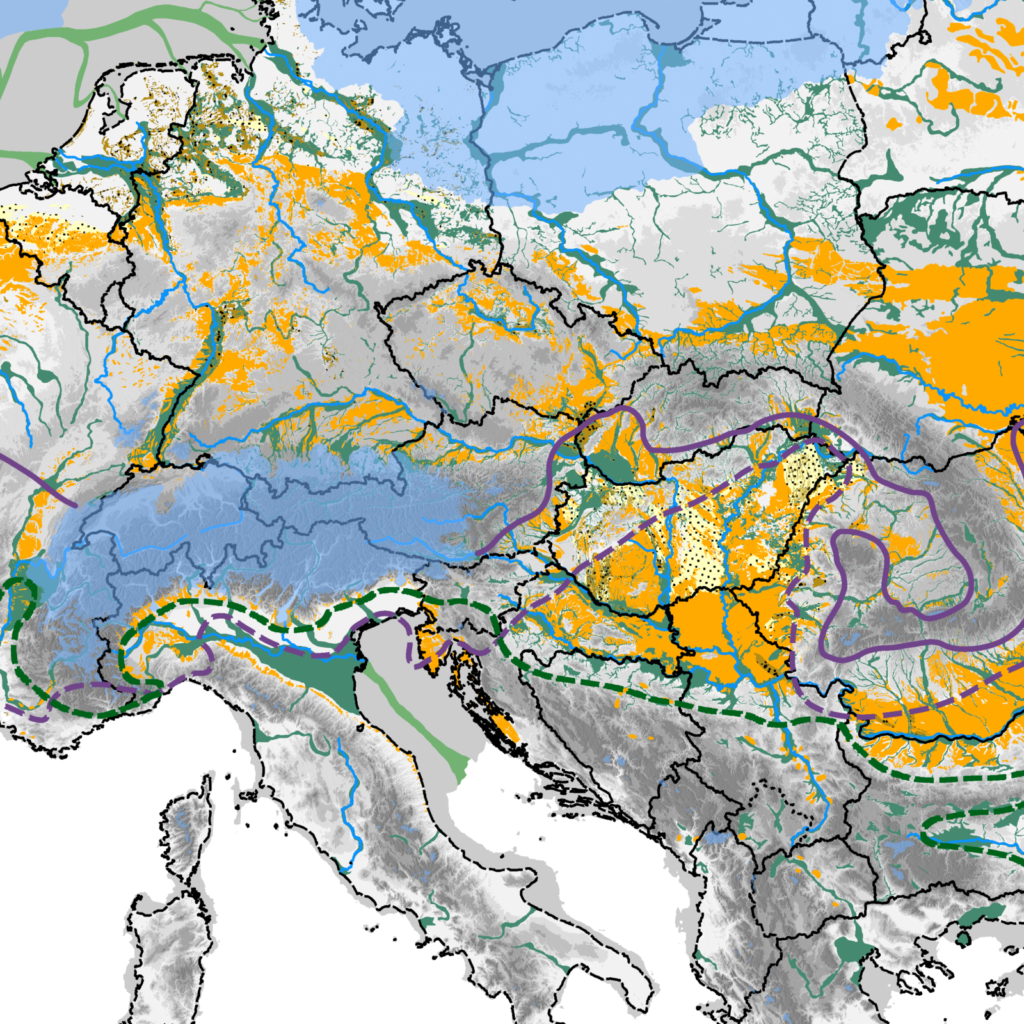
Presenting a new European loess map
Loess is a silt-sized, aeolian sediment that was produced in large quantities in past geological eras of mid-latitude Europe and Asia, among others (Fig. 1). It is used in Quaternary science to infer about past climatic and environmental conditions. Generally, layers of loess formed during cold and dry periods, while soils formed within/on top the …[Read More]
EGU’s Atmospheric Sciences and Climate: Past, Present & Future Divisions welcome the US back into the Paris Climate Agreement
As of 19 February 2021, the US officially re-joined the Paris Climate Agreement, a landmark international accord to limit global warming by 2°C (and ideally to 1.5°C) compared to pre-industrial levels. The Paris Climate Agreement aims to bring the world together to avoid catastrophic warming that will impact us all and to build resilience to …[Read More]
What’s my age again? Comparing dating methods in loess
As you have learned from our previous posts, loess is a widespread terrestrial sediment, known to be an important archive for the changes of past environmental and climatic conditions. In order to use loess as a proxy, we first need to investigate the age of the sediments. In loess, different dating methods can be used, …[Read More]
Highlighting climate sessions at vEGU21: Gather Online
With the abstract deadline at 13th January, we would like to highlight some of the fantastic sessions that are offered in the climate division in 2021. Due to the large amount of offered sessions, we focus in this overview on EDI sessions. EDI stands for equality, diversity, and inclusion and the EDI logo highlights sessions …[Read More]
Presenting the EGU climate divisions´ outreach team
For our seasonal greetings this year, we would like to present the outreach team of the climate division. Our team has grown after the last EGU assembly, and this was highly visible in our increased number of blog postings throughout the year. We published 14 post in total! The team is responsible for writing and …[Read More]
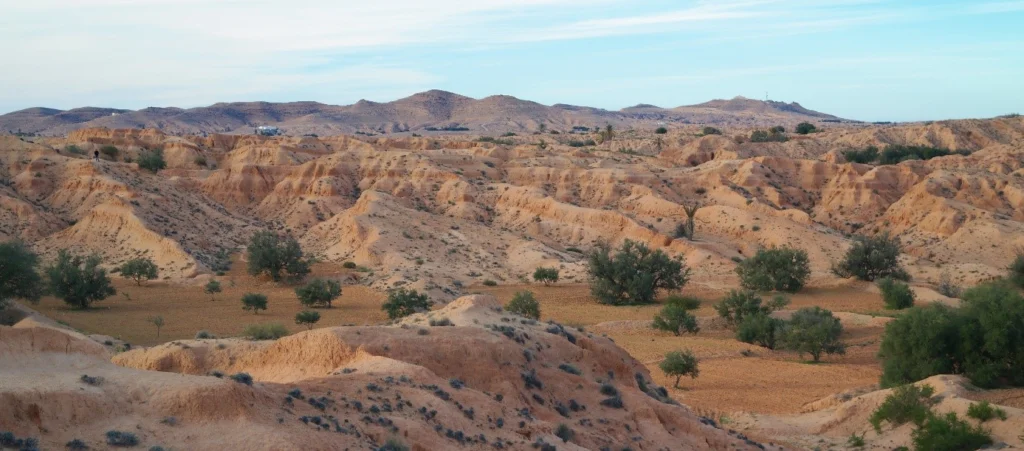
Desert loess: formation, distribution, geoscientific value
Loess is an aeolian (wind-driven) silty sediment covering over 10% of the Earth’s land surface; it occurs predominantly in the mid-latitudes. On a global scale, loess is among the most widespread unconsolidated sediments, and of crucial importance for agricultural regions where loess deposits are known to form fertile soils because of its ability to store …[Read More]
Seasonal Greetings
The anticipation is rising, the offices smell of gingerbread and cookies, papers get written to be done just in time for Santa and his elves. Everyone is happily stressed these days working on the perfect Christmas presents, but then… aah, what to present at next year’s EGU? Which session to attend? This is a friendly …[Read More]