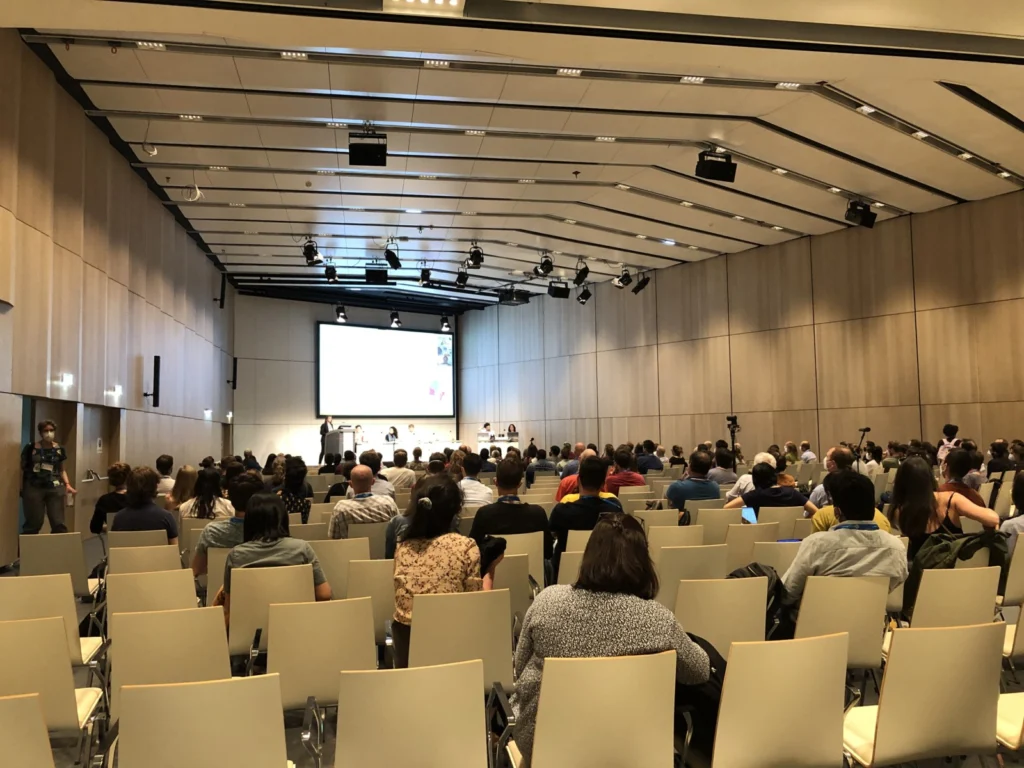
From aiming at globally distributed, but virtually connected conference hubs to live subtitles and translations: never has the scientific conference format been on a trajectory of such abrupt change. What the new format of the coming years will be is still unclear, but it will need fewer chairs and more bandwidth, and should be sensibly …[Read More]
Accessibility and inclusivity at EGU
EGU22: The bitter reality behind fixed-term contracts
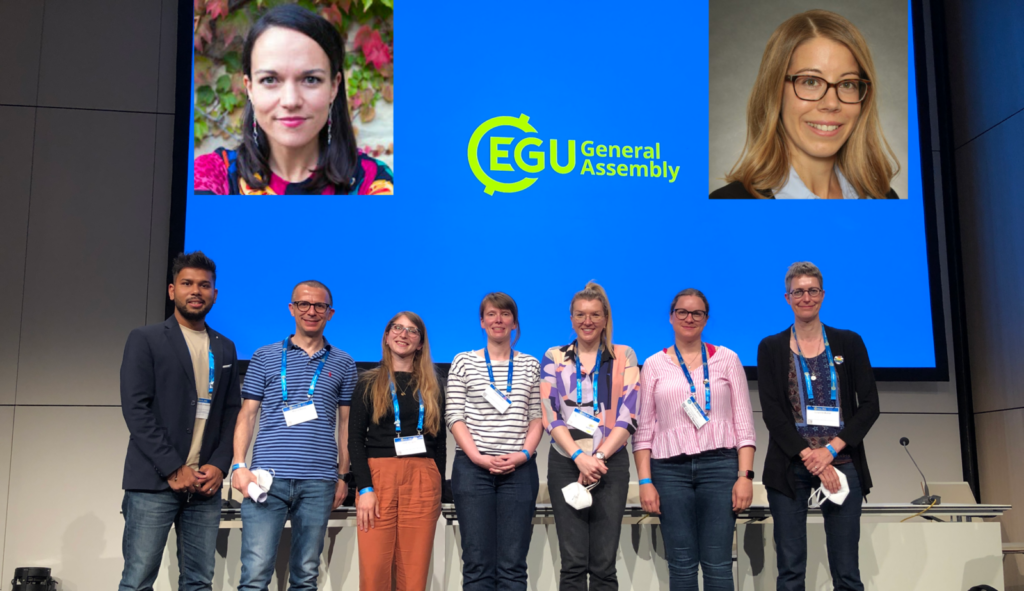
Monday evening’s Great Debate was definitely the place to be. Whether you were a PhD student, a professor, a research associate, a lecturer or, like me, a Postdoctoral researcher, this debate was here to raise awareness of the lack of permanent positions and the impact this has on a researcher’s career (and life!). As you …[Read More]
What’s on at EGU22: highlights from Publications, Policy, EDI, Outreach and the ECS
There are so many great events to participate in at EGU22 this year, in both on-site and virtual formats, that it can be very easy to feel overwhelmed. Whilst we encourage you to make good use of your Personal Programme to help organise your activities, we also reached out to several of EGU’s Committees that …[Read More]
How to EGU22: Help us ensure a safe and inclusive EGU22!
It is true that academic gatherings like scientific conferences can offer great opportunities for career advancement, such as building stronger networks, highlighting your research, and finding new opportunities for collaboration. Unfortunately, many conferences are not equally inclusive to all (see the image below) and can pose as unsafe environments for presenters and participants. With EGU22 …[Read More]
Meet the EGUpride group: LGBTQIA+ members are welcome to join!
It is hardly a surprise that members of the geoscience community who identify as LGBTQIA+ (Lesbian, Gay, Bisexual, Transgender, Queer/Questioning, Intersex, Asexual, and others who fall under the umbrella but do not identify with these categories) are likely to face more obstacles in their career compared to their cisgender and heterosexual colleagues. This is true …[Read More]
How to EGU22: top 10 tips for participants to get the most out of EGU22!
EGU’s General Assembly continues to adapt and evolve to make our annual conference accessible to all. This year, EGU22 will for the very first time be a hybrid conference, which means new ways of learning and networking for us all! Many Networking and Session conveners will be learning right along with you, and our conference …[Read More]
How to EGU22: Making your presentation accessible to all!
The last couple of years have changed the way we communicate with each other – both in our professional and personal lives. The pandemic has inspired many of us to experiment with and embrace new digital ways of working, catching up with family and friends, networking, and more! This is also true for the way …[Read More]
How to EGU22: the first hybrid General Assembly has the best of both worlds!
Since the first EGU General Assembly in 2004, the European Geosciences Union’s annual scientific conference has welcomed thousands of researchers from all over the globe, every year. As the event grew in scale, we found a home in Vienna, Austria, attracting scientists, science for policy researchers and journalists from around the world, to discuss the …[Read More]
Women in science: Inspiring and honest stories that call for support and change
Sometimes, a simple story in a book or movie lights a spark and makes a young person curious about science. These young minds grow up dreaming to be mathematicians, scientists, doctors, engineers, technologists, and astronauts. But the road to being a woman or girl in science is rarely an easy one – even today in …[Read More]
Using comics to talk about sexism in science: how ‘Did this really happen?!’ is trying to change the conversation
1953: Marie Tharp created a map that showed the seafloor was spreading via the Mid-Atlantic Ridge and therefore proved the theory of plate tectonics, only for it to be dismissed as “”girl talk” by her (male) supervisors. 1968: A few years after winning the Nobel Prize (without crediting her work), James Watson wrote about Rosalind …[Read More]