Doing science is not a walk in the park. In fact, it might be closer to dancing on a volcano. Dan Bower, CSH and Ambizione Fellow at the University of Bern, Switzerland, takes full advantage of the creative freedom of a blog post to reiterate that scientific progress is not a straight-forward endeavour. We all learn early in our education about the scientific method—the scientific approach t ...[Read More]
Wit & Wisdom
Writing the Methods Section
An important part of science is to share your results in the form of papers. Perhaps, even more important is to make those results understandable and reproducible in the Methods section. This week, Adina E. Pusok, Postdoctoral Researcher at the Department of Earth Sciences, University of Oxford, shares some very helpful tips for writing the Methods in a concise, efficient, and complete way. Writin ...[Read More]
Writing your own press release
Do you have an upcoming publication and would like to extend its reach through a press release? Maybe your university doesn’t have a media office able to help, you are short on time, and/or don’t know where to start. Don’t fret, this week Grace Shephard (Researcher at CEED, University of Oslo) shares some tips for writing your own press release and includes a handy template for download. She also ...[Read More]
It doesn’t work! (Asking questions about scientific software)
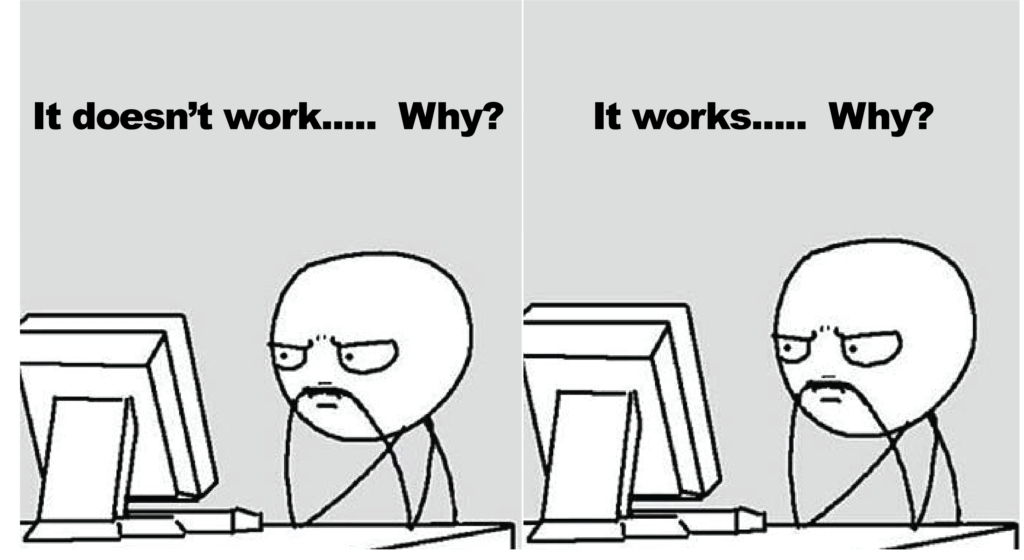
Numerical modelling is not always a walk in the park. In fact, many of us occasionally encounter problems that we cannot directly solve ourselves, and thus rely on help from others. In this month’s Wit & Wisdom post, Patrick Sanan, postdoctoral researcher at the Geophysical Fluid Dynamics group at ETH Zurich, will talk about asking the right questions about scientific software. As an experienc ...[Read More]
On the resolution of seismic tomography models and the connection to geodynamic modelling (Is blue/red the new cold/hot?) (How many pixels in an Earth??)
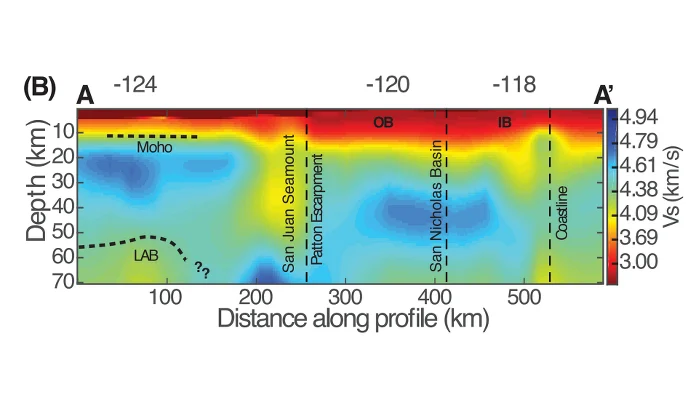
Seismologists work hard to provide the best snapshots of the Earth’s mantle. Yet tomographic models based on different approaches or using different data sets sometimes obtain quite different details. It is hard to know for a non specialist if small scale anomalies can be trusted and why. This week Maria Koroni and Daniel Bowden, both postdocs in the Seismology and Wave Physics group in ETH ...[Read More]
Demystifying the Peer-Review Process
An important and inevitable aspect of being in academia is receiving a request to peer-review a paper. And much like the papers we write and submit, retaining structure and clarity for the review itself is important. This week Adina E. Pusok, Postdoctoral Researcher at Scripps Institution of Oceanography, UCSD, and our outgoing GD ECR representative, shares some detailed and helpful tips for writi ...[Read More]
Presentation skills – 2. Speech
Presenting: some people love it, some people hate it. I firmly place myself in the first category and apparently, this presentation joy translates itself into being a good – and confident – speaker. Over the years, quite a few people have asked me for my secrets to presenting (which – immediate full disclosure – I do not have) and this is the result: a running series on the ...[Read More]
It’s just coding … – Scientific software development in geodynamics
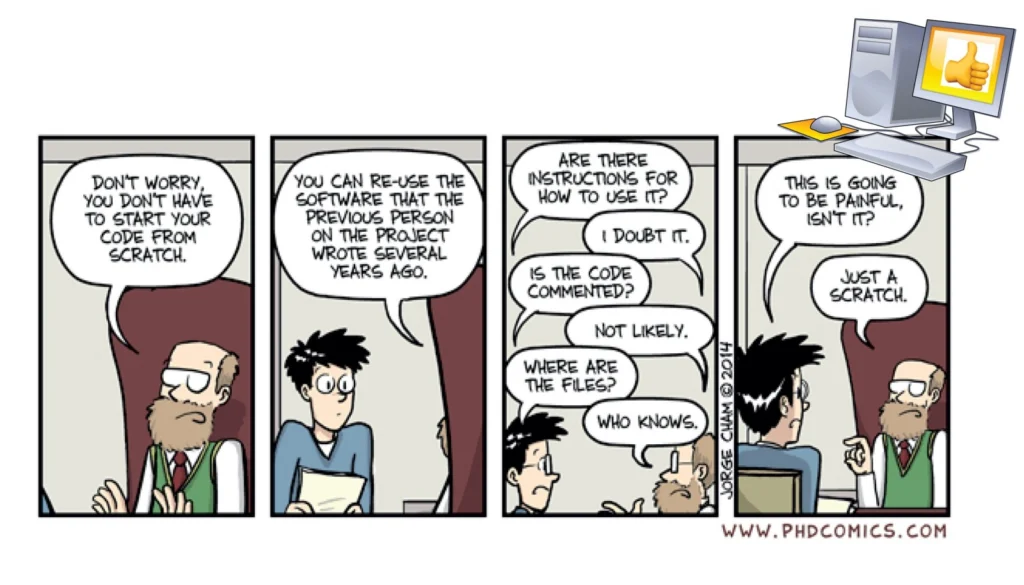
As big software packages become a commonplace in geodynamics, which skills should a geodynamicist aim at having in software development? Which techniques should be considered a minimum standard for our software? This week Rene Gassmöller, project scientist at UC Davis, Computational Infrastructure for Geodynamics, shares his insights on the best practices to make scientific software better, and ho ...[Read More]
Presentation skills – 1. Voice
Presenting: some people love it, some people hate it. I firmly place myself in the first category and apparently, this presentation joy translates itself into being a good – and confident – speaker. Over the years, quite a few people have asked me for my secrets to presenting (which – immediate full disclosure – I do not have) and this is the result: a running series on the ...[Read More]
Reproducible Computational Science
We’ve all been there – you’re reading through a great new paper, keen to get to the Data Availability only to find nothing listed, or the uninspiring “data provided on request”. This week Krister Karlsen, PhD student from the Centre for Earth Evolution and Dynamics (CEED), University of Oslo shares some context and tips for increasing the reproducibility of you ...[Read More]