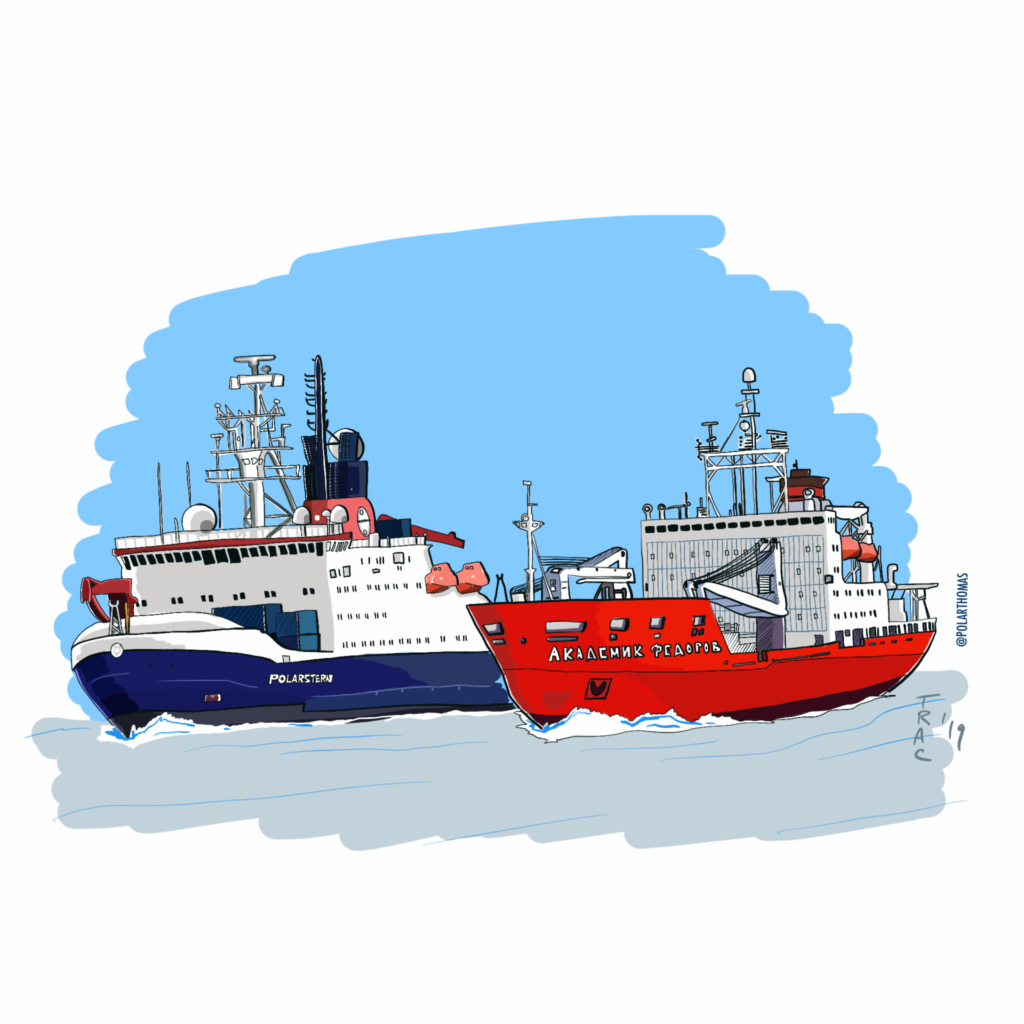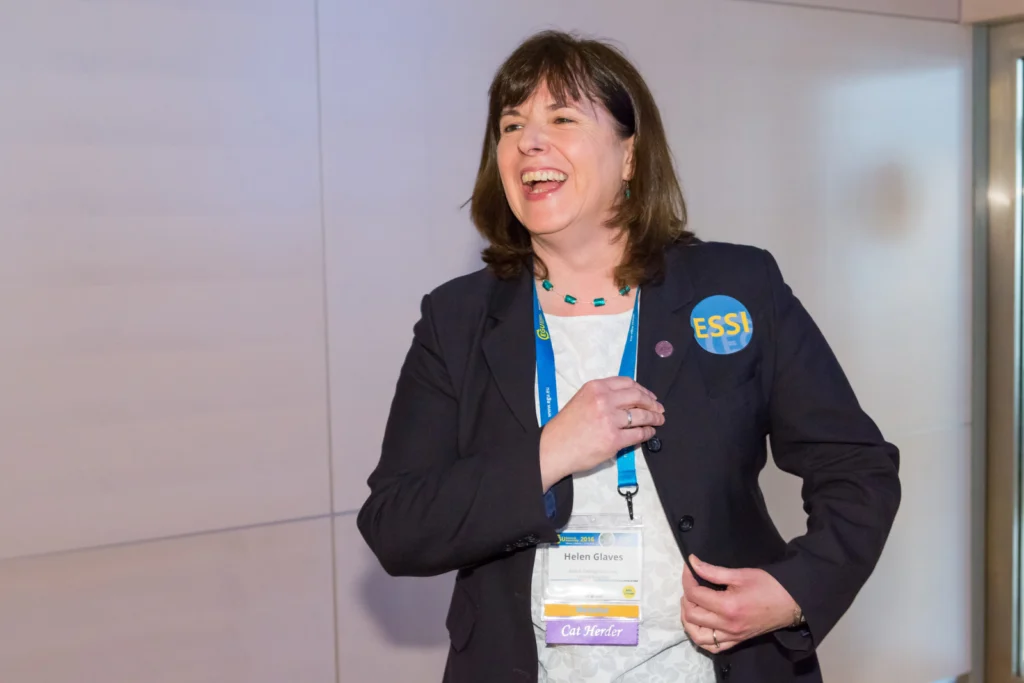
Today’s NP Interviews hosts the newly elected NP Division President François Schmitt. François has a PhD degree from Université Pierre et Marie Curie in Paris (1993), in atmospheric turbulence, and an Habilitation degree from the same university (2001). He has stayed in Belgium during 6 years as a post-doc, working in meteorology and in fluid …[Read More]
Latest posts
Geodynamics
Should we still study LLSVPs?
All blobs are equal, but some blobs are more interesting than other blobs. In this new Wit & Wisdom post, Jamie Ward, PhD student in seismology at the University of Leeds, United Kingdom, explores this age-old saying and discusses whether or not LLSVPs are the most important blobs in our lives. Also, there is a …[Read More]
Hydrological Sciences
Sharing is caring: Models for all, presenting eWaterCycle II
The photos above were found by doing a google image search for ‘hydrologist’. Apparently our image is that of scientists that get to be outside a lot. We all know that the knowledge we gain from fieldwork gets codified in hydrological models which can be written in all sort of programming languages. “I wonder what …[Read More]
Soil System Sciences
Early Career Scientist representative: how to become one in a few easy steps!
Early career scientist representatives are a crucial link between the EGU and the early career scientist community. They are vital in providing feedback from students and early career researchers so that we can take action to improve our early-career scientist’s activities at the EGU General Assembly and maintain our support for early-career scientists throughout the …[Read More]
Geochemistry, Mineralogy, Petrology & Volcanology
Five hundred miles from civilisation: Exploring active volcanism in the South Sandwich Islands
By Emma Liu – Lecturer in Earth Science, University College London. For more adventures, follow Emma on Twitter! It’s a strange feeling to realise that your closest human neighbours are on the international space station…! We were five hundred miles away from the nearest civilisation and all I could see in every direction was miles …[Read More]
GeoLog
Imaggeo on Mondays: Tertiary Flying Saucers
Besides for the purposes of documenting my research, I like to take photos of rocks under the microscope also because of their aesthetic appeal. It’s an hidden, marvelous world. These flying-saucer-looking objects are in fact the fossil skeletons of a Nummulites (the larger) and a Discocyclina (the one on top left), both belong to the …[Read More]
Stratigraphy, Sedimentology and Palaeontology
Adaptation and inheritance in the geosciences
Every year, the Stratigraphy, Sedimentology and Paleontology Division awards one scientist for their outstanding contribution to stratigraphy, sedimentology or paleontology with the Lamarck medal in recognition of the scientific achievements of Jean-Baptiste Lamarck (Bazentin-le-Petit, 1-02-1744 – Paris, 18-12-1829). It was the 11 May 1800 when Jean Baptiste Lamarck presented a lecture at the Muséum national d’histoire naturelle …[Read More]
Cryospheric Sciences
Boom and bust beneath the ice
Beneath the frozen surface of the Southern Ocean, live some of the most spectacular creatures on earth. These creatures are spectacular not only in appearance, but also in their ability to survive in such an extreme environment as Antarctica. Here, temperatures deviate only slightly from 0°C, and food is scarce during the winter months. How …[Read More]
GeoLog
GeoPolicy: How to become a Seconded National Expert for the European Commission
The European Seconded National Expert programme is a fantastic opportunity for scientists who are currently working in a national, regional or local public administration of an EU member state or an intergovernmental organisation to gain experience working within a European policy institution. In most cases, secondments are between six months and four years during which …[Read More]
Geodynamics
The Sassy Scientist – Stochastic Sequels
Tuckered from simply contemplating the infinite myriad of possibilities arising behind the dandy phantasmagoria at the pristine horizon which is a doctorate, Maite considers: Should I start a postdoc directly after my PhD? Dear Maite, I would. If you want to stay in science, that is. Consider yourself a prospector initiating the exploration of an …[Read More]