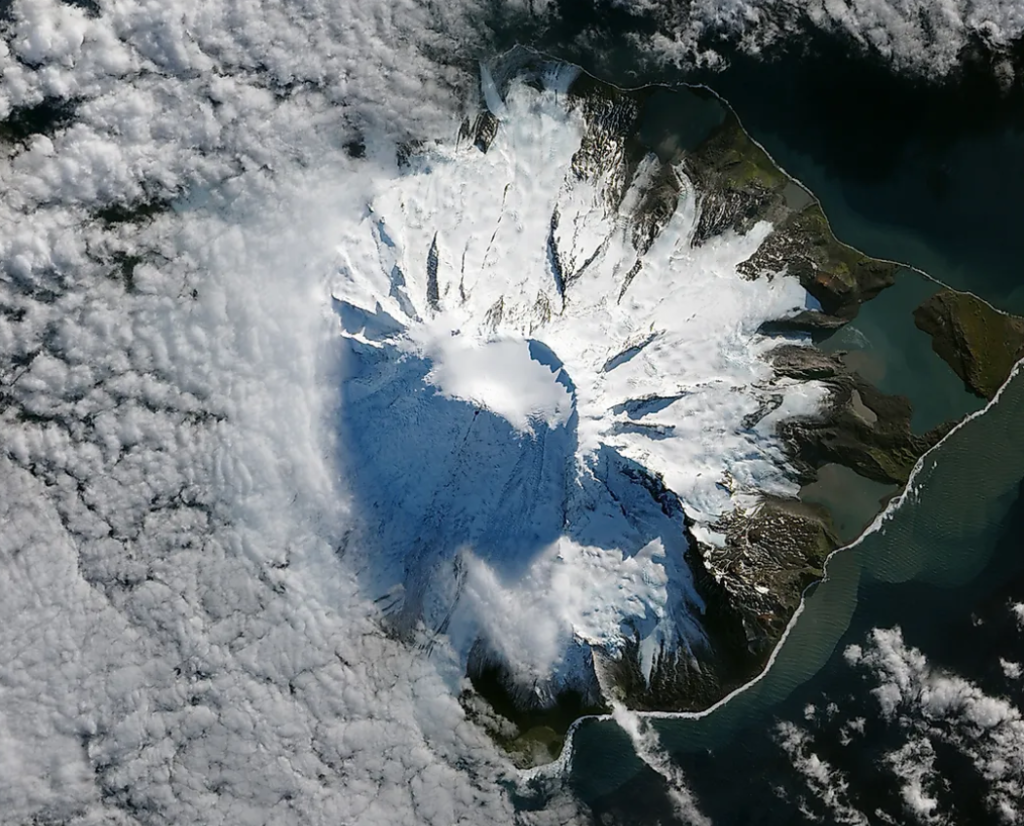
In this blog post Dr Levan Tielidze from Monash University and Securing Antarctica’s Environmental Future shares insights from a new glacier assessment of Heard Island. Although rarely visited and largely unknown, Heard Island plays an outsized role in understanding how the Southern Ocean cryosphere is responding to global warming. The island is one of the …[Read More]
Tracking the Footprints of a Vanishing Glaciers in the Greater Caucasus
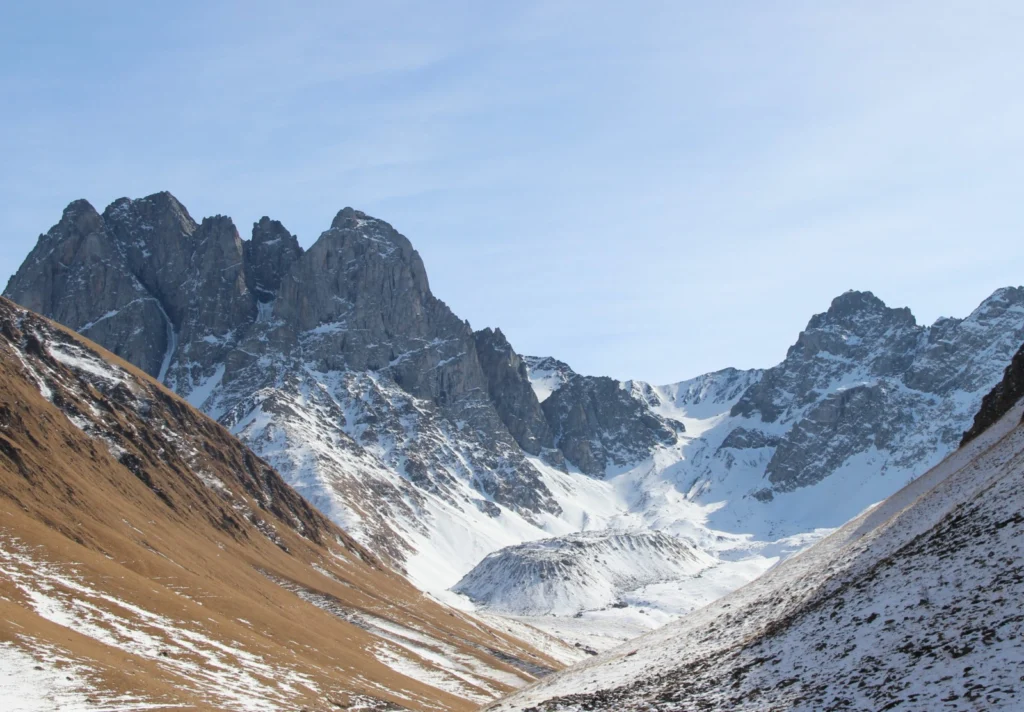
In this week’s blog, Levan Tielidze tells us about his recent glacier study from the Greater Caucasus. By combining geomorphology, remote sensing, and historical cartography, the team reconstructed nearly 200 years of glacier and climate change across one of the world’s most dynamic cryospheric frontiers. Glaciers’ transformation provides a high-resolution archive of post-Little Ice Age …[Read More]
A Scientific Quest from Australia to Antarctica
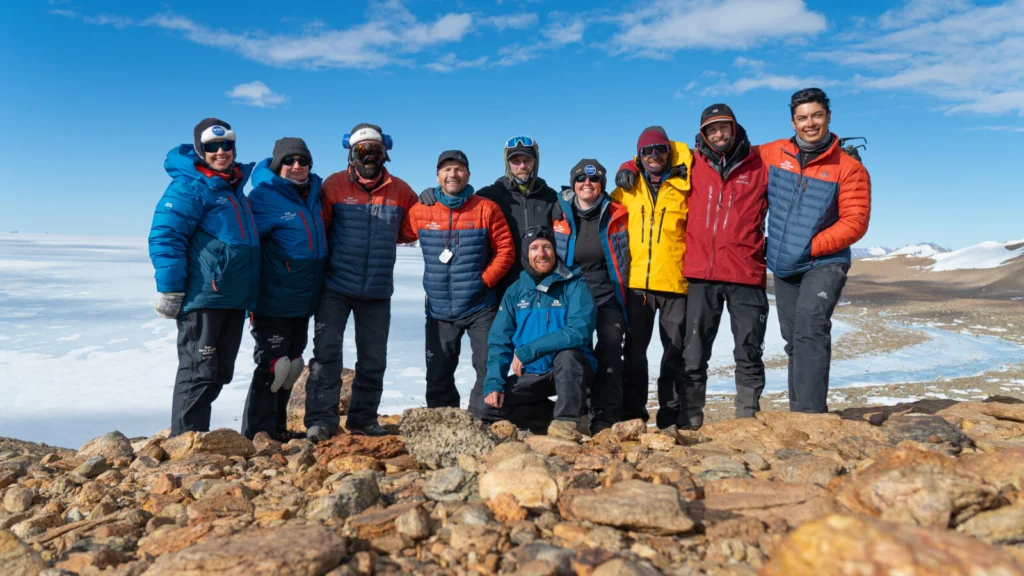
In this week’s blog, Levan Tielidze tells us about his participation in a scientific expedition to Dronning Maud Land, Antarctica, during the 2024–2025 field season. The journey, commencing in Australia and passing through South Africa, led him to the “surreal” and “awe-inspiring” Antarctic landscape. The team, a collaborative effort from Monash University, and the University …[Read More]
Hidden Ice of the Greater Caucasus
In this week’s blog, Levan Tielidze tells us about the first inventory of rock glaciers from the Greater Caucasus as an important basis for further research of geomorphology and palaeoglaciology in this region. What are Rock Glaciers? Rock glaciers are distinctive geomorphological landforms of frozen debris that are supersaturated with ice. The low ice velocity …[Read More]
Enigmatic Climatic Event: Antarctic Cold Reversal
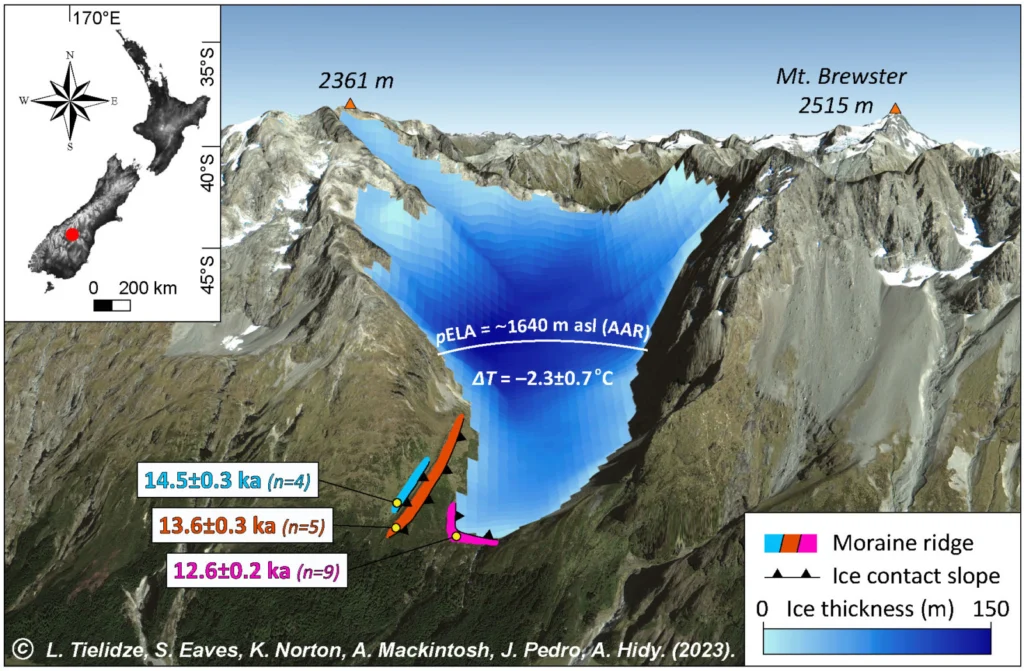
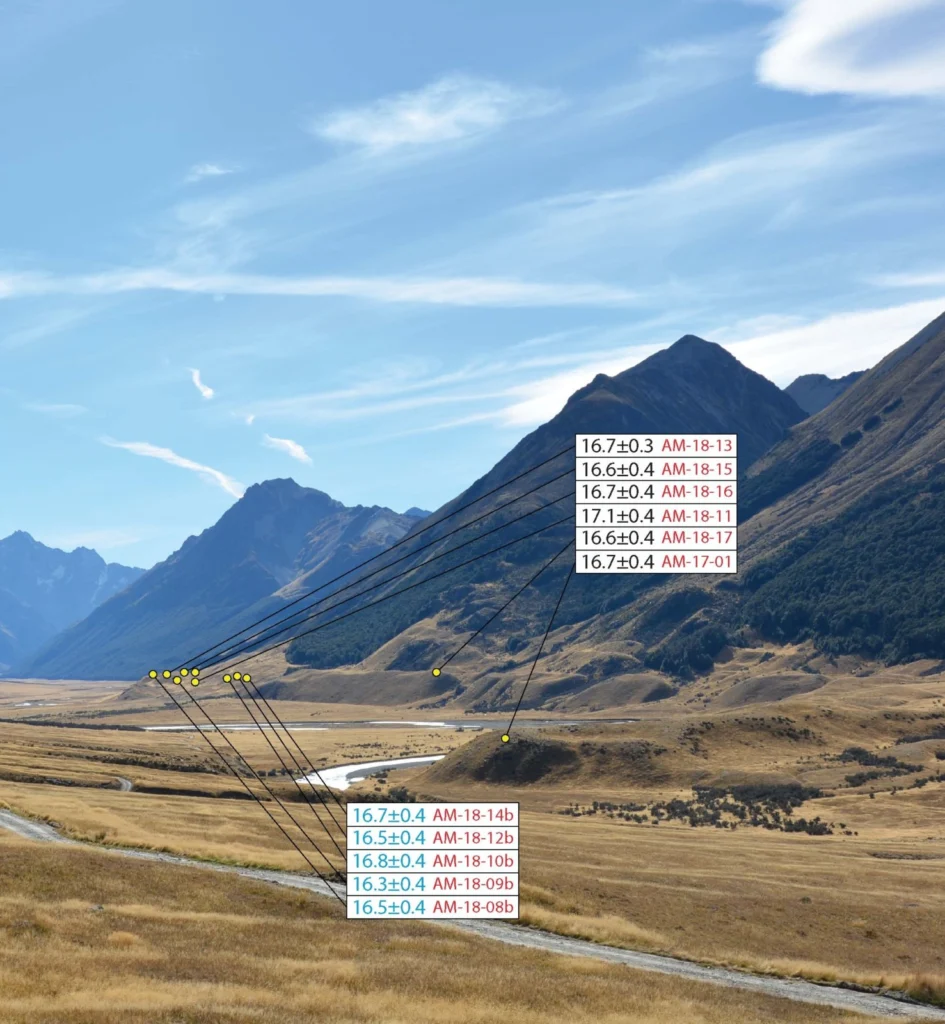
In this week’s blog, Levan Tielidze tells us about the insight into the response of mountain glaciers to the Antarctic Cold Reversal (ACR) event in New Zealand to better understand the climatic history of the Southern Hemisphere during the last deglaciation. The ACR was a cold period occurred in the Southern Hemisphere during the transition …[Read More]
A new glacier chronology from New Zealand
In this week’s blog, Levan Tielidze tells us about the new glacier history from the Southern Alps of New Zealand, an important piece of information to better understand the climatic history of Earth during the Quaternary, the current geologic period. Quaternary glaciations Geochronological dating of glacial moraines is useful for determining the extent and timing …[Read More]
Massive melting of Caucasus glaciers
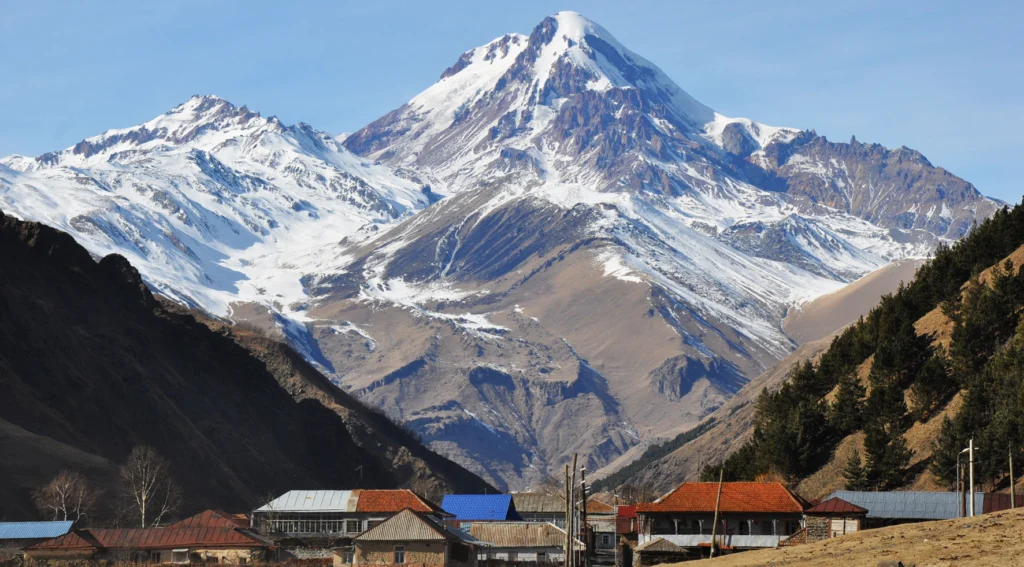
The Caucasus is one of the most studied glacierized regions in the world (see previous Cryoblogs on Caucasus glaciers here and here). In this week’s blog, Levan Tielidze tells us about the health of the Greater Caucasus glaciers. His first study published this year indicates that the rate of decline in glacier extent between 2000 …[Read More]
The new glacial geomorphological map from New Zealand
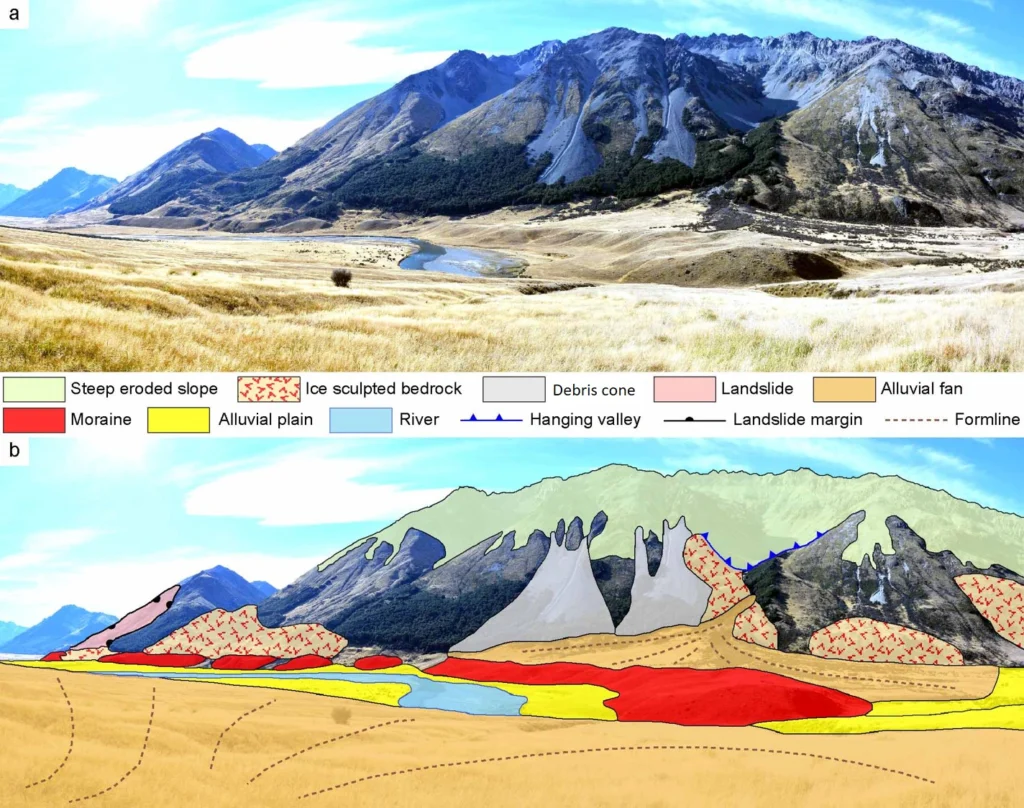
Geomorphological maps are a fundamental tool to represent landforms and understand how different morphological elements and agents shaped a natural landscape. They are also important as background information for many fields of research including ecology, forestry and of course, glaciology. In this week’s blog, Levan Tielidze tells us about the importance of mapping glacial geomorphology, …[Read More]
Climate Change & Cryosphere – How the Chalaati Glacier (Georgian Caucasus) changed since the Little Ice Age
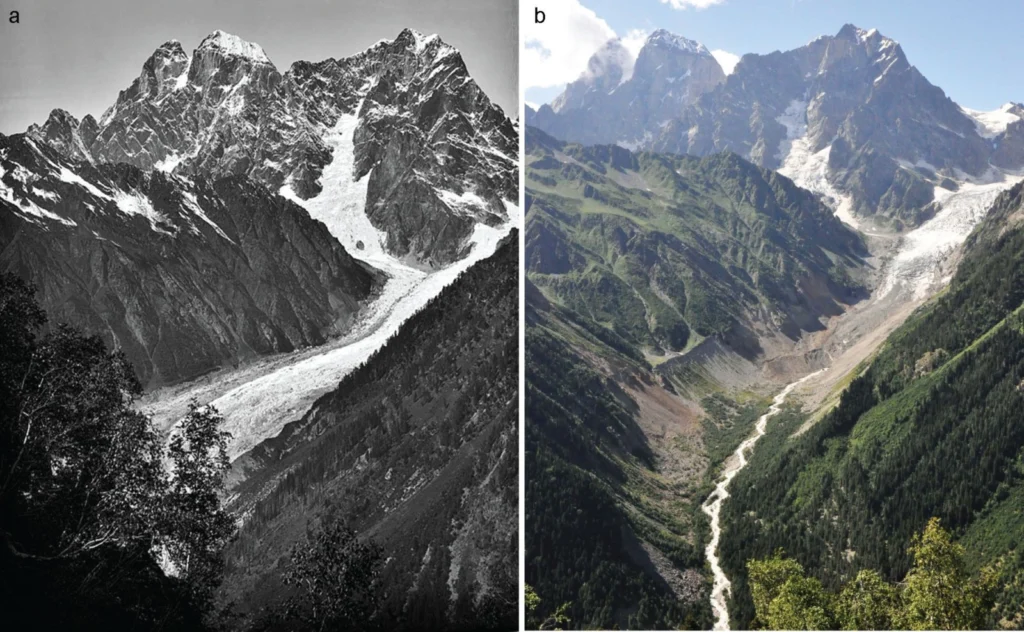
Chalaati Glacier is one of the largest glaciers in the Greater Caucasus and has undergone expansive mass loss. In this week’s blog post, Levan Tielidze tells us about Chalaati Glacier variations in the past centuries. His recent study was conducted based on surface exposure dating technique, dendrochronology (tree ring analysis), lichenometry, and satellite imagery. They …[Read More]
Does debris cover offset glacier retreat in the Greater Caucasus?
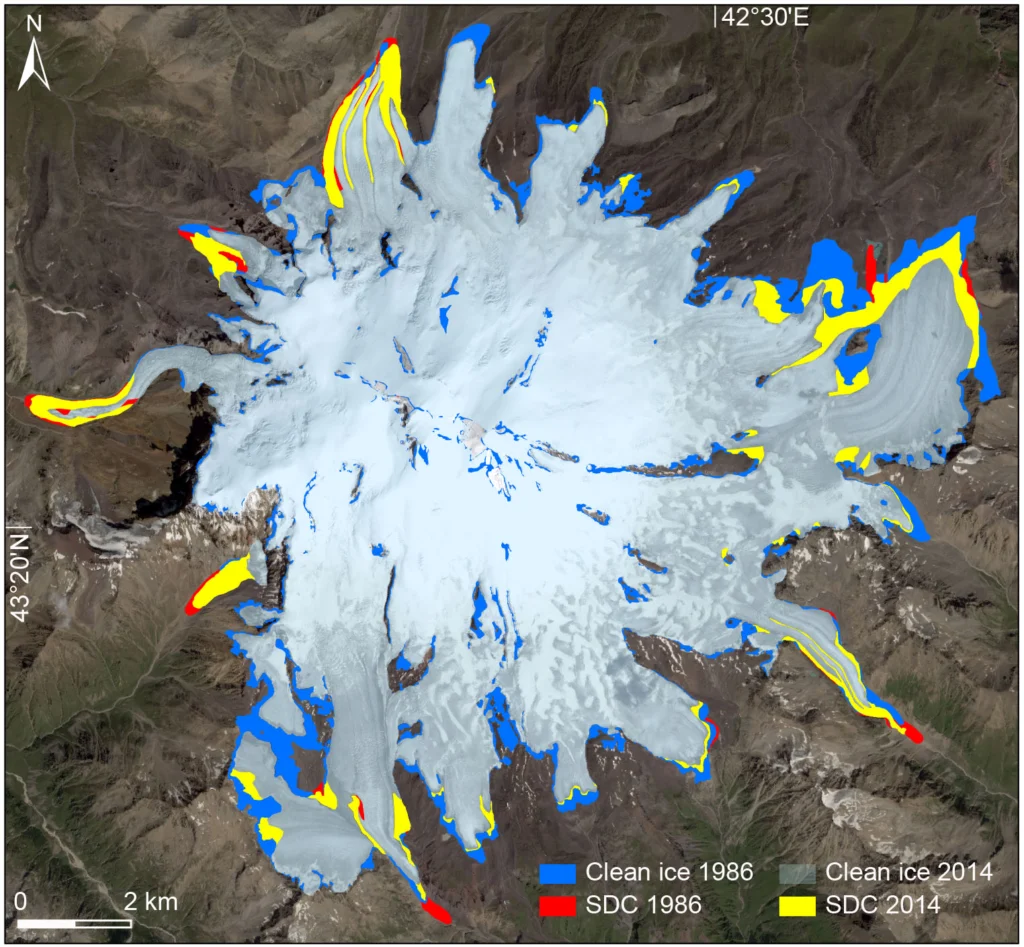
In this week’s blog, Levan Tielidze tells us about supra-glacial debris cover change for the Greater Caucasus. His recent study indicates more than a doubling in the area of supra-glacial debris cover for the Elbrus Massif‘s glaciers from 1986 to 2014, the largest glacierized massif in the whole region. Glaciers on the western slope of …[Read More]