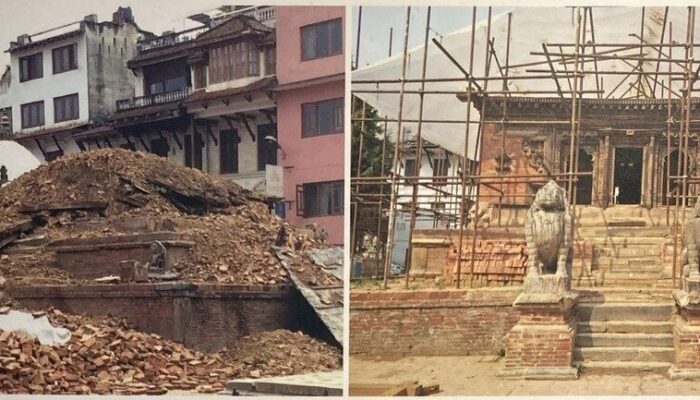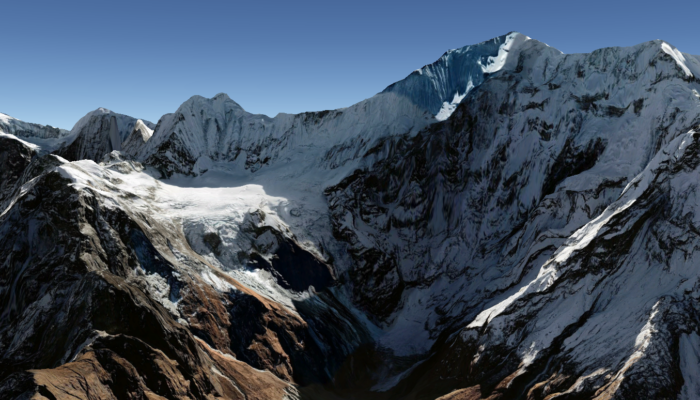
A note from the Natural Hazards Division editorial team We would like to open this blog post with our sincere condolences in response to the devastating multi-hazard flash flood that occurred in Nepal and Tibet in late August. In the face of such suffering, messages like this risk sounding hollow. Still, we, as the Natural Hazards Division editorial team, wish to express our solidarity with all fa ...[Read More]
GeoLog
70 years of tech: Does it serve science or separate us from it? My take as an EGU media professional
When I joined the European Geosciences Union in 2024 as a media professional, my primary mandate felt straightforward: democratising scientific understanding and building durable, trustworthy bridges that connect scientists, researchers, journalists, and public communicators. Now, in my third year at EGU, I find myself looking out over our scientific community with a mixture of reverence and uneas ...[Read More]
Hydrological Sciences
eDNA4Hydrology
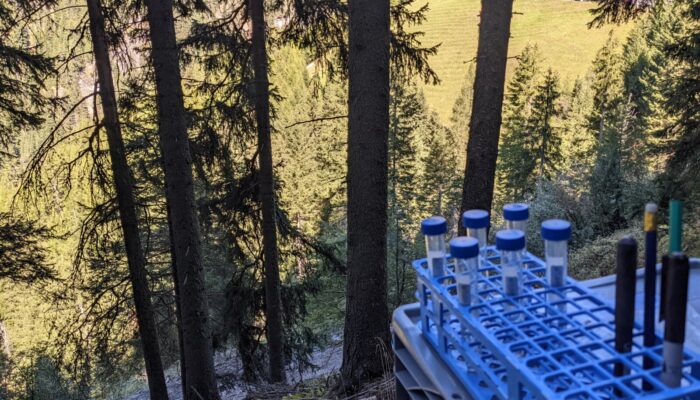
What flows around comes around For centuries, hydrologists have studied the flow of water through landscapes near and far. We measured flow rates, mapped aquifers and followed invisible paths of raindrops through soil and bedrock. Hydrology is a meticulous, beautiful science that has taught us much over the years. From the water cycle, surface water in rivers, wetlands and snowpack and groundwater ...[Read More]
Geodynamics
The Geodynamics Awakens: Star Wars Planets and Earth’s Geological History
Star Wars is one of the most influential science-fiction worlds created in our time. The central theme revolves around the struggle between the tyrannical Galactic Empire and the rebels trying to bring it down. Star Wars has many reasons to pull you in: iconic lightsaber duels, technological advancements such as hyperspace travel, and perhaps most importantly for a geologist: a remarkable number o ...[Read More]
Geomorphology
From Storm to Landscape: High Resolution for Climate Risk
Welcome to ”Climate Change through a Geomorphological Lens”, a blog series exploring the changing climate from a geomorphological perspective. This first post was inspired by a single figure in the Intergovernmental Panel on Climate Change’s Sixth Assessment Report [1]. It compares precipitation change per degree Celsius of warming across different climate models and observations for three t ...[Read More]
GeoLog
GeoRoundup: the highlights of EGU Journals published during August!
Each month we feature specific Divisions of EGU and during the monthly GeoRoundup we put the journals that publish science from those Divisions at the top of the Highlights section. For August, we are featuring the Natural Hazards (NH), Geochemistry, Mineralogy, Petrology & Volcanology (GMPV), and Geodesy (G). They are represented by the journals Solid Earth (SE), Geoscientific Model Developme ...[Read More]
Ocean Sciences
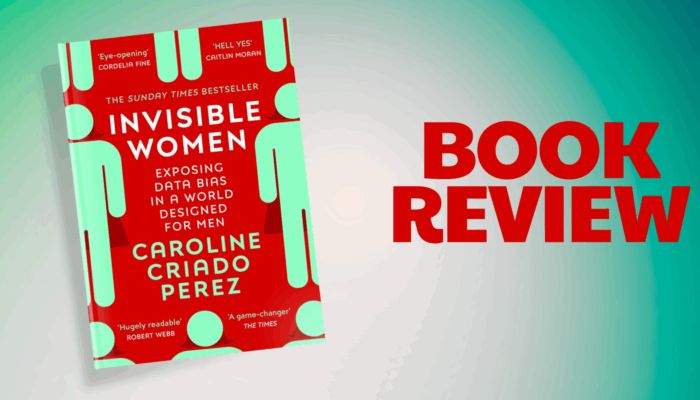
Book Review: Invisible Women by Caroline Criado Perez
Our previous book recommendations were the nonfiction books Blue Machine – How the Ocean Shapes our World by Helen Czerski and Below the Edge of Darkness by Edith Widder as well as the thriller The Swarm by Frank Schätzing. This time, we are stepping away from the ocean. Our next book recommendation is “Invisible Women: Exposing Data Bias in a World Designed by Men” by Caroline Criado ...[Read More]
Hydrological Sciences
Summary of the August 26th, 2026, Himalayan flash flood
At the time of preparing this blog entry, we are less than 48 hours after the catastrophe which has hit the Himalaya. While the flow of new information continues, it is useful to summarize and clarify the key points around this event. WHAT? The massive destruction was caused by a flash flood. It was such a high energy that is rarely seen. Numerous videos can be found online. WHERE? The caus ...[Read More]
GeoLog
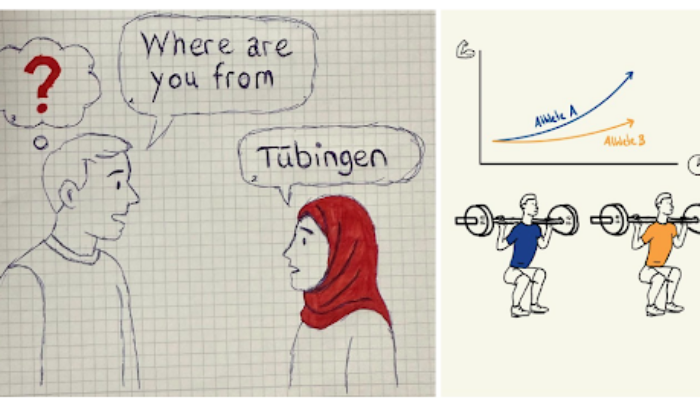
Geolog series: Communicating uncertainty in science -Student perspectives from the University of Tübingen
Welcome to a new series on GeoLog dedicated to one of the most critical yet frequently misunderstood aspects of research: Communicating uncertainty in science. Over the coming months, we will feature six guest posts written by students from a summer course at the University of Tübingen. Bringing together 13 students across diverse disciplines, the course challenged them to reframe uncertainty as a ...[Read More]
Geodesy
Regional Reference Frames: Keeping Track of a Deforming Earth
You are observing the construction of a bridge that will be initiated on the two banks of a river simultaneously, in such a way that the works will eventually meet in the middle of the river. You wonder, how do they make sure that the construction on the two sides will stay aligned with the millimeter precision that this project requires? You are aware of previous constructions where small miscalc ...[Read More]