Tinted detail of a photo: Aerial view of steep limestone mountain ridges whose pale rock layers are tilted almost vertical, with green grassy slopes between them, a deep shadowed valley and a building with a mast on the left summit.
TS
Tectonics and Structural Geology
Avatar photo

Dripta Dutta

Dripta (pronounced: drip-toh) is an Assistant Professor at the Department of Earth and Planetary Systems Science at Hiroshima University in Japan. His work focuses on identifying the deformation mechanisms of rock-forming minerals, such as quartz, feldspars, amphibole, and clinopyroxene, in a variety of rocks, ranging from granites and gneisses to eclogites and amphibolites.

From Fault Architecture to Grain-Scale Deformation: Integrating Field, Microstructural, and Experimental Approaches
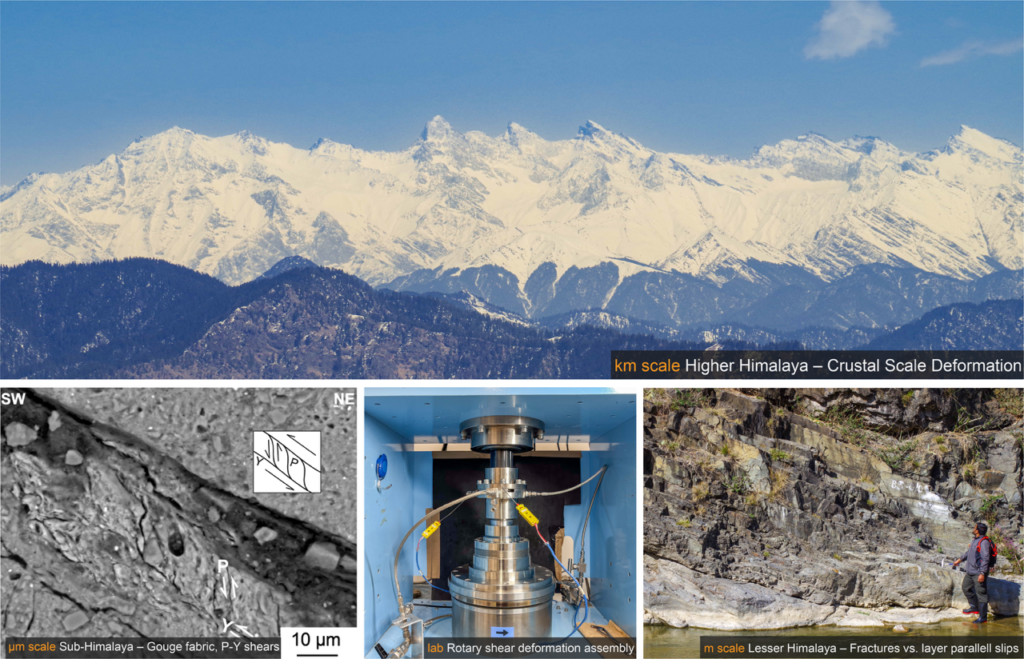
From Fault Architecture to Grain-Scale Deformation: Integrating Field, Microstructural, and Experimental Approaches

Fault zones are far more complex than the lines we draw on geological maps. Their internal structures, mineralogical compositions, and deformation histories offer important clues to deformation mechanisms and even how earthquakes might occur. But how can we connect what we observe in the field with the microscopic processes and mechanical behaviour of faults at …[Read More]

Finding Geothermal Energy with Structural Geologists!

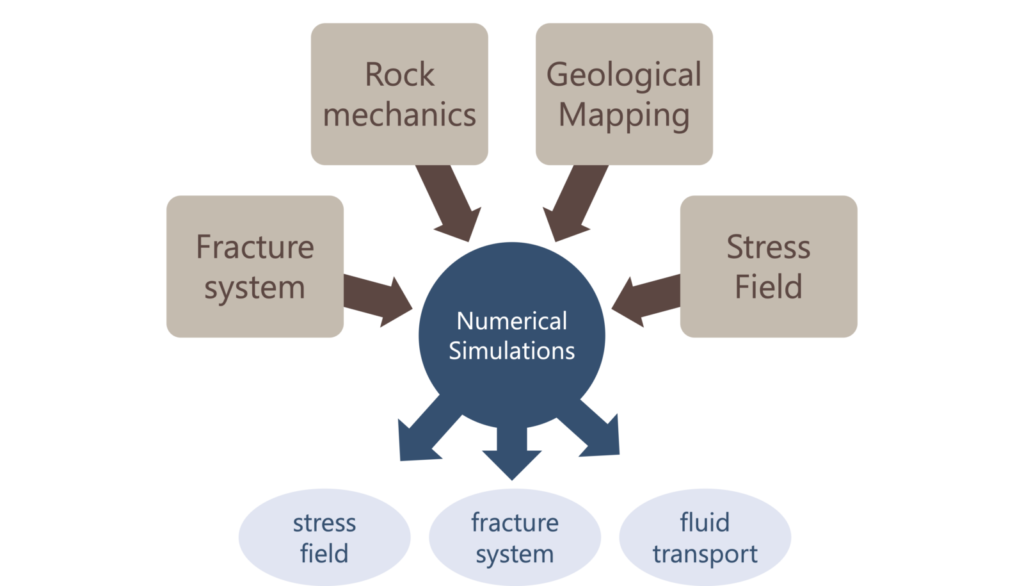
Finding Geothermal Energy with Structural Geologists!

Imagine harnessing the Earth’s natural warmth to heat our homes and generate clean electricity. That is the promise of geothermal energy. It taps into the heat from beneath the Earth’s surface, providing a consistent and low-carbon power source. Geothermal energy plays a crucial role in reducing carbon emissions because it produces very little greenhouse gas …[Read More]