A frozen lake can be more than a layer of ice. It can become a road, a fishing ground, a place of spiritual significance, or a window into a changing climate. From the ice-covered waters of the Northern Hemisphere to Patagonia, lake ice shapes ecosystems and influences communities. But as temperatures rise, lake ice is changing too. Explore the science, traditions, and changing patterns surrounding the frozen surfaces of our lakes.
A short definition of lake ice
Lake ice is mostly seasonal ice that forms on water bodies such as lakes and lagoons when the air temperature is below 0°C for long enough to drop the surface water temperature to or below 0°C. First, some ice crystals begin to form at the lake surface and then develop into a continuous layer that covers the surface partially or completely.
After becoming sufficiently stable the ice starts to increase in thickness. During this process, different layers form (Figure 2), the main ones being primary, secondary and superimposed ice. Each one has their own subtype, and which one forms depends on the water (turbulent or calm) and weather conditions (snow and wind).
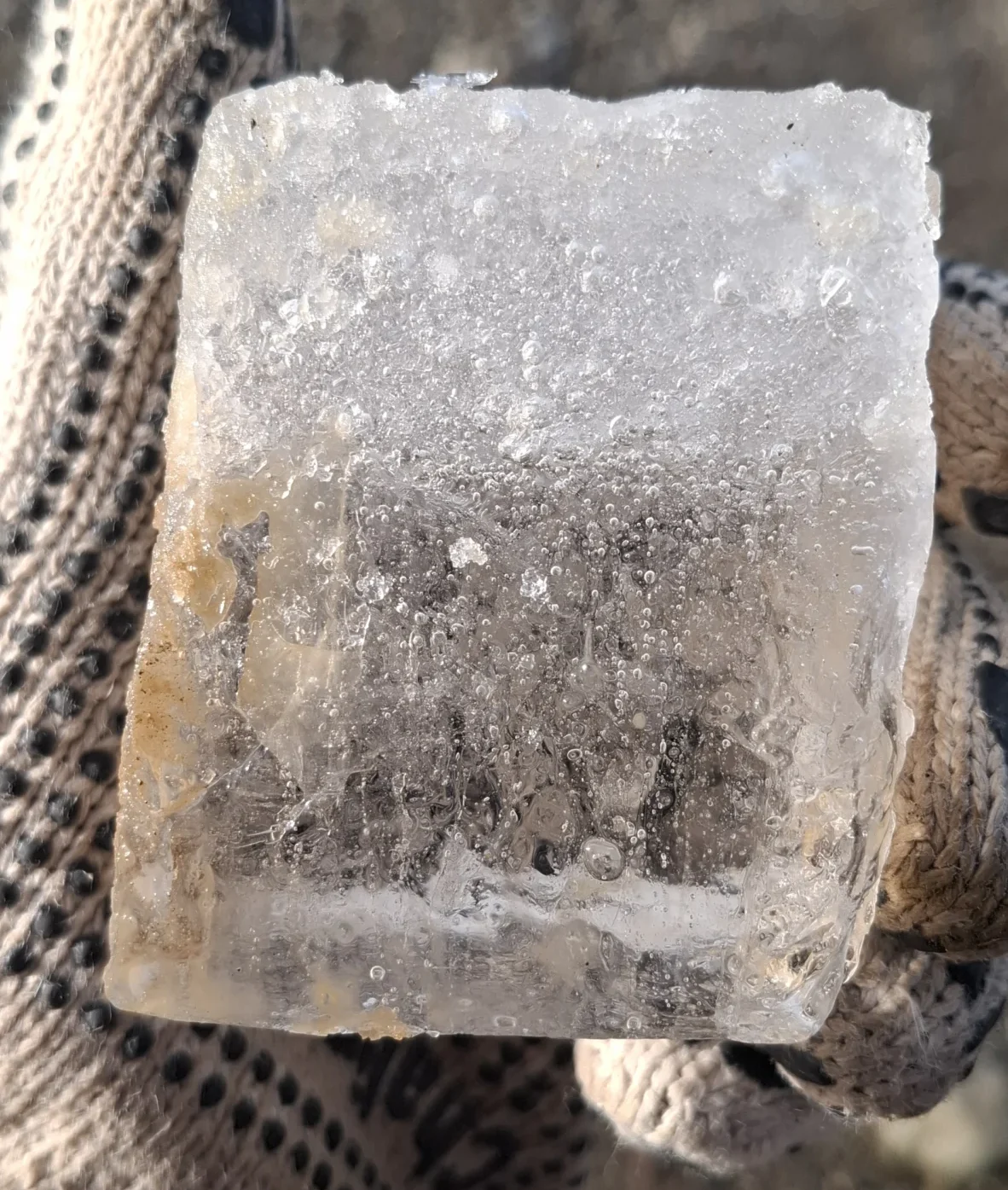
Figure 2. Lake ice sample of Lynch Lagoon, Patagonia, Chile. [Credit: Javier Norambuena]
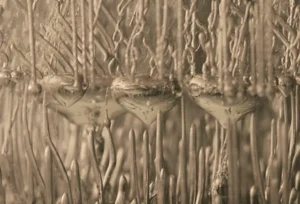
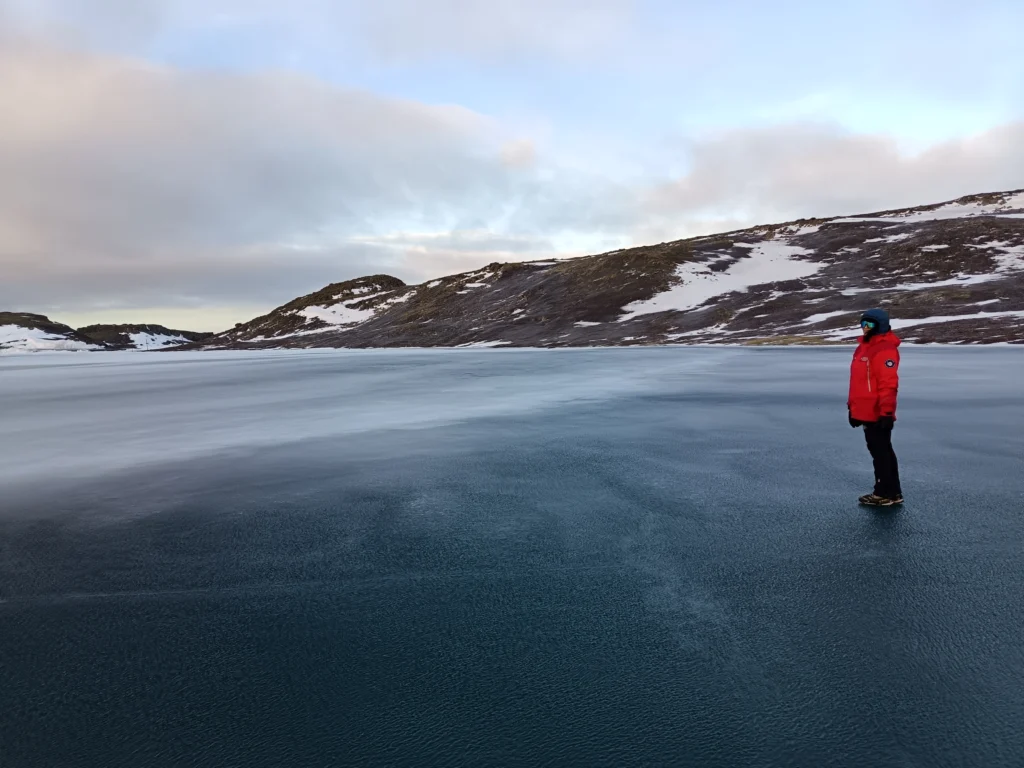
While lake ice is normally a seasonal phenomenon in mid to high latitudes, water bodies close to the poles can be permanently frozen, such as the lakes in the McMurdo Dry Valleys in East Antarctica. Ice can also form distinctive and interesting features, for example elongated ridges observed on a frozen lake in Chile (Figure 3). The seasonal ice is not only an important physical component of lakes, but also plays a role in a wide range of ecological, environmental, social, cultural, and economic processes.
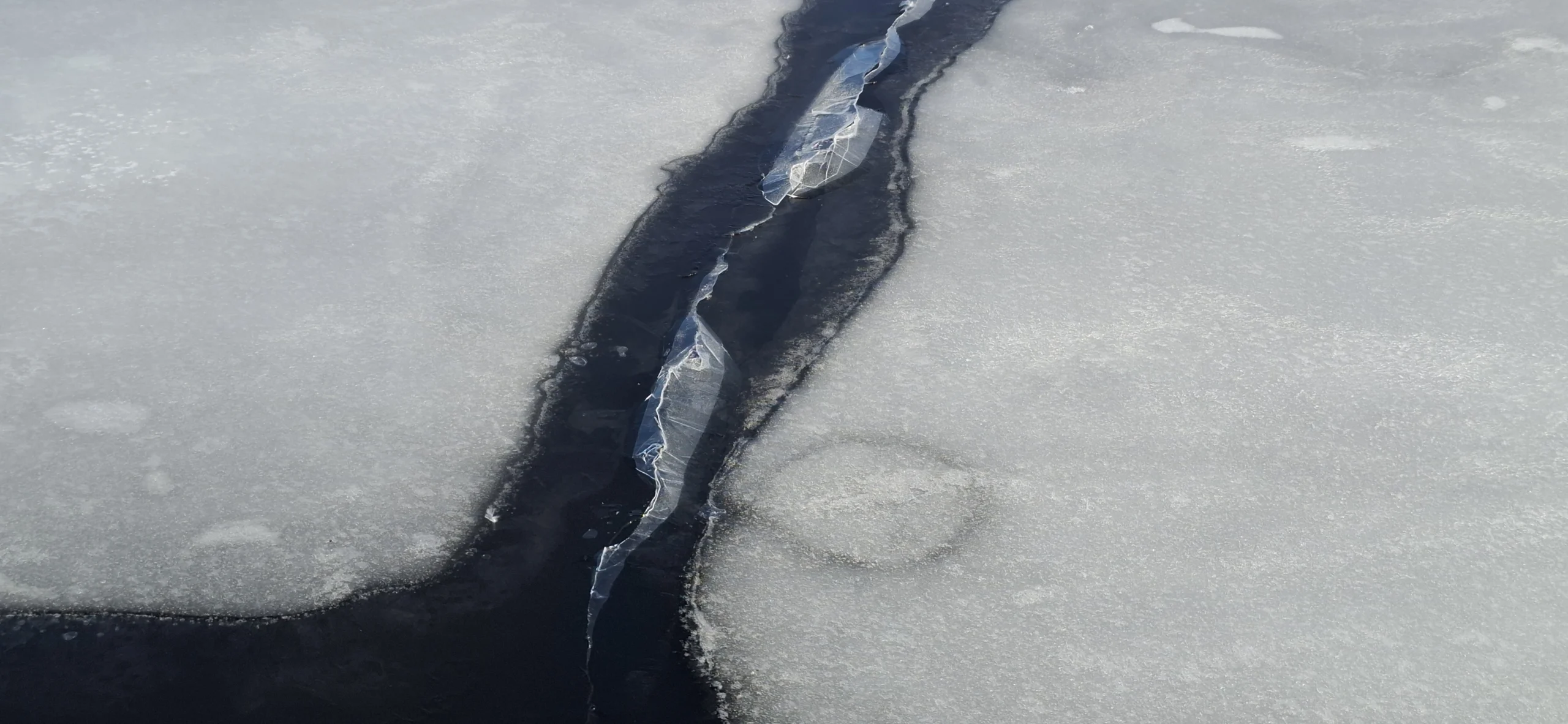
Figure 3. Elongated ice ridges on frozen lake in Chile. [Credit: Javier Norambuena]
Current tendencies in lake ice phenology
Lake ice phenology describes the seasonal freeze and thaw of ice on water bodies. Most available records come from lakes in the Northern Hemisphere with few studies in Antarctica. Magnusson’s work on lake and river ice in the Northern Hemisphere analyzes the variability of the freeze-up and break-up dates of 26 water bodies that have time series with more than 100 years. Most of the studied lakes show later freeze-up dates (13 out of 17 lakes, for 9 lakes there is no data) and earlier break-up dates (24 out of 26 lakes), leading to a shorter total duration of ice cover. However, there are 2 lakes that show stable trends or the opposite pattern.
Data from the Global Lake and River Ice Phenology Database (Figure 4) suggest that freeze-up trends are not consistent across all regions. The freeze-up dates for some Canadian lakes, with records until 2000, show positive trends (later freeze-up), while others show negative trends (earlier freeze-up). Across the complete Canadian data set, 107 lakes show later freeze-up and 92 show earlier freeze-up. As Figure 4 shows, the length of the records varies among lakes.
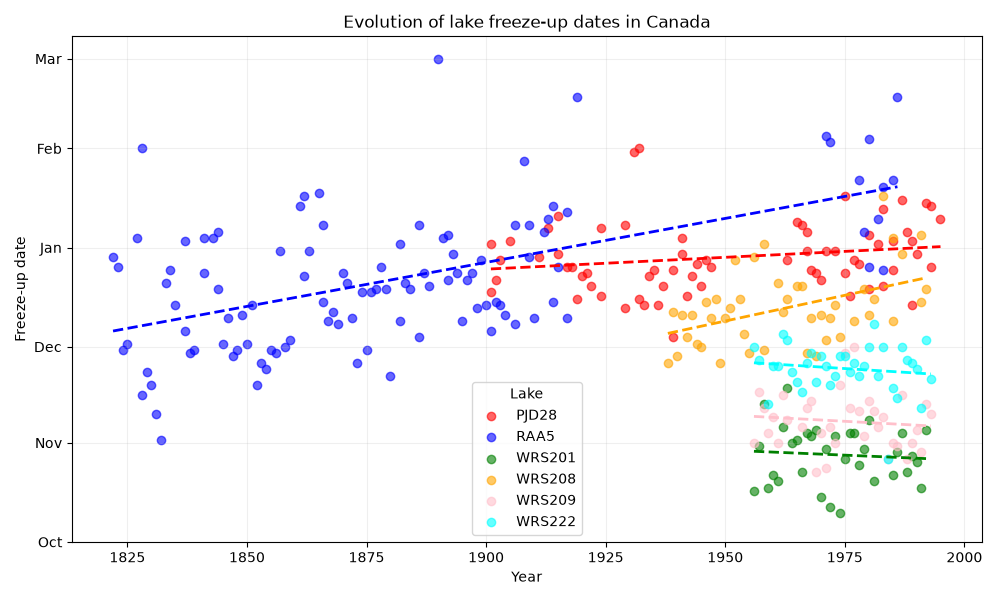
Figure 4. Trends in the freeze-up dates in a set of Canadian lakes from the 1820s to 2000. [Credit: Javier Norambuena, using data from The Global Lake and River Ice Phenology Database]
A more recent study shows similar trends in 53 lakes across the Tibetan plateau (Figure 5). This study focuses on the reconstruction of the phenological variables between 2001 and 2017. Most of the lakes show positive trends in the freeze-up date (i.e. the lakes are frozen later in the year) and negative in the break-up date (i.e. the lakes are free of ice sooner in the year).
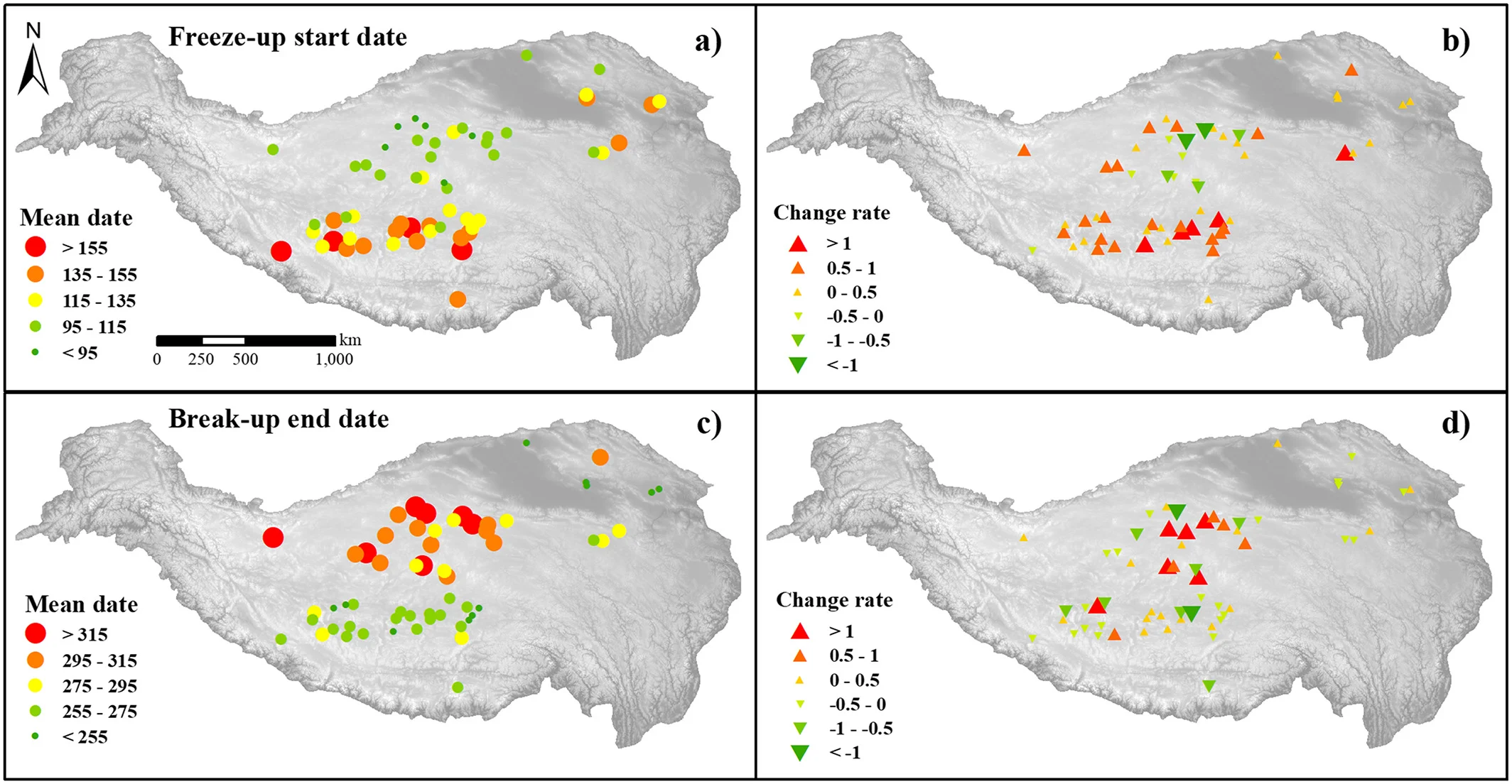
Figure 5. Change rate (days/year) of freeze-up start and break-up end dates for 58 lakes on the Tibetan Plateau, 2001–2017. Positive change rate values indicate later dates (b and d); a later freeze-up combined with an earlier break-up implies a shorter ice-cover season. [Credit: Cai et al., 2019]
The main trend (shorter ice cover duration) can be seen as a response to the general atmospheric variability, as the rate seen in the plateau shows an yearly increase of 0.056 °C on average in the mean air temperature. On the other hand, some of the reasons behind the rebel lakes that do not follow the overall trend are related to lake morphology as well as differences in their chemical composition.
Impact on the ecosystem
Lakes can act as sink or source of greenhouse gases depending on the balance of organic matter decomposition and carbon burial or uptake. This balance is influenced by the presence of (micro)organisms as well as chemical and physical factors such as the nutrient concentrations in the water and the depth of the lake. During winter, lakes in mid to high latitudes can develop an ice cover that limits the renewal of oxygen and nutrients making the (micro)organisms adapt to poor light and low oxygen levels.
Losing the seasonal ice cover means that the lake has a permanent exchange with the atmosphere during winter, changing the water temperature and allowing more oxygen and nutrients to enter the lake. The effects of losing the cover are not clear yet. However, a change in the lake’s diversity of (micro)organisms is expected, as it will have more resources during the winter.
Impact on communities
In cold regions around the world, lake ice is an integral part of winter life for many communities. It can serve as a temporary transportation route, connecting remote settlements and allowing people and goods to cross lakes rather than travel around them. Lake ice is also used for recreation, such as ice skating, and supports traditional food-storage practices that rely on cold conditions to preserve perishable foods. In addition, it provides access to ice fishing, which can be an important source of food and a traditional livelihood.
Lake ice also has important religious and spiritual significance through different religions, some examples being Lake Suwa in Japan and Lake Constance in Germany. In the Shinto tradition, the long ridges that form across the frozen lake are considered to be the path of the gods crossing the lake. This phenomenon is known as o-miwatari (御神渡り), and records of its occurrence in Lake Suwa date back to 1443. In the case of Lake Constance, there is the Catholic tradition of the procession with an apostle’s statue over the ice from Germany to Switzerland. In both cases, as the lake freezing becomes less frequent, these traditions are increasingly difficult to maintain.
Walking on thin ice: Lake ice in a warming climate
Lake ice is an important component of the everyday life of many communities, supporting a range of activities and practice. The 2019 IPCC report on ocean and cryosphere shows a clear trend, even with limited evidence of universality: lake-ice duration is shortening as a result of the increasing water and atmospheric temperature and this will imply a change in lifestyle for communities depending on lake ice. Even small increases in temperature will make lake-ice formation less likely and reduce ice thickness and duration. This should be taken as a call to go ahead of the imminent changes, both from the perspective of infrastructure and the preservation of heritage records.
There are still many questions related to lake ice that should be addressed, including the ecosystem impacts of shorter ice duration, ways to monitor the lake ice and many others. Check out the 100 open questions for lake ice research for an overview of these and other outstanding questions.
Suggested reading
The Ainu and winter traditions in Japan
One-hundred open questions for lake ice research
Lake Ice Phenology in Antarctica
References
Cai, Y., Ke, C., Li, X., Zhang, G., Duan, Z., & Lee, H. (2019). Variations of Lake Ice Phenology on the Tibetan Plateau From 2001 to 2017 Based on MODIS Data. Journal Of Geophysical Research Atmospheres, 124(2), 825-843. https://doi.org/10.1029/2018jd028993
Leppäranta, M. (2023). Freezing of Lakes and the Evolution of Their Ice Cover. https://doi.org/10.1007/978-3-031-25605-9
Magnuson, J. J., Robertson, D. M., Benson, B. J., Wynne, R. H., Livingstone, D. M., Arai, T., Assel, R. A., Barry, R. G., Card, V., Kuusisto, E., Granin, N. G., Prowse, T. D., Stewart, K. M., & Vuglinski, V. S. (2000b). Historical Trends in Lake and River Ice Cover in the Northern Hemisphere. Science, 289(5485), 1743-1746. https://doi.org/10.1126/science.289.5485.1743
Wang, Q., Yang, F., Liao, H., Feng, W., Ji, M., Han, Z., Pan, T., & Feng, D. (2024). Seasonal Variations of Ice-Covered Lake Ecosystems in the Context of Climate Warming: A Review. Water, 16(19), 2727. https://doi.org/10.3390/w16192727