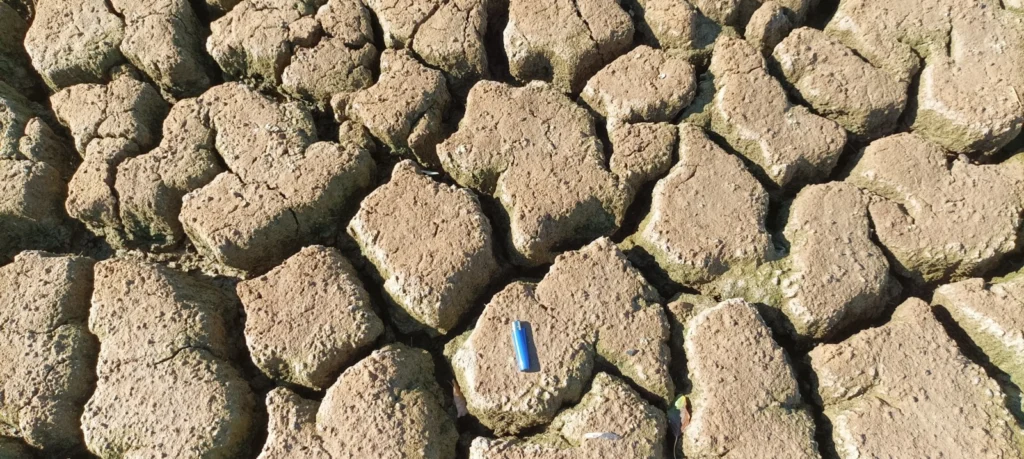
First, in English: Bottom of a dry lagoon in the Cañada de Los Pájaros (Birds Dale) in the surroundings of the Doñana National Park (Huelva, SW Spain). After an exceptionally long, hot, and dry summer, the area’s lagoon system has dried up. The bottom, clayey and silty, contracts to form a network of columnar aggregates …[Read More]
Regular Features
GeoRoundup: the highlights of EGU Journals published during November!
Each month we feature specific Divisions of EGU and during the monthly GeoRoundup we put the journals that publish science from those Divisions at the top of the Highlights roundup. For November, the Divisions we are featuring are: Earth Magnetism & Rock Physics (EMRP), Geodynamics (GD) and Tectonics and Structural Geology (TS). They are served by the …[Read More]
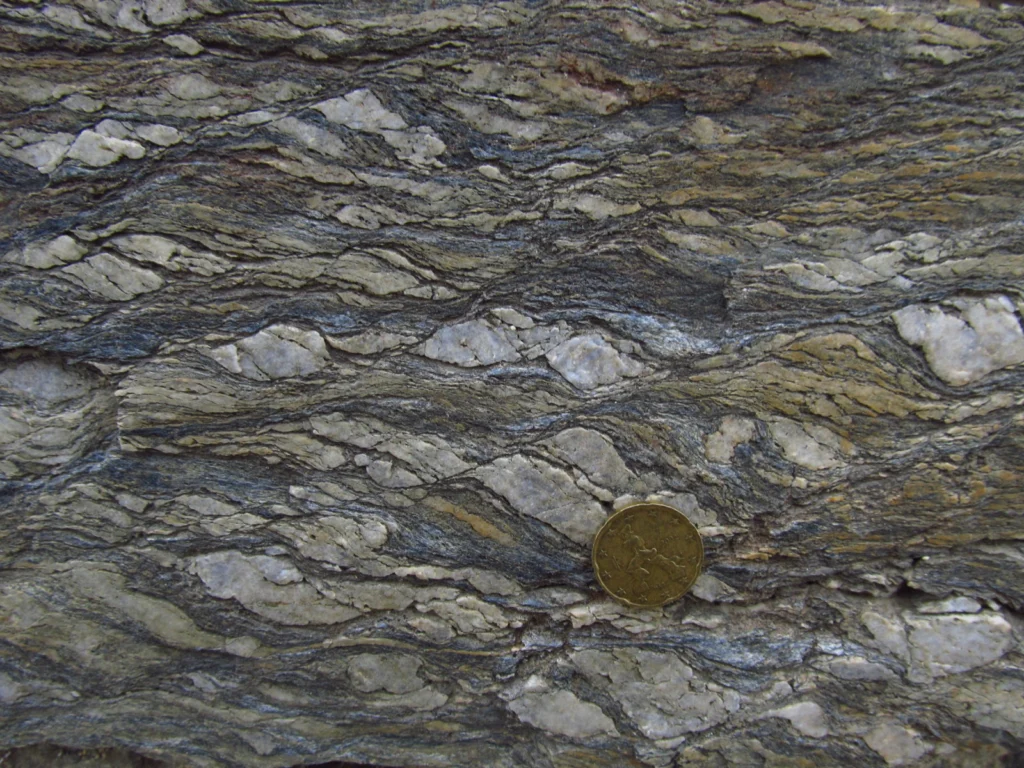
Imaggeo On Monday: S-C mylonite in the Calamita Schists (Island of Elba, Italy)
S-C mylonites developed in andalusite-cordierite micaschist (Calamita Schists) in the contact aureole of the Porto Azzurro pluton. The white layers are made of quartz, while the brown layers consist predominantly of white mica and biotite. Top-to-left (East) sense of shear. Read more: Papeschi et al (2017). Heterogeneous brittle-ductile deformation at shallow crustal levels under high …[Read More]
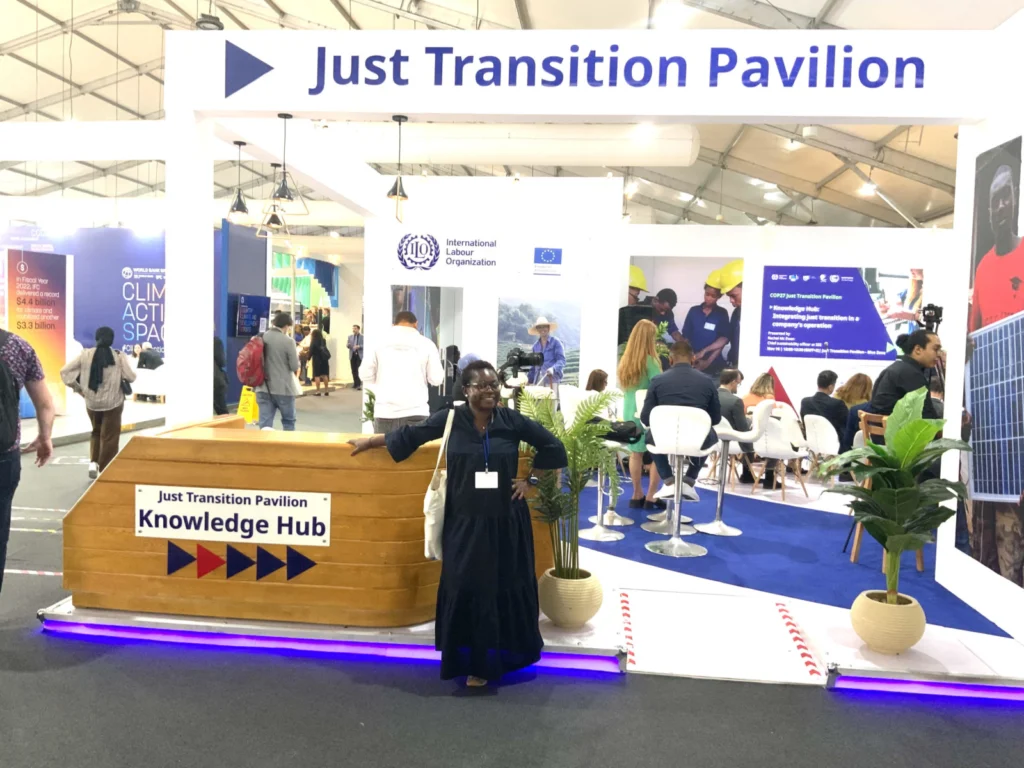
Sustainable Energy Geoscientist reflects on UN’s COP27
This year, from 6 to 20 November, the United Nation’s COP27 took place in Sharm el-Sheikh in Egypt. The conference hosted several high-level and side events, key negotiations and press conferences, attended by more than 100 Heads of State and Governments and over 35,000 participants who deliberated climate action strategies around the world. I had …[Read More]
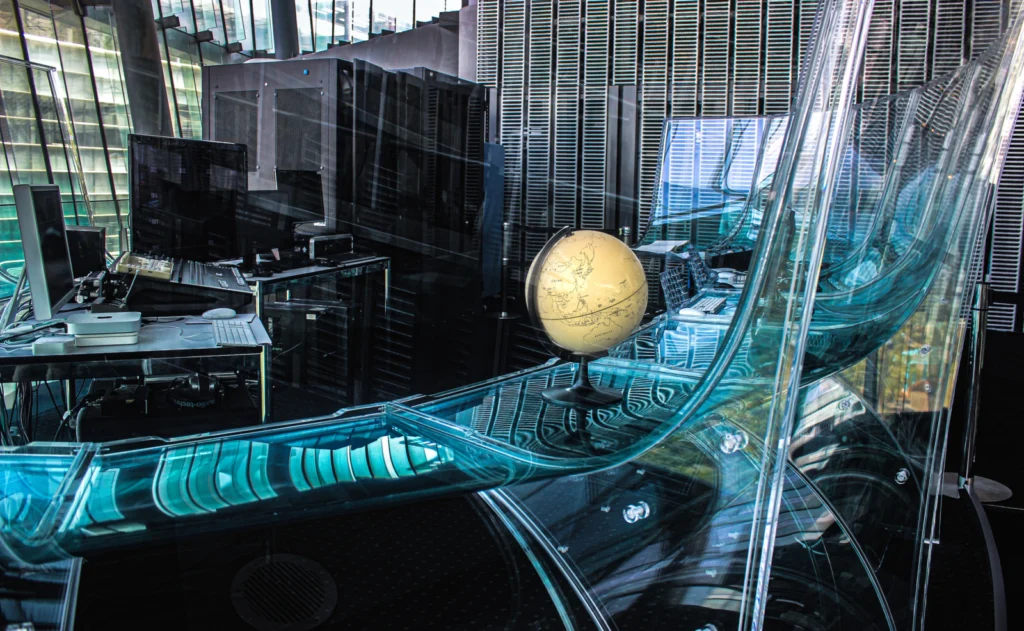
Imaggeo On Monday: Computing for a blank globe
A tribute to the computational geosciences. A mix of computer infrastructure, a modern workstation, and a simple globe with coastlines. Found this scene at the back of room at Miraikan – the National Museum of Emerging Science and Innovation in Tokyo, Japan. The computers, screens, and globe are behind a plexi-glass and while not intended …[Read More]
GeoPolicy: A new step to build robust science-for-policy ecosystems in Europe
On 25 October, The European Commission published a Staff Working Document that aims to help Member States build capacity to use scientific knowledge more effectively in their policymaking processes. This month’s GeoPolicy Blog post provides a summary of the Staff Working Document that outlines key science for policy challenges and the EU instruments, resources and …[Read More]
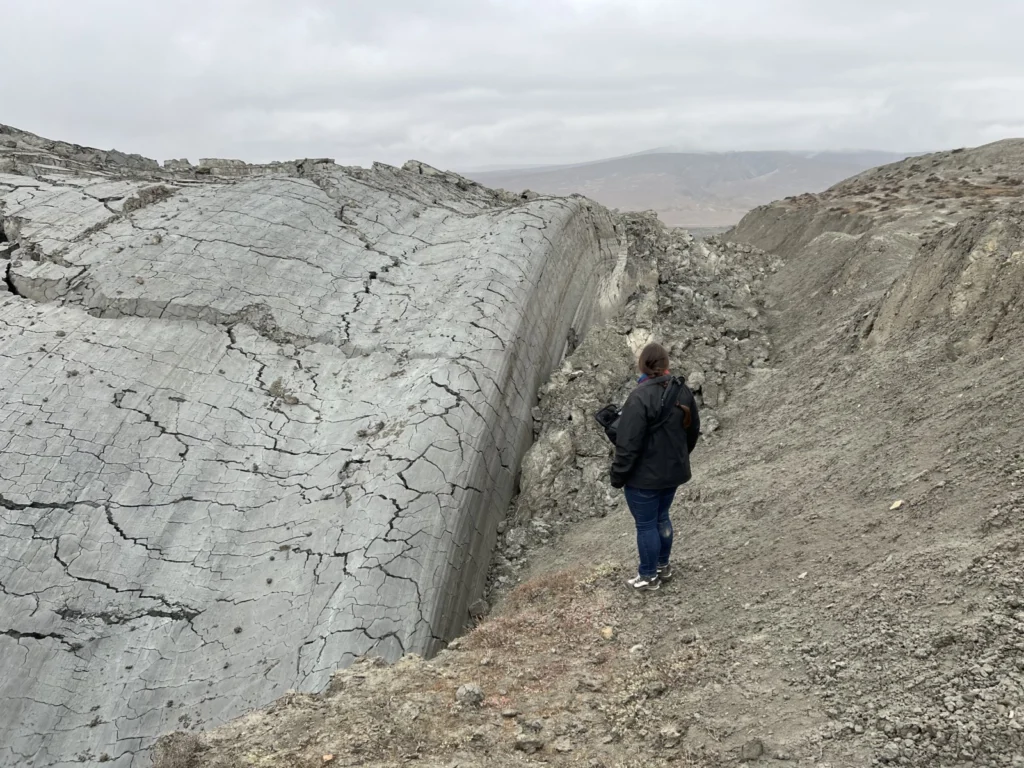
Imaggeo On Monday: Mud extrusion, Gobustan, Azerbaijan
In Gobustan, Azerbaïdjan, gases such as methane or carbon dioxide are emitted in the underground. They lower the density of the overlying sediments which are pushed upwards by buoyancy. Fingering instabilities occur, where more mobile and lighter sediments form vents and mud volcanoes with upwards moving material. Many small scale cones are deposited when the …[Read More]
GeoTalk: meet Morelia Urlaub, researcher of underwater landslides!
Hi Morelia. Thank you for joining us today! Could you tell our readers a bit about yourself and your research? Hi, I am Junior Professor for Marine Geomechanics at GEOMAR Helmholtz Centre for Ocean Research Kiel and Kiel University in Germany. I graduated at the University of Bremen (Germany) and did my PhD in 2013 …[Read More]
Imaggeo On Monday: Comb through the mysteries of Comb Ridge, Utah
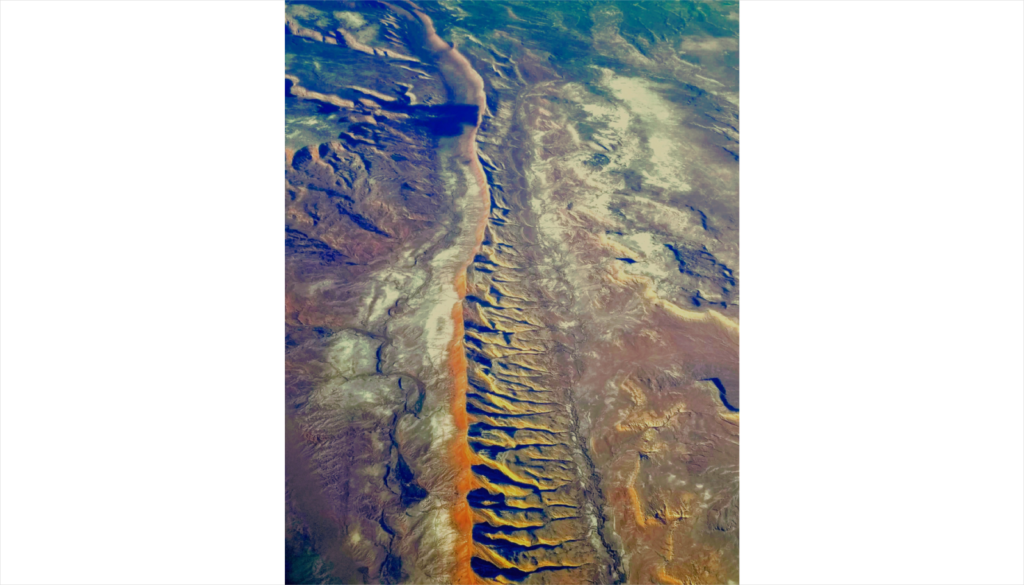
Scientists have combed through the mysteries offered by this ridge for a long time. This is an aerial image of the linear north-south ridge in South-Eastern Utah. First mapped by modern geoscientists in the late 19th century, the ridge is home to numerous Puebloan cliff dwellings and petroglyphs. It is a National Natural landmark and …[Read More]
The theory of continental drift and how it changed the geosciences forever
German scientist Alfred Wegener spent most of his life defending a shocking theory: that all the world’s continents were once part of the same land mass before they drifted away. For many years after he passed, his theory continued to be shunned, ridiculed, and labelled as pseudoscience. And then, several decades later, geologists began to …[Read More]