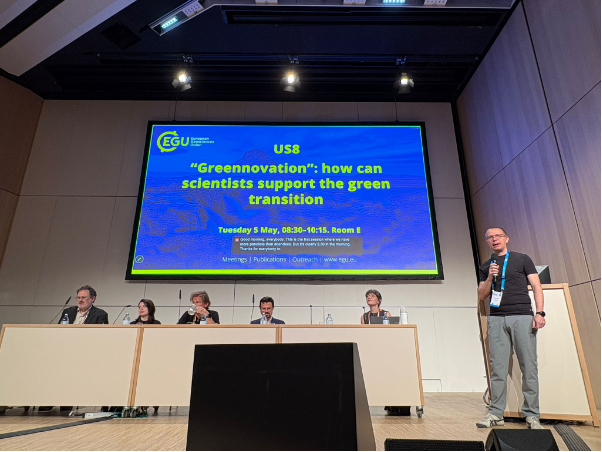
Each year, the EGU General Assembly offers a diverse programme of scientific and skills-focused sessions where participants can explore new research, grow their network, broaden their expertise, and build new skills. Among these are sessions that focus on science for policy, showcasing how researchers can start engaging in policymaking, connect with decision-makers, and create policy impact. This ...[Read More]
Footprints reveal climate’s mark on mudflats
Tidal flats, the muddy reaches of estuaries unveiled at low tide, support rich ecosystems and fisheries worldwide. But these habitats are under threat from climate change, as sea level rise overwhelms the landscape and heavy rainfall scours away the sediment – impacts that scientists are only just beginning to explore. In an effort to understand how shellfisheries are affected by climate change, a ...[Read More]
GeoPolicy: Response to the new European climate resilience framework
Climate change is having a profound impact on the planet. According to several reports, 2023 was the warmest year on record, with the global average temperature over the 12-month period from February 2023 to January 2024 exceeding the 1.5 °C threshold above pre-industrial levels. Climate change acts as a risk multiplier, as its impacts transcend national borders and amplify existing threats and cr ...[Read More]
GeoRoundup: the highlights of EGU Journals published during March!
Each month we feature specific Divisions of EGU and during the monthly GeoRoundup we put the journals that publish science from those Divisions at the top of the Highlights section. For March, we are not featuring any particular divisions, but an ensemble of all the highlights of this month instead. Atmospheric Chemistry and Physics Emerging low-cloud feedback and adjustment in global satellite ob ...[Read More]