GeoLog

EGU

Imaggeo On Monday: Drought – a prerequisite for hazardous flash floods
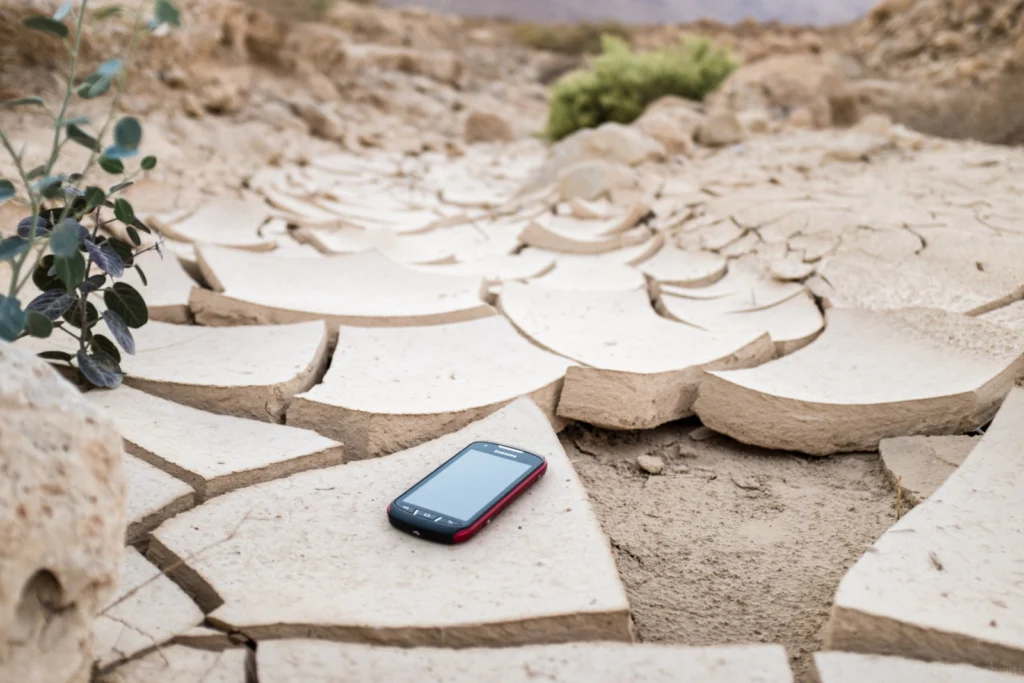
Imaggeo On Monday: Drought – a prerequisite for hazardous flash floods
The drying out of the soil leads to the hazard of flash floods in the wadis of the Dead Sea Valley during sparse but strong rain events. During longer precipitation-free periods and extreme low relative humidity, driven by mesoscale wind, the soil crust ultimately tends to break into piece. Photo by Stefan Schmitt, description from imaggeo.egu.eu.   Imaggeo is the EGU’s online open access geo ...[Read More]

Imaggeo On Monday: Plume of steam rising from the crater of Mount Erebus, Antarctica

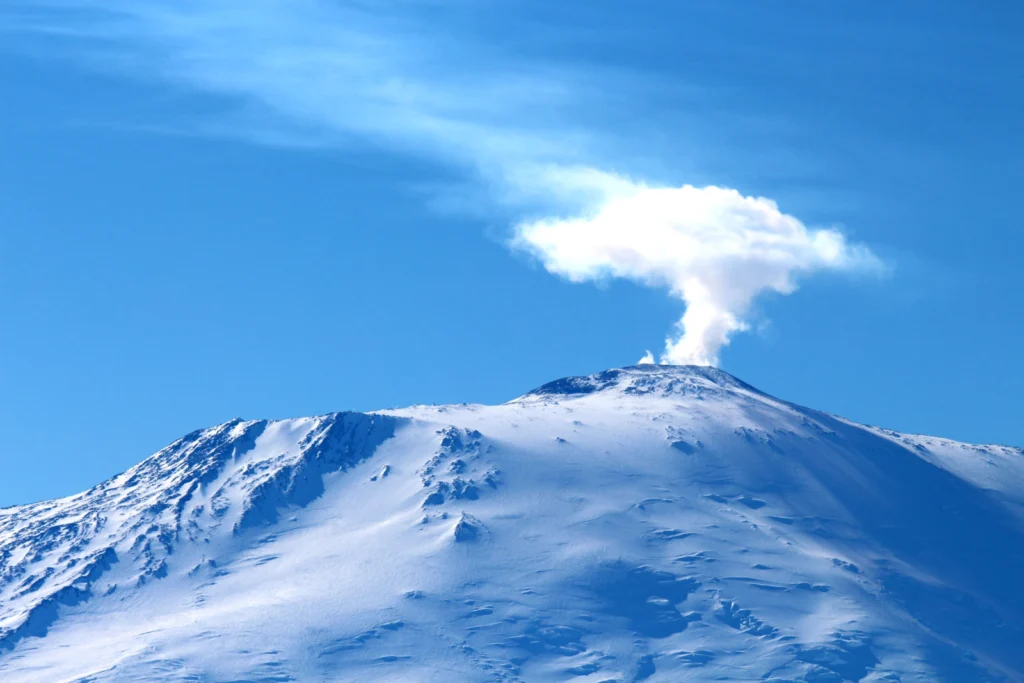
Imaggeo On Monday: Plume of steam rising from the crater of Mount Erebus, Antarctica

Plume rising from Mount Erebus on a rare calm day. This 3794 m high volcano is the most active in Antarctica and close to the American base at McMurdo. Photo by Martyn Unsworth, description from imaggeo.egu.eu.   Imaggeo is the EGU’s online open access geosciences image repository. All geoscientists (and others) can submit their photographs and videos to this repository and, since it is open ...[Read More]

Imaggeo On Monday: Morning view of volcanoes in Java, Indonesia

Imaggeo On Monday: Morning view of volcanoes in Java, Indonesia

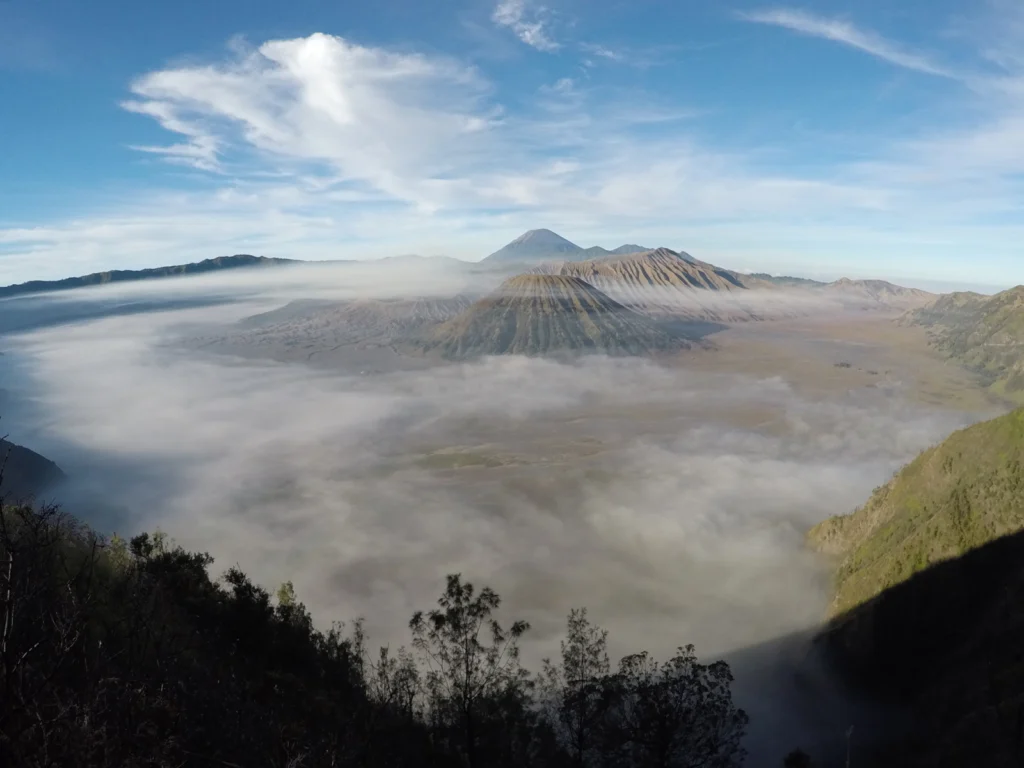
Tengger Caldera is a volcanic complex consisting of five overlapping stratovolcanoes (Mounts Batok, Bromo, Kursi, Watangan and Widodaren) forming out of the ancient volcano Tengger, which was formed about 820,000 years ago, situated in East Java, Indonesia. In this panoramic view are visible Mount Batok (in the front; an inactive volcano with lush green vegetation on its rises), Mount Bromo (the s ...[Read More]

GeoPolicy: Building stronger and more diverse communities at the science-policy interface

GeoPolicy: Building stronger and more diverse communities at the science-policy interface

There are numerous reasons why we should want to build stronger and more diverse scientific communities. Greater inclusivity leads to innovation, expands the pool of ideas, broadens perspectives, and encourages more people to engage. Strong and diverse scientific communities allow us to go beyond the information we can produce on our own and scale our research outcomes. But one reason not often ci ...[Read More]

Imaggeo On Monday: Diversity of resources in forest harvesting systems in the Dehesa (Sevilla, Spain)

Imaggeo On Monday: Diversity of resources in forest harvesting systems in the Dehesa (Sevilla, Spain)

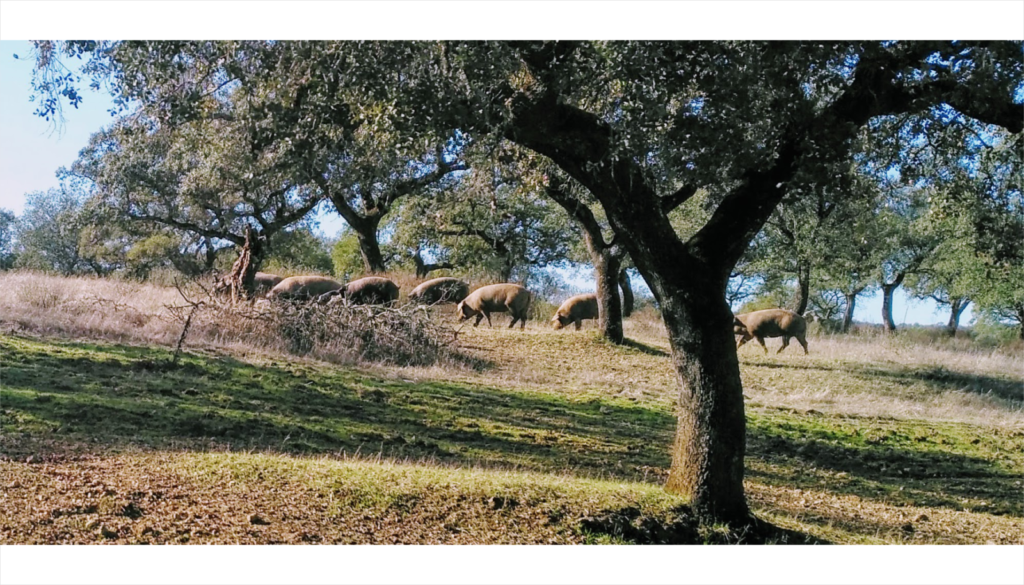
Spanish “dehesas” and Portuguese “montados” are grassland areas with sparse trees (usually oaks) that allow a diversity of agrosylvopastoral uses. Photo by Antonio Jordán, description as shown on imaggeo.egu.eu.   Imaggeo is the EGU’s online open access geosciences image repository. All geoscientists (and others) can submit their photographs and videos to this reposito ...[Read More]

Imaggeo On Monday: Graduate life – keep going, don’t give up

Imaggeo On Monday: Graduate life – keep going, don’t give up

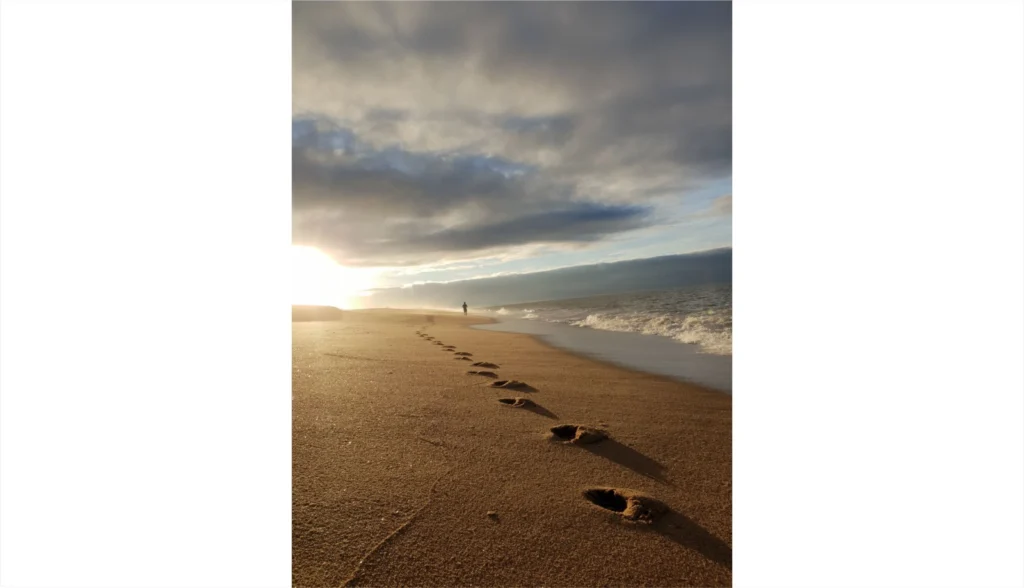
The Algarve barrier island system in southern Portugal: the land is sinking due to deltaic sediment compaction and urbanization, and the sea water level is rising due to global warming. Photo by Makan A. Karegar, description as shown on imaggeo.egu.eu.   Imaggeo is the EGU’s online open access geosciences image repository. All geoscientists (and others) can submit their photographs and videos ...[Read More]

Imaggeo On Monday: Observation of the Stars

Imaggeo On Monday: Observation of the Stars

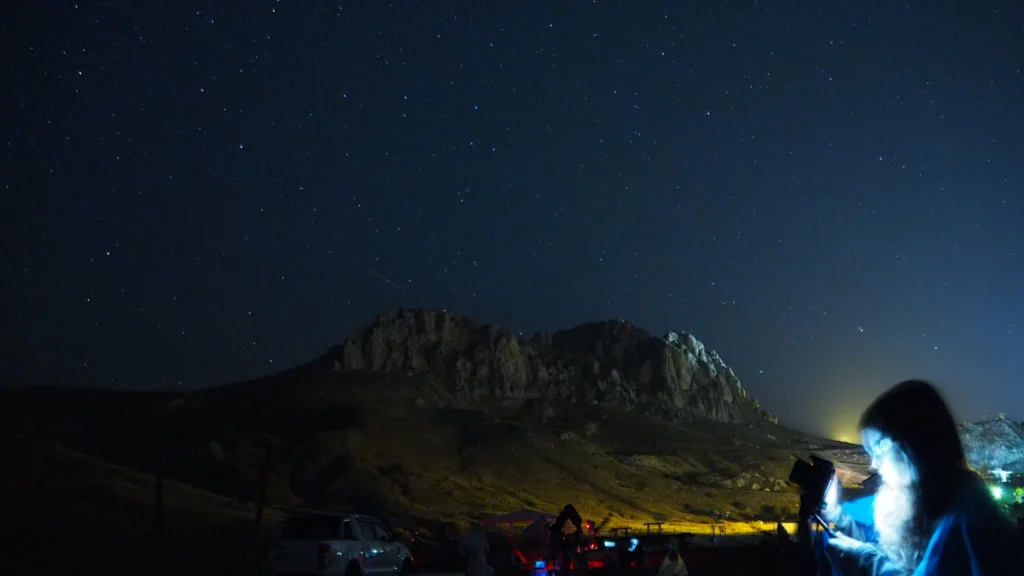
TUBITAK National Observatory (TUG) is located at an altitude of 2500 m, on the top of Bakirlitepe mountain in Saklikent region of the city of Antalya which is located on the Mediterranian coast of Turkey. Besides research and training activities, TUG feels the responsibility of creating awareness in astronomy and space sciences. In this context, TUG regularly organizes a yearly star fest at Saklik ...[Read More]

Imaggeo On Monday: Welcome aboard Planet Earth

Imaggeo On Monday: Welcome aboard Planet Earth

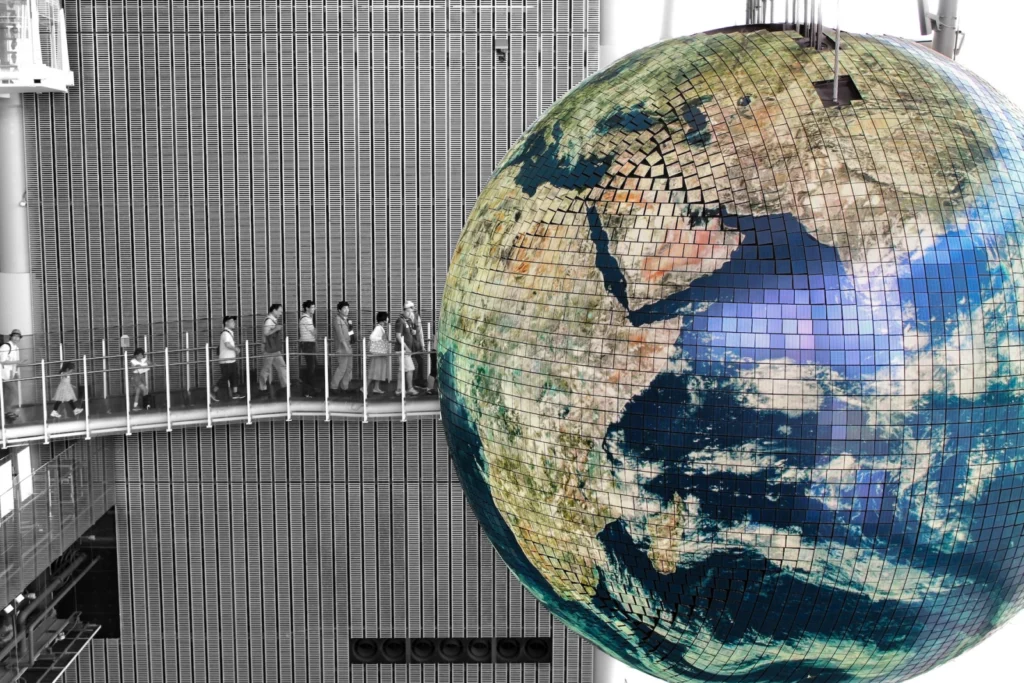
The large suspended globe in the foreground and a suspended pathway in the background. The composition gives an impression that the museum visitors are entering into the Earth, perhaps even boarding an Earthly spaceship. Photo taken at Miraikan – the National Museum of Emerging Science and Innovation in Tokyo, Japan. At the moment the photo was taken the projection shows a satellite image of ...[Read More]

GeoTalk: Philippe Courtial, Executive Secretary, reflects on 20 years of EGU!

GeoTalk: Philippe Courtial, Executive Secretary, reflects on 20 years of EGU!

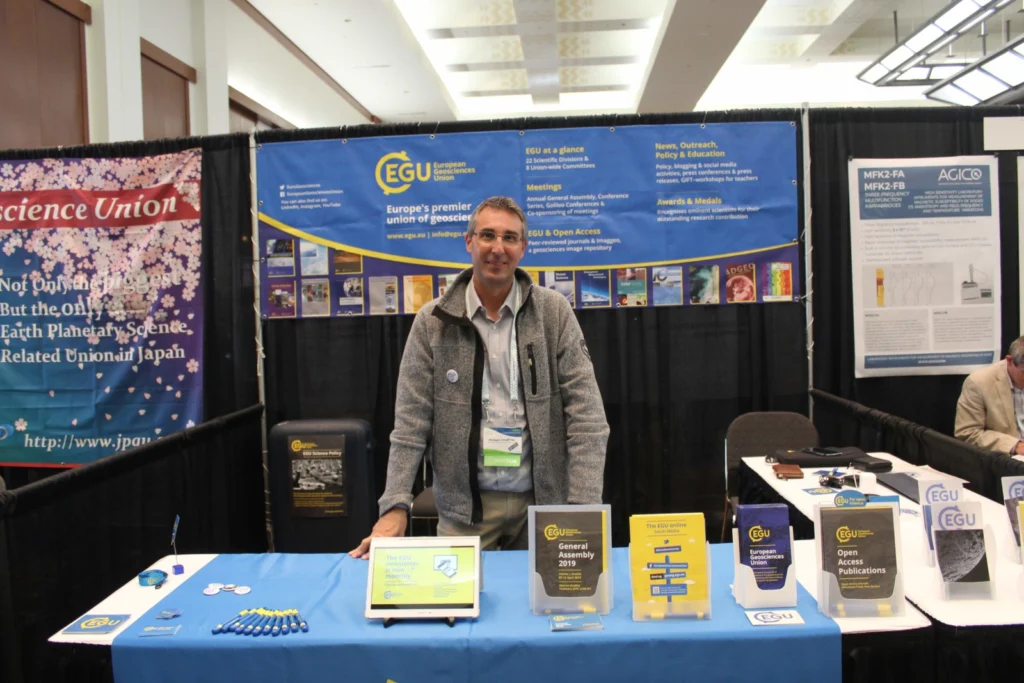
Hi Philippe, could you please introduce yourself and your role for our readers? Thank you for inviting me today to provide this contribution as part of this celebration of the EGU 20th anniversary. Being fascinated by the geological features and the beauty of the minerals since my early age, I had the opportunity to study Geology. I completed my PhD at the Institut de Physique du Globe in Paris on ...[Read More]

What is the EGU (extraordinary virtual) Plenary, and why should I attend?

What is the EGU (extraordinary virtual) Plenary, and why should I attend?

The European Geosciences Union (EGU) annual Plenary is the Union’s business meeting where updates are provided and new officers are inaugurated. Prior to 2020, this meeting took place during the General Assembly (GA) week every year. With the onset of COVID-19 and the change in conference format, the last few years have seen the plenary move online. At this year’s General Assembly (EGU22), t ...[Read More]